
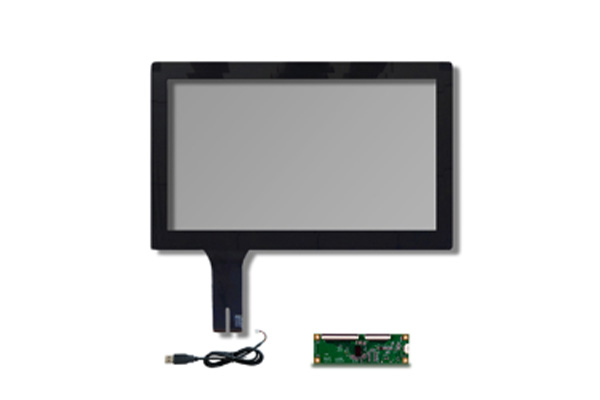
Optimal Touch Monitor Selection requires balancing technical endurance with factory-direct supply chain transparency to ensure long-term operational success. For many B2B buyers, a faulty interface is not just a nuisance; it is a catalyst for expensive production downtime and maintenance headaches. You may feel the pressure of choosing between hundreds of generic options that promise much but deliver inconsistent quality. By partnering directly with a manufacturer, you eliminate the middleman and secure a mission-critical component that is built to your exact engineering specifications.
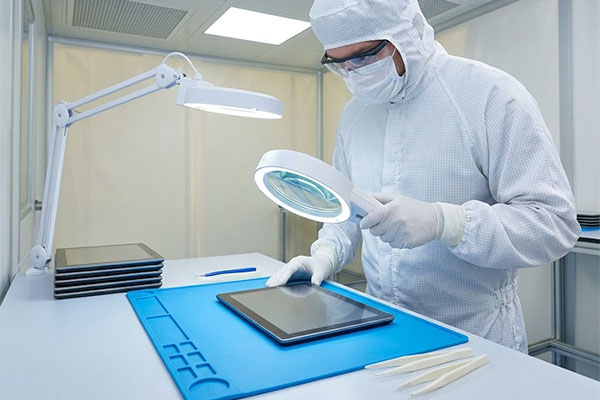
Why is Touch Monitor Selection vital for equipment?
Effective Touch Monitor Selection determines whether your human-machine interface remains responsive during 24/7 industrial operations. Without the right hardware, your equipment risks frequent failures that disrupt the entire production workflow.
How do you avoid interface failure?
You must prioritize components that are built for high-duty cycles rather than consumer-grade alternatives. Here is the deal: standard screens often delaminate or lose sensitivity when pushed beyond their design limits in professional settings.
- Select industrial-grade IC controllers.
- Verify the MTBF (Mean Time Between Failures) metrics.
- Ensure the bonding method supports high vibration.
You will find that moving beyond off-the-shelf limitations allows for a much more stable user experience. Engineering-level oversight ensures that every touch translates into an accurate command for your system.
| Reliability Factor | Industrial Grade | Consumer Grade |
|---|---|---|
| Duty Cycle | 24/7 Operation | 8/5 Operation |
| Touch Controller | High EMI Shielding | Basic |
| MTBF | 50,000+ Hours | 15,000 Hours |
Analyzing the hardware lifecycle reveals that industrial components offer significantly lower total cost of ownership over several years.
Key TakeawayInvesting in high-quality interface hardware at the start of your project prevents catastrophic downtime and ensures your brand reputation for reliability remains intact.
Does Touch Monitor Selection impact supply chain risk?

Yes, proper Touch Monitor Selection through a direct factory partnership significantly reduces the risk of receiving inconsistent production batches. Working with a middleman often leads to technical “lost in translation” errors that can stall your assembly line.
Why choose factory-direct sourcing?
You gain immediate access to the engineering team that actually builds your modules, ensuring your technical questions get answered in hours. Look at it this way: a direct line to the production floor means you can verify your BOM (Bill of Materials) is locked and frozen.
- Direct engineer-to-engineer communication.
- Wholesale pricing without trading company markups.
- Full transparency regarding material origins.
You should always look for a partner that provides factory tours or video verifications. This level of accountability is the only way to safeguard your long-term supply stability.
| Sourcing Type | Price Stability | Technical Depth | Lead Time |
|---|---|---|---|
| Direct Factory | Locked BOM | Engineering-Led | 2-4 Weeks |
| Trading Co. | Variable | Sales-Led | 4-8 Weeks |
The shift toward factory-direct procurement allows for more agile responses to design changes and market fluctuations.
Key TakeawayDirect factory engagement eliminates the uncertainty of the middleman, providing you with better pricing and technical security for your project.
Can Touch Monitor Selection handle harsh environments?
Industrial-grade Touch Monitor Selection involves choosing materials that withstand temperature fluctuations from -20°C to +70°C. Consumer electronics simply cannot survive the thermal stress or humidity found in manufacturing plants.
What environmental specs are critical?
You need to evaluate the IP rating of the screen to ensure it is dust-tight and resistant to moisture ingress. Here is the deal: “ghost touches” often occur when moisture or debris accumulates on a low-quality sensor.
- Check for IP65 front-panel sealing.
- Specify wide-temperature operating ranges.
- Look for chemically strengthened top glass.
You can also request specialized coatings like anti-glare (AG) or anti-reflection (AR). These treatments ensure your operators can read the display clearly under harsh overhead lighting or direct sunlight.
| Environmental Stress | Required Specification | Outcome |
|---|---|---|
| Extreme Heat/Cold | -20°C to +70°C Ops | Zero thermal throttling |
| Chemical Exposure | Mohs 6-9 Glass | No surface degradation |
| High Moisture | Sealed Bezel | No ghost touches |
Evaluating environmental stressors upfront allows you to build a more resilient product that thrives where others fail.
Key TakeawayRuggedized hardware is the foundation of industrial success, ensuring that your interface remains functional in the toughest operating conditions.
Is Touch Monitor Selection dependent on touch tech?
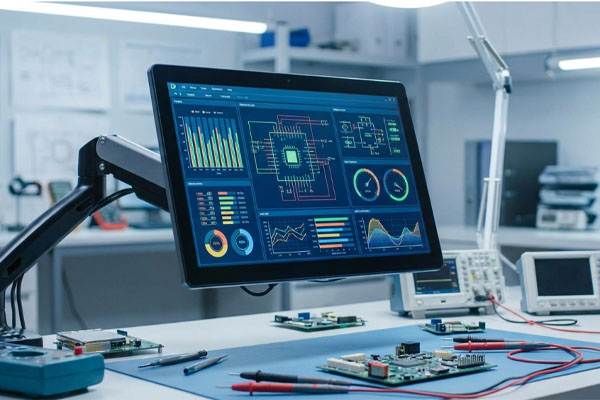
Yes, the success of your Touch Monitor Selection depends entirely on matching the touch technology—capacitive or resistive—to your user’s specific environment. Choosing the wrong technology can make the machine nearly impossible to operate in certain conditions.
Is capacitive better than resistive?
You should choose Projected Capacitive (PCAP) for modern, multi-touch interfaces that require the sleek responsiveness of a smartphone. But wait, there is more: resistive screens are often better for heavy-duty settings where operators must use thick, non-conductive gloves.
- Capacitive: Multi-touch, high clarity, durable surface.
- Resistive: Single-touch, glove-compatible, cost-effective.
- Hybrid: Custom firmware for gloved capacitive touch.
You must decide based on how your operators will actually interact with the system on a daily basis. If they are in a medical setting, a sealed capacitive screen with antimicrobial coating might be the best path.
| Technology | Multi-Touch | Glove Support | Impact Resistance |
|---|---|---|---|
| PCAP | Yes (10 pts) | Specialized | High |
| Resistive | No | Universal | Moderate |
Matching touch technology to user behavior ensures high operator efficiency and reduces the likelihood of input errors.
Key TakeawayUnderstanding the trade-offs between PCAP and Resistive technologies allows you to design an interface that is both intuitive and functional for your end-users.
Will Touch Monitor Selection ensure batch consistency?
Reliable Touch Monitor Selection protocols include a locked Bill of Materials (BOM) to guarantee that the tenth batch is identical to the first. Many buyers face a nightmare where the production units perform differently than the approved samples.
How is consistency maintained?
You must require your supplier to use a version-controlled BOM for every component, from the IC to the adhesive. Here is the deal: substitutions are the primary cause of field failures, so you need a partner that requires your written consent for any changes.
- Same glass supplier for all batches.
- Locked firmware versions on controllers.
- Digital version tracking for every production run.
You should always request a First Article Inspection (FAI) report for each new mass production batch. This documentation proves that the factory is adhering to your established quality benchmarks.
| Consistency Tool | Function | Benefit |
|---|---|---|
| Locked BOM | Freezes component list | No surprise substitutions |
| FAI Report | Verifies first unit | Batch-wide confidence |
| Lot Tracking | Traces material origin | Rapid root-cause analysis |
Strict adherence to version control prevents the “sample-to-production” quality gap that plagues many global supply chains.
Key TakeawayConsistency is not an accident; it is the result of rigorous documentation and a commitment to maintaining identical specifications across years of supply.
How does Touch Monitor Selection meet medical needs?
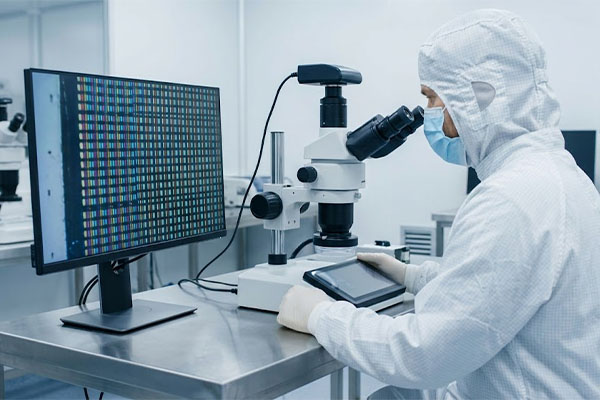
Precision Touch Monitor Selection for the medical sector focuses on high electromagnetic compatibility (EMC) and chemical resistance. These monitors must operate accurately alongside sensitive diagnostic equipment without causing interference or failing under harsh cleaning cycles.
Why is chemical resistance vital?
You need a screen that can survive frequent disinfection with 70% isopropyl alcohol or bleach without surface delamination. It is a simple fact: medical environments are brutal on standard plastic or low-grade glass surfaces.
- Choose medical-grade glass (Mohs 7+).
- Request antimicrobial surface treatments.
- Ensure the bezel is easy to wipe down.
You will also want to verify that the touch controller is tuned for high-accuracy medical interfaces. This ensures that surgeons or nurses can make precise selections even when wearing latex or nitrile gloves.
| Medical Requirement | Technical Solution | Value |
|---|---|---|
| Disinfection | Chemical-resistant coating | Long-term clarity |
| Cleanliness | Antimicrobial glass | Patient safety |
| EMC Compliance | Shielded IC Controller | No signal interference |
Specializing the hardware for clinical settings ensures that the technology aids the medical professional rather than becoming a point of failure.
Key TakeawayMedical-grade selection prioritizes safety and hygiene, ensuring the interface meets the strict regulatory and functional demands of healthcare.
Can Touch Monitor Selection improve vehicle displays?
Enhanced Touch Monitor Selection for automotive or navigation use centers on sunlight readability and vibration resistance. Standard displays often become unreadable in direct sunlight, which is a major safety concern for vehicle operators.
How do you achieve sunlight readability?
You must look for high-brightness backlights (up to 1000 nits) and optical bonding technology. Here is the deal: optical bonding removes the air gap between the LCD and the touch glass, which drastically reduces internal reflections and glare.
- Optical bonding for better contrast.
- High-brightness (800-1000 nits) panels.
- Anti-reflective (AR) surface coatings.
You should also ensure the mounting structure is designed for automotive-grade vibration. This prevents the touch layer from shifting or failing during off-road or high-vibration heavy machinery use.
| Automotive Factor | Requirement | Implementation |
|---|---|---|
| Direct Sunlight | 1000 Nits | High-output LEDs |
| Glare | Reduced Reflection | Optical Bonding |
| Road Vibration | Structural Integrity | Enhanced adhesive bonding |
Optimizing the display for high-light and high-motion environments creates a safer and more reliable user experience in the field.
Key TakeawayAutomotive selection transforms a standard screen into a high-visibility tool that performs reliably regardless of external lighting or mechanical vibration.
Does Touch Monitor Selection include custom frames?
Yes, custom Touch Monitor Selection allows you to specify everything from glass thickness to silk-printed logos on the bezel. When your equipment has a unique mechanical footprint, off-the-shelf monitors simply won’t fit your chassis.
What can you customize?
You can tailor the thickness of the cover lens from 0.7mm to 6mm depending on the impact risk of your application. Here is the deal: custom silk printing allows you to add brand logos or specific button icons directly onto the touch glass.
- Custom glass shapes and cutouts.
- Personalized silk-screened logos.
- Specific interface protocols (USB, I2C, RS232).
You should provide your CAD drawings to the factory’s engineering team for a feasibility review. This ensures that the final product integrates perfectly into your mechanical design without any gaps or alignment issues.
| Custom Option | Range / Availability | Application |
|---|---|---|
| Glass Thickness | 0.7mm to 10.0mm | Impact protection |
| Branding | Custom silk-print | OEM branding |
| Interface | USB / I2C / RS232 | Controller compatibility |
Tailoring the physical and electrical structure of the monitor ensures it fits your product like a glove, rather than a forced compromise.
Key TakeawayCustomization allows you to maintain your machine’s aesthetic and functional integrity while benefiting from specialized manufacturing expertise.
How does Touch Monitor Selection affect QC standards?
Rigorous Touch Monitor Selection guarantees that your project follows a multi-stage Quality Control (QC) process from raw material to shipping. A reliable factory does not just check for defects at the end; they prevent them at every step.
What are the QC milestones?
You need to verify that your supplier conducts incoming material inspections (IQC) and in-process checks in climate-controlled clean rooms. Here is the deal: even a single dust particle trapped during assembly can cause an expensive field failure later on.
- 100% functional testing of every unit.
- Touch sensitivity calibration verification.
- Cosmetic inspection for pixel defects.
You will find that professional factories provide detailed inspection reports with every shipment. These records give you the data you need to trust the quality of the components entering your assembly line.
| QC Stage | Primary Check | Goal |
|---|---|---|
| IQC | Raw material specs | Prevent component flaws |
| Clean Room | Visual contamination | Zero dust assembly |
| OQC | Final touch accuracy | 100% functional shipment |
Establishing high quality control expectations at the selection stage protects your brand from the costs of warranty claims and repairs.
Key TakeawayQuality control is the invisible shield that protects your supply chain, ensuring that only perfect units reach your customers.
Should Touch Monitor Selection consider logistics?
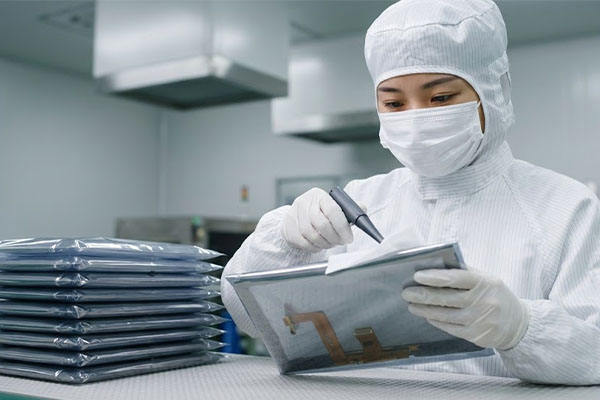
Absolutely, Touch Monitor Selection must account for international shipping compliance and professional packaging to ensure items arrive in “plug-and-play” condition. If the logistics fail, the quality of the screen becomes irrelevant because it will arrive damaged or stuck in customs.
Is professional packaging necessary?
You must ensure that your screens are shipped using anti-static shielding and thick foam cushioning. Here is the deal: overseas transit involves moisture, vibration, and temperature changes that can damage sensitive electronics if they are not properly protected.
- Moisture-barrier bags for sea freight.
- Double-walled cardboard for drop protection.
- Complete export documentation (CE, FCC, RoHS).
You should work with a partner who has extensive experience exporting to your specific region, whether it is North America, Europe, or Japan. This ensures they understand the local compliance requirements and can handle the paperwork smoothly.
| Logistics Factor | Standard | Industrial Best Practice |
|---|---|---|
| Packaging | Single-wall box | Custom foam + Anti-static |
| Compliance | Minimal | Full CE / RoHS / FCC |
| Tracking | Basic | Real-time milestone updates |
Streamlining the logistics process turns a global supply chain into a competitive advantage by ensuring on-time and damage-free delivery.
Key TakeawayLogistics and compliance are the final pieces of the selection puzzle, ensuring that your high-quality components arrive ready for immediate installation.
Selecting the right touch interface is a critical decision that impacts your equipment’s reliability, your company’s supply chain stability, and your brand’s reputation for quality. By moving away from generic trading companies and embracing a factory-direct partnership, you gain the engineering support and batch consistency required for industrial success. We understand the challenges of modern manufacturing and offer the technical precision and transparent communication you need to scale your business with confidence. Let us help you eliminate the risks of interface failure and supply chain volatility with our specialized touch technology solutions. To start your journey toward a more reliable human-machine interface, please contact us today and discuss your project specifications with our expert engineering team.
Frequently Asked Questions
Can I request a custom silk-printed logo on my touch panels? Yes, you can. Most direct manufacturers offer precision silk-screen printing during the glass production phase, allowing you to add UV-resistant logos, button icons, or decorative borders that match your brand’s aesthetic requirements perfectly.
What’s the best glass thickness for heavy-duty industrial screens? It depends on your environment, but generally, 3mm to 6mm chemically strengthened glass is ideal. This thickness provides the structural durability needed to meet high impact ratings like IK08 while still maintaining excellent touch sensitivity and optical clarity.
How do I know if a factory is a genuine manufacturer? It is simple: a genuine factory will welcome video tours and provide direct access to their engineering team. They also hold their own ISO certifications and production licenses, which trading companies cannot authentically provide when asked for detailed production floor evidence.
Can I get engineering support for a 21.5-inch module integration? Yes, you should. Large-format touch integration requires specific attention to interface protocols like USB or I2C and custom firmware tuning to ensure the sensor responds accurately across the larger surface area, especially in high-EMI environments.
How do I know if the screen will work with my operators’ gloves? A quick test is best, but generally, you should specify the type of glove (latex, leather, or wool) to the factory engineers. They can then tune the touch controller’s firmware to recognize those specific input signals while rejecting accidental environmental noise.