
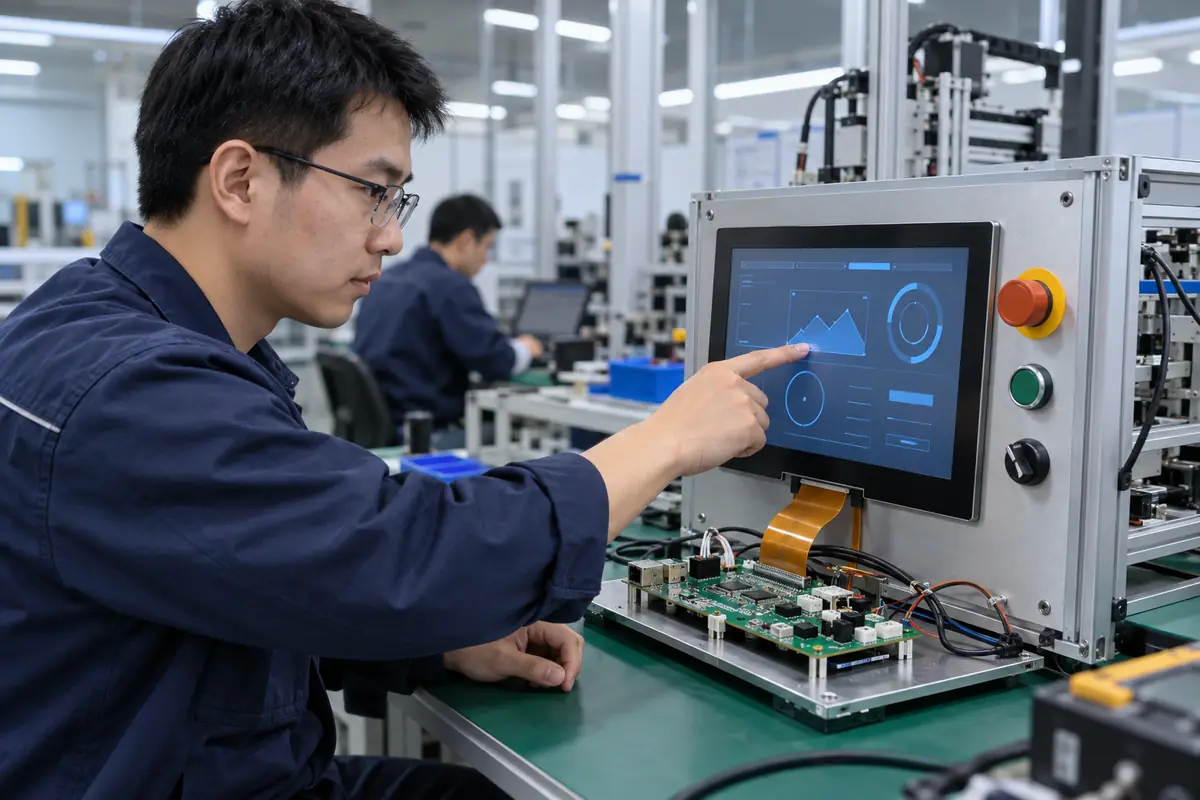
Embedded systems use touchscreens as direct interfaces for control, status, data entry, service, and guided workflows. A buyer researching "touchscreen applications in embedded systems" may receive mismatched quotations because suppliers use familiar terms for different delivery scopes. This guide applies "touchscreen applications in embedded systems" across ten practical checks for engineering, purchasing, and quality teams. For "touchscreen applications in embedded systems," Yinghong works from drawings, application conditions, and interface requirements. Use this "touchscreen applications in embedded systems" review during RFQ checks, sample approval, integration testing, and production release. That sequence helps your team compare factories on one basis for "touchscreen applications in embedded systems" without broad marketing claims. It keeps "touchscreen applications in embedded systems" scope connected with evidence that engineers and inspectors can verify.
1. Why Use Touch in an Embedded Product?
Embedded touchscreens give users flexible controls, changing menus, visual feedback, and guided procedures within one surface. For a buyer asking "touchscreen applications in embedded systems," sourcing decisions depend on interface purpose. Software can update interface behavior without adding many physical keys or indicators. A touch interface can also hide critical functions when layout or feedback remains weak.
Start with interface purpose. Treat interface purpose as a project condition rather than catalog copy. Engineering can define a pass rule for interface purpose before samples arrive. Purchasing and quality teams can then apply that rule without hidden changes in "touchscreen applications in embedded systems."
Which design checks apply to interface purpose?
- Map user tasks
- Mark safety actions
- Plan feedback
- Keep needed hard keys
| Buyer check | Evidence | Release rule |
|---|---|---|
| Map user tasks | Controlled drawing | Scope and revision match |
| Mark safety actions | Approved sample | Construction matches approval |
| Plan feedback | Relevant test record | Method fits stated use |
| Keep needed hard keys | Batch inspection record | Result meets agreed limit |
Use the capacitive touchscreen options as related context for "touchscreen applications in embedded systems." Buyer action: define user tasks, hazards, frequency, and fallback controls before hardware selection.
2. Which Processor Resources Are Needed?
Embedded touchscreens consume processor time, memory, graphics bandwidth, bus capacity, interrupts, and power depending on architecture. Teams researching "touchscreen applications in embedded systems" also need a clear decision on processor resources. Evaluation boards can mask limits found on the production MCU or SoC. A USB touch controller may reduce low-level work while a raw interface can require closer firmware handling.
A drawing for processor resources settles this quickly. Buyers should ask how factory controls carry processor resources from design review into production. One sample for processor resources shows a single build at one moment. Batch records for "touchscreen applications in embedded systems" reveal whether materials, firmware, tooling, and inspection stayed aligned.
Which design checks apply to processor resources?
- Check CPU load
- Budget memory
- Measure bus use
- Review power
| Buyer check | Evidence | Release rule |
|---|---|---|
| Check CPU load | Controlled drawing | Scope and revision match |
| Budget memory | Approved sample | Construction matches approval |
| Measure bus use | Relevant test record | Method fits stated use |
| Review power | Batch inspection record | Result meets agreed limit |
Use the resistive touchscreen options as related context for "touchscreen applications in embedded systems." Buyer action: budget resources using target hardware and worst-case interface activity.
3. Which Interface Fits the Host Board?
Embedded touchscreens can connect through USB, I2C, UART, SPI, or controller-specific signals. In an RFQ, the phrase "touchscreen applications in embedded systems" must cover host interface without ambiguity. Choice depends on host ports, voltage, distance, connector space, latency, software stack, and EMC environment. Selecting protocol before board architecture stabilizes can cause avoidable redesign.
Factory evidence for host interface beats a sales label. A practical decision on host interface needs application data, product drawings, and relevant evidence. No sales phrase can prove host interface for "touchscreen applications in embedded systems." Keep measurable host interface acceptance points and approved references available for supplier and buyer.
Which design checks apply to host interface?
- Check available ports
- Match voltage
- Set cable length
- Assign driver work
| Buyer check | Evidence | Release rule |
|---|---|---|
| Check available ports | Controlled drawing | Scope and revision match |
| Match voltage | Approved sample | Construction matches approval |
| Set cable length | Relevant test record | Method fits stated use |
| Assign driver work | Batch inspection record | Result meets agreed limit |
Use the touch display module integration as related context for "touchscreen applications in embedded systems." Buyer action: compare interface options during schematic planning with cable and driver owners present.
4. How Should Firmware Handle Touch Events?
Embedded touchscreens need firmware that initializes hardware, reads reports, maps coordinates, filters states, manages power, and recovers faults. The question "touchscreen applications in embedded systems" also raises a practical issue around firmware architecture. Blocking code or weak error handling can create lag, stuck input, or missed wake events. Event queues and state machines help separate low-level input from application behavior.
Check firmware architecture before sampling. Review firmware architecture with teams that own mechanics, electronics, firmware, purchasing, and quality. Each function sees a different firmware architecture failure path. A short cross-functional review prevents expensive assumptions around "touchscreen applications in embedded systems" and records ownership.
Which design checks apply to firmware architecture?
- Design event queue
- Handle timeouts
- Recover reset
- Log errors
| Buyer check | Evidence | Release rule |
|---|---|---|
| Design event queue | Controlled drawing | Scope and revision match |
| Handle timeouts | Approved sample | Construction matches approval |
| Recover reset | Relevant test record | Method fits stated use |
| Log errors | Batch inspection record | Result meets agreed limit |
Use the fully laminated touchscreen construction as related context for "touchscreen applications in embedded systems." Buyer action: test event load, disconnects, timeouts, resets, and version compatibility.
5. How Does the GUI Affect Hardware Choice?
Embedded touchscreens must support interface targets such as button size, gesture count, orientation, refresh, glove use, and response time. For a buyer asking "touchscreen applications in embedded systems," sourcing decisions depend on GUI requirements. A polished GUI cannot recover inaccurate coordinates or slow host rendering. Graphic complexity may push teams toward a larger processor, display bandwidth, or memory budget.
One missing GUI requirements detail can shift ownership. A useful review connects GUI requirements with one drawing, one sample revision, and one test plan. Buyers should compare matching scope for GUI requirements before price. A supplier should record every accepted deviation involving GUI requirements for production and receiving inspection.
Which design checks apply to GUI requirements?
- Set target latency
- Size touch targets
- Test orientation
- Measure graphics load
| Buyer check | Evidence | Release rule |
|---|---|---|
| Set target latency | Controlled drawing | Scope and revision match |
| Size touch targets | Approved sample | Construction matches approval |
| Test orientation | Relevant test record | Method fits stated use |
| Measure graphics load | Batch inspection record | Result meets agreed limit |
Use the industrial control touchscreen solutions as related context for "touchscreen applications in embedded systems." Buyer action: prototype representative screens and interactions before freezing electronics.
6. What Changes in Industrial Controllers?
Embedded touchscreens in industrial controllers face electrical noise, gloves, long service, contamination, vibration, and operator training needs. Teams researching "touchscreen applications in embedded systems" also need a clear decision on industrial control. Consumer tuning can create false input near drives or fail through work gloves. Machines may require reliable operation during motor switching, grounding shifts, or unstable power.
Keep teams aligned on industrial control. Treat industrial control as a project condition rather than catalog copy. Engineering can define a pass rule for industrial control before samples arrive. Purchasing and quality teams can then apply that rule without hidden changes in "touchscreen applications in embedded systems."
Which design checks apply to industrial control?
- Run motor cycles
- Test work gloves
- Check grounding
- Plan service life
| Buyer check | Evidence | Release rule |
|---|---|---|
| Run motor cycles | Controlled drawing | Scope and revision match |
| Test work gloves | Approved sample | Construction matches approval |
| Check grounding | Relevant test record | Method fits stated use |
| Plan service life | Batch inspection record | Result meets agreed limit |
Use the outdoor laminated touchscreen design as related context for "touchscreen applications in embedded systems." Buyer action: validate inside the actual cabinet with final grounding and machine cycles.
7. What Changes in Medical Devices?
Embedded touchscreens in medical devices may face cleaning chemicals, gloves, precise selection, alarms, documentation, and risk controls. In an RFQ, the phrase "touchscreen applications in embedded systems" must cover medical device integration without ambiguity. Device requirements depend on intended use and cannot be inferred from a touchscreen component alone. A material or firmware change can reopen system-level assessment.
Test the complete case for medical device integration. Buyers should ask how factory controls carry medical device integration from design review into production. One sample for medical device integration shows a single build at one moment. Batch records for "touchscreen applications in embedded systems" reveal whether materials, firmware, tooling, and inspection stayed aligned.
Which design checks apply to medical device integration?
- List cleaners
- Test gloves
- Review alarm actions
- Control changes
| Buyer check | Evidence | Release rule |
|---|---|---|
| List cleaners | Controlled drawing | Scope and revision match |
| Test gloves | Approved sample | Construction matches approval |
| Review alarm actions | Relevant test record | Method fits stated use |
| Control changes | Batch inspection record | Result meets agreed limit |
Use the medical touchscreen applications as related context for "touchscreen applications in embedded systems." Buyer action: coordinate touch requirements with device quality and regulatory teams.
8. What Changes in Vehicle Systems?
Embedded touchscreens in vehicle systems face sunlight, temperature swings, vibration, electrical transients, gloves, and distraction concerns. The question "touchscreen applications in embedded systems" also raises a practical issue around vehicle integration. A stationary bench test cannot represent road vibration or changing light. Optical bonding, brightness, haptic support, touch tuning, and UI layout may work together.
Make vehicle integration traceable. A practical decision on vehicle integration needs application data, product drawings, and relevant evidence. No sales phrase can prove vehicle integration for "touchscreen applications in embedded systems." Keep measurable vehicle integration acceptance points and approved references available for supplier and buyer.
Which design checks apply to vehicle integration?
- Simulate sunlight
- Cycle temperature
- Run vibration
- Test power transients
| Buyer check | Evidence | Release rule |
|---|---|---|
| Simulate sunlight | Controlled drawing | Scope and revision match |
| Cycle temperature | Approved sample | Construction matches approval |
| Run vibration | Relevant test record | Method fits stated use |
| Test power transients | Batch inspection record | Result meets agreed limit |
Use the vehicle navigation touchscreens as related context for "touchscreen applications in embedded systems." Buyer action: test final assembly across temperature, light, vibration, and power states.
9. How Should Power States Be Managed?
Embedded touchscreens must behave correctly during boot, sleep, wake, brownout, reset, update, and shutdown. For a buyer asking "touchscreen applications in embedded systems," sourcing decisions depend on power management. Controller and host may start at different times or retain different state after faults. Unmanaged sequencing can create ghost events, missed wake, or a locked interface.
Production control for power management closes the loop. Review power management with teams that own mechanics, electronics, firmware, purchasing, and quality. Each function sees a different power management failure path. A short cross-functional review prevents expensive assumptions around "touchscreen applications in embedded systems" and records ownership.
Which design checks apply to power management?
- Measure boot timing
- Test sleep current
- Verify wake
- Recover brownout
| Buyer check | Evidence | Release rule |
|---|---|---|
| Measure boot timing | Controlled drawing | Scope and revision match |
| Test sleep current | Approved sample | Construction matches approval |
| Verify wake | Relevant test record | Method fits stated use |
| Recover brownout | Batch inspection record | Result meets agreed limit |
Use the factory background as related context for "touchscreen applications in embedded systems." Buyer action: define power timing and recovery tests for every system state.
10. How Should an Embedded Touch Design Be Released?
Embedded touchscreens need a release package covering hardware, firmware, GUI, mechanics, environmental tests, manufacturing, and field update strategy. Teams researching "touchscreen applications in embedded systems" also need a clear decision on embedded release. Releases remain safer when interfaces and responsibilities are traceable across teams. A component approval proves only one part of a complete embedded user experience.
Put embedded release into writing. A useful review connects embedded release with one drawing, one sample revision, and one test plan. Buyers should compare matching scope for embedded release before price. A supplier should record every accepted deviation involving embedded release for production and receiving inspection.
Which design checks apply to embedded release?
- Lock hardware
- Lock firmware
- Archive tests
- Define update path
Use the engineering contact as related context for "touchscreen applications in embedded systems." Buyer action: freeze compatible revisions and rerun affected tests after any change.
Frequently Asked Questions About touchscreen applications in embedded systems
Q1: What does touchscreen applications in embedded systems mean for a buyer? It defines embedded hardware, software, interfaces, mechanics, and application validation. Purchasing, engineering, and quality teams can then compare suppliers on one basis for "touchscreen applications in embedded systems."
Q2: Which information should I send with an RFQ about touchscreen applications in embedded systems? Send application conditions, target dimensions, interface needs, environmental limits, annual volume, and requirements connected with processor resources.
Q3: Can I approve touchscreen applications in embedded systems from a visual sample alone? No. A visual sample cannot prove industrial control, controller behavior, dimensional consistency, or batch control. Pair "touchscreen applications in embedded systems" samples with drawings and test records.
Q4: How do I know whether two touchscreen applications in embedded systems quotations match? Build a touchscreen applications in embedded systems comparison sheet for delivery scope, materials, controller, firmware, interfaces, dimensions, tolerances, and tests. Add documentation, packing, and change-control fields for "touchscreen applications in embedded systems."
Q5: What should I verify before touchscreen applications in embedded systems mass production? Verify signed drawings, approved samples, integration results, golden firmware, inspection rules, packaging, and factory controls for power management.