
Touch Display Module
for Mission-Critical Systems
More than a display. A core interface that determines system stability, user experience, and long-term reliability.
Discuss Your Project Requirements
What Is a Touch Display Module —
and Why It's Not Just a "Screen"
Most procurement mistakes start with a misunderstood spec. Knowing what separates a Touch Display Module from a simple touch panel or standalone LCD is the first step toward making the right sourcing decision.
Not Just a Touch Panel
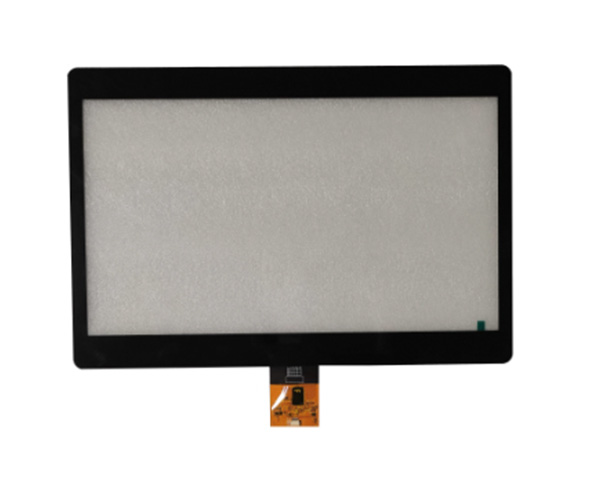
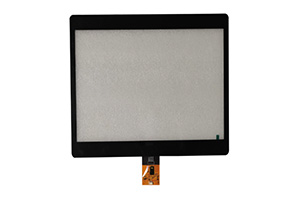
A touch panel alone provides input detection — nothing more. A Touch Display Module integrates the display, touch sensor, structural housing, and interface electronics into a single, tested assembly ready for your system integration.
Not Just an LCD
An off-the-shelf LCD carries no guarantee of touch compatibility, interface fitment, or environmental durability. A Touch Display Module is engineered as an integrated system — optimized from the display layer down to the signal protocol.
A Five-Layer Solution
Display + Touch Sensing + Structural Design + Interface Compatibility + Reliability Engineering. Every layer affects your end product's performance. When any layer is compromised, the system fails — not just the screen.
Choosing Wrong Costs More Than You Expect
One Wrong Choice,
Three Real Consequences
- System instability in the field — hard to diagnose, expensive to fix
- Project delays caused by rework, re-qualification, and re-tooling
- After-sales cost spirals that erode your product margin
Already know your requirements? Let's confirm the right module spec together.
Get A Technical ConsultationRecognise These Situations?
These aren't edge cases. They're the recurring failures that B2B buyers report every year — and the reasons most are actively looking for a better supplier.
Real Experience
"The sample passed every test. Mass production failed in the field."
Consequence
Full rework cycle, delay penalties, and damaged client relationships — all because the supplier swapped components after sample approval.
Real Experience
"They claimed to be a factory. They were just a middleman with a business card."
Consequence
No real engineering support. Slow responses. Price markup with no value added. You bear the risk; they pocket the margin.
Real Experience
"We submitted custom specs. They built something completely different."
Consequence
Wasted tooling cost, lost development time, and a second qualification round — pushing your product launch back by months.
Real Experience
"After-sales support went silent once the PO was signed."
Consequence
Field issues handled alone. Your engineering team becomes the support team for your supplier's defects. Brand damage you can't bill back.
These are solved problems — when you work with the right factory. Let's talk about your specific situation.
Share Your Project ChallengesTurning Uncertainty Into A Controlled Variable
The risks above aren't inevitable — they're the result of working with the wrong partner. Here's how we structure every engagement to remove them from your project equation.
01 · Factory-Controlled
End-To-End Production Ownership
Every stage — from raw material selection to final inspection — happens under our roof. No subcontracting hidden in the supply chain. You get what you approved, every time.
02 · Drawing-Based
Custom Development From Your Spec
We work from your engineering drawings, not catalogue defaults. Custom dimensions, interfaces, glass types, and brightness levels — engineered to match your design, not adapted around ours.
03 · BOM Locked
Same BOM From Sample To Mass Production
Your approved sample defines the locked BOM. Every batch is produced from the same components, the same suppliers, the same process records. No silent substitutions. No field surprises.
04 · Long-Term Partner
Designed For Ongoing Supply
We plan for your product lifecycle, not just your first order. Stable supply commitments, documented engineering changes, and proactive lifecycle management keep your production running without surprises.
Ready to verify that our process fits your project? Let's go through it together.
Discuss Our Engineering ProcessTypical Application Scenarios
Touch Display Modules serve as the human interface layer in high-stakes environments. Each industry has different requirements — here's how we adapt.
Industrial Control Systems
Factory Automation & HMI
Medical Devices
Clinical & Diagnostic Instruments
Vehicle & Navigation Systems
In-Vehicle Infotainment & Telematics
Display & System Integration
Smart Terminals & Embedded Computing
Working in one of these industries? Tell us your application and we'll confirm the right module configuration.
Match My ApplicationWhat A Qualified Touch Display Module Must Deliver
Before you evaluate any supplier, you need an objective benchmark. These six criteria define what separates a reliable module from one that will create problems six months into deployment.
Display Stability
Consistent backlight uniformity, accurate colour rendering, and no flicker or ghosting across the product's operating temperature range. Performance must remain stable over a minimum 50,000-hour operational lifecycle.
Touch Accuracy Consistency
Touch response must meet the same linearity and sensitivity specification from unit one to unit ten thousand. Tolerance drift between early samples and production batches is the leading cause of field complaints.
Interface Compatibility
MIPI DSI, LVDS, HDMI, SPI — the module must communicate cleanly with your host controller without EMI issues or signal integrity failures. Interface compatibility must be confirmed and documented before mass production.
Mechanical Reliability
The module must withstand your product's rated vibration, drop, and thermal cycling requirements without delamination, connector failure, or glass cracking. Mechanical reliability is defined by your environment, not ours.
Long Lifecycle Support
A component discontinued two years into your product lifecycle creates a crisis. Qualified modules come with a documented supply commitment — minimum 5-year availability guarantee, proactive EOL notice, and a planned replacement roadmap.
Batch Traceability
Every production batch must carry full documentation — COA certificates, incoming material records, and test reports linked to each serial number. Without traceability, quality disputes become unanswerable and field investigations stall.
Use these six criteria as your supplier evaluation checklist. Ask every potential partner to demonstrate how they satisfy each one — not with marketing claims, but with engineering documentation and process evidence.
Want to verify how Yinghong meets each of these criteria for your specific project?
Request A Technical Verification CallOur Product Solution Range
We don't offer a catalogue — we offer a capability. These four solution categories represent the scope of what we engineer, produce, and supply at scale.
Category 01
Industrial Touch Display Modules
Purpose-built for factory automation, HMI panels, and control systems. Engineered for wide operating temperature, vibration resistance, and continuous 24/7 duty cycles.
Category 02
Medical-Grade Touch Displays
Designed to meet the hygiene, biocompatibility, and traceability requirements of clinical environments. Flat glass, glove-compatible touch, and full production lot documentation.
Category 03
Vehicle Touch Modules
High-brightness, sunlight-readable displays for in-vehicle infotainment, fleet telematics, and off-road equipment. Validated against automotive vibration and temperature profiles.
Category 04
Custom Integrated Display Modules
Non-standard form factors, OEM branding, proprietary interface requirements — developed from your drawings with full engineering documentation and stable mass production supply.
Not sure which category fits your application? Share your requirements — we'll confirm the right solution scope.
Identify The Right SolutionCustomisation Doesn't Mean
Changing The Size
Real customisation happens across five engineering layers. Each one changes how the module performs in your product — and separates a capable factory from a catalogue reseller.
Size & Structure
Custom outline dimensions, mounting hole patterns, connector positions — all defined by your mechanical drawing. Not adapted from our standard.
Cover Glass & Thickness
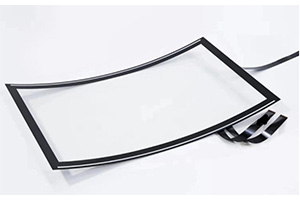
Tempered, AR-coated, chemically strengthened, or AG-treated glass in your specified thickness. Bonded or non-bonded depending on your optical and sealing requirements.
Touch Technology & Interface
PCAP, resistive, or optical touch — with your preferred controller and communication protocol. Interface compatibility is confirmed before tooling begins.
Brightness & Durability
Standard brightness (250–400 nits) to high-brightness outdoor-readable (800–1500 nits). Ruggedised against UV exposure, chemical cleaning agents, and continuous operation.
Appearance & Branding
Custom silk-screen logos, brand-colour bezels, and OEM labelling applied directly in production — so your module looks like your product, not ours.
Have a custom requirement across any of these layers? Let us review your drawings and confirm feasibility.
Submit Your Custom RequirementsOur Engineering Collaboration Process
Working with a factory overseas shouldn't mean communication overhead and missed requirements. Our five-stage process keeps your engineering team in control at every milestone.
Requirement & Drawing Review
We review your mechanical drawings, interface spec, and environmental requirements. Every ambiguity is flagged and clarified before any commitment is made.
Technical Confirmation
Our engineers prepare a formal technical confirmation document — BOM list, interface wiring, structural tolerances, and acceptance criteria. Signed off by both sides before tooling.
Sample Production
First-article samples built from the confirmed BOM. Dimensional, electrical, and functional test reports accompany every sample shipment — no guesswork on your side.
Testing & Approval
Your team validates the samples against the agreed acceptance criteria. Any modification is documented as an Engineering Change Notice — traceability maintained end to end.
Mass Production
Production runs against the locked BOM and approved sample standard. Outgoing QC reports and COA certificates issued with every shipment — ongoing, not just for the first batch.
Engineering Response
Technical questions answered by our engineers — not a sales coordinator. Clear, documented answers within one working day.
Clear Communication
Every meeting, decision, and change is documented. No verbal agreements, no ambiguity. The record protects your project and ours.
Factory-Direct Support
The team you speak with during development is the same team running your production. No intermediaries introducing delay or misinterpretation.

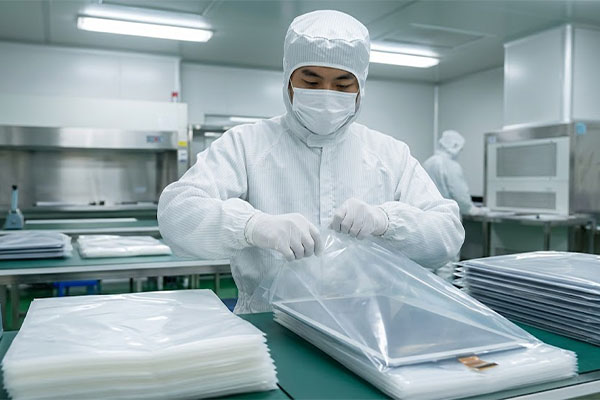
Want to walk through the process for your specific project? Let's start with your drawings.
Start The Engineering ReviewSample Approval Is Not The Finish Line
The most common B2B disappointment in hardware sourcing: a sample that performs perfectly, followed by mass production that doesn't. Here's the root cause — and how we systematically prevent it.
What Most Suppliers Do After Sample Approval
- Substitute approved components with lower-cost alternatives — silently, without notification or re-qualification
- Change suppliers for sub-components when original stock runs out, without updating the BOM record
- Apply inconsistent process parameters across operators and shifts — introducing batch-to-batch variation with no traceability
- Skip outgoing inspection on repeat orders, assuming "it worked before" is sufficient quality control
How We Lock Consistency From Sample To Production
Same BOM Policy
The approved sample BOM is frozen. No component substitution without a formal ECN and customer sign-off.
Process Records
Every production run is documented with operator IDs, equipment calibration records, and process parameter logs.
Batch Inspection
100% electrical test and AQL visual inspection on every production batch — not sampled on first order and skipped thereafter.
Full Traceability
Each shipment carries COA certificates linking finished goods back to raw material lots, production records, and test data.
100%
Electrical test coverage on every production unit
0
Silent BOM substitutions — ever
5yr+
Minimum supply commitment on approved programmes
ECN
Required for any component or process change — no exceptions
Concerned about batch consistency in your current supply chain? Let's show you our QC documentation system.
Request A Quality Process OverviewWhy Factory-Direct Matters More Than Price
The gap between working with a real manufacturer and a trading company isn't just cost — it's control, transparency, and what happens when something goes wrong.
What You Experience With A Trader
- Every message passes through a sales intermediary — engineering answers take days, not hours
- Custom requirements get misinterpreted twice — once between you and the trader, again between the trader and the factory
- Quality issues are disputed, not resolved — the trader has no production authority and limited leverage
- Supply continuity is at the mercy of a third-party factory whose priorities you don't control
What You Get With Yinghong
- Direct access to the engineering team that designed and builds your module — no relay, no delay
- Custom requirements captured in a formal drawing review — confirmed before production starts, not discovered after
- Quality issues resolved at source — we own the process and have the authority to fix it
- Long-term supply managed internally — your programme doesn't depend on a factory we don't control
| Dimension | Trading Company | Yinghong — Factory Direct |
|---|---|---|
| Communication | ||
| Custom Response | ||
| Quality Control | ||
| Long-Term Supply |
Want to verify our factory status before committing? We welcome a direct factory audit or video tour.
Talk To Our Engineering Team DirectlyQuality Control & Long-Term Supply Commitment
A reliable touch display module isn't just built right once — it's built right consistently, across every batch, for the full duration of your product lifecycle.
Quality Inspection Stages
Every Batch Passes Through Four Control Gates
Incoming Material Inspection
All raw materials and sub-components are inspected against approved specs before entering the production line. Non-conforming materials are quarantined and returned.
In-Process Quality Checkpoints
Critical parameters — bonding alignment, backlight uniformity, touch linearity — verified at each production stage. Defects caught and corrected before they compound into final assembly failures.
100% Final Electrical Test
Every finished unit undergoes a full electrical and functional test — display, touch, interface, and backlight. Not sampled. Every unit. A passed test record is assigned to each serial number before packing.
Outgoing COA & Shipment Documentation
Each shipment is accompanied by a Certificate of Analysis, batch inspection report, and packing list — everything needed for incoming acceptance without guesswork.
Long-Term Supply Commitment
Designed Around Your Product Lifecycle, Not Our Inventory
5-Year Minimum Supply Guarantee
Approved programmes receive a documented 5-year supply commitment. Your production roadmap is protected from supplier-side EOL surprises.
Repeat Order Stability
Locked BOM and process records mean your tenth batch is built to the same standard as your first. Repeat orders don't require re-qualification.
Proactive EOL Notification
If a component approaches end-of-life, we notify you with minimum 12 months' advance notice — with an alternative solution ready before the disruption occurs.
Export Experience Support
Export documentation, customs classification, and certification support (CE, FCC, RoHS) included for our key markets — reducing your compliance overhead.
Want to see our inspection documentation or discuss a supply commitment for your programme?
Request Quality DocumentationLong-Term Partnerships Across Industries
These are straightforward accounts from clients who have integrated our Touch Display Modules into their products.
The sample-to-production consistency was what mattered most to us. We've placed four batches over 18 months and the functional test pass rate has stayed above 99.5% each time. We didn't have to re-qualify after the first batch — that alone saved us several weeks on each order cycle.
We needed glove-compatible touch with a specific chemical resistance profile. The drawing review process was thorough — they flagged two tolerance issues we hadn't caught before we committed to tooling. The first article samples met all acceptance criteria, and the COA documentation was exactly what our regulatory team needed.
We've worked with several Chinese display suppliers and the typical problem is the first batch passes, the second batch has issues, and you spend weeks arguing about root cause. That hasn't happened here. The engineering change notification system means we know in advance if anything is going to change — before it reaches production.
Looking for references in your specific industry? We can connect you with a relevant client upon request.
Request An Industry ReferenceFrequently Asked Questions
These are the questions that most often stand between a first conversation and a confident sourcing decision. Answered plainly.
We are a manufacturer. Our production facility is located in Shenzhen, China, and covers display module assembly, optical bonding, and final test. We welcome factory audits — in person or via video call — before any commitment. You'll be speaking with the engineering team that builds your modules, not a middleman.
Yes. Custom development is a core part of our business, not an exception. We work from your mechanical drawings and electrical specs to develop modules to your exact requirements — including non-standard sizes, custom interfaces, specific glass treatments, and OEM branding. A formal drawing review and technical confirmation are conducted before any tooling or sampling begins.
Through four mechanisms: a frozen BOM policy (no component substitutions without a signed ECN), documented process records for every production run, 100% electrical and functional testing on every unit, and COA certificates issued with every shipment. Your fifth batch is produced from the same materials and process parameters as your first.
Yes. We support sample orders and small-batch trial production specifically to allow your engineering team to validate the module before committing to volume. Sample quantities are manufactured from the confirmed production BOM — not a separate "sample version" — so your validation results reflect actual production quality.
We export primarily to North America, Europe, Japan, and Southeast Asia. Our modules can be produced to support CE, FCC, and RoHS certification requirements. For specific certification needs — such as UL, MDD for medical, or E-Mark for automotive — we advise on the testing and documentation pathway during the technical confirmation stage. We don't guarantee certifications we haven't verified for your specific configuration.
Have a question not covered here? Our engineering team responds to direct enquiries within one working day.
Ask A Specific QuestionStart With A Clear Requirement,
Not A Risky Guess
Most procurement problems in touch display modules start before the first order is placed — with assumptions that were never confirmed. Tell us what you need. We'll tell you exactly what's possible, what isn't, and what we'd recommend.
Tell Us About Your Project
We review every enquiry within one working day and respond with a clear technical assessment — no obligation.
We don't share your information with third parties. This form goes directly to our engineering team.