
Resistive Touchscreens for Industrial & Mission-Critical Applications
Factory-direct manufacturing with stable customization and long-term supply
Where Resistive Touchscreens Still Dominate
When your application demands reliability in challenging conditions, resistive technology isn't just an option—it's often the only viable choice.

Gloves Operation Required
Why resistive? Works flawlessly with any glove type—industrial, medical, winter, or protective gear.
Capacitive limitation: Requires special conductive gloves or won't register touch at all, creating workflow interruptions and safety concerns.

Harsh Industrial Environments
Why resistive? Sealed construction resists dust, liquids, and contamination. Functions reliably in extreme temperatures and wet conditions.
Capacitive limitation: Water droplets cause ghost touches and erratic behavior. Dust and moisture compromise touch accuracy.

Medical Equipment with Long Lifecycle
Why resistive? Proven reliability over 10-15 year product lifecycles. Works with medical gloves and can withstand frequent chemical cleaning.
Capacitive limitation: Degradation over time with chemical exposure. Medical gloves create significant usability issues.

Vehicle / Outdoor Control Systems
Why resistive? Operates reliably in rain, snow, and direct sunlight. Pressure-based activation prevents accidental touches from vibration.
Capacitive limitation: Rain renders the screen nearly unusable. Bright sunlight requires high power consumption. Vibration causes false inputs.
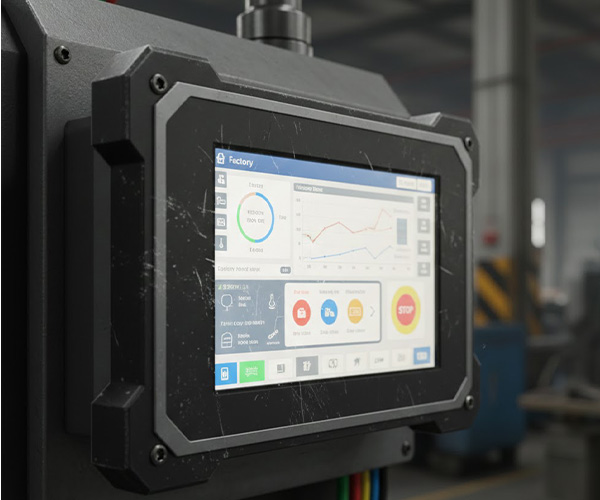
Industrial Machine Control
Factory-floor terminals and CNC control panels demand pressure-based input that stays accurate through oil, dust, and vibration.

Medical & Laboratory Devices
Patient monitors and diagnostic equipment rely on resistive panels that operate through latex gloves and survive repeated chemical sterilization.
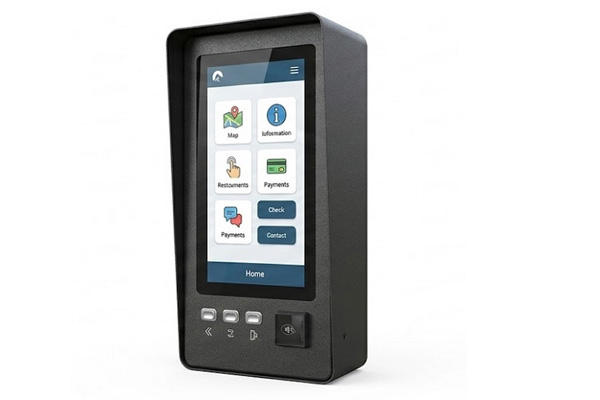
Outdoor Kiosks & Terminals
Self-service kiosks exposed to weather, rain, and direct sunlight maintain reliable performance where capacitive screens consistently fail.
Does your application face these challenges? Let's discuss the right solution.
Discuss Your Application RequirementsMaking the Right Technology Choice
Understanding when resistive touchscreens provide superior value and reliability for your specific application.
Operating Method Advantages
Resistive: Pressure-based activation works with any object—stylus, gloved finger, or tool. Prevents unintended activation from hovering hands or environmental factors.
Environmental Adaptability
Resistive: Sealed construction naturally resists moisture, dust, and contamination. Stable performance across -20°C to +70°C operating range without calibration drift.
Long-Term Stability
Resistive: Mechanical design with predictable wear patterns. Performance remains consistent throughout 5-15 year product lifecycles common in industrial and medical applications.
Cost Controllability
Resistive: Lower initial cost, simpler integration, and reduced power consumption. No need for expensive special gloves or environmental controls.
"For many industrial and medical projects, resistive touchscreens remain the safer and more controllable choice."
Need help evaluating which technology fits your requirements?
Get Technical ConsultationCommon Challenges in Resistive Touchscreen Projects
These issues don't stem from resistive technology itself—they result from supplier capability gaps that create costly problems during production and deployment.
Sample-to-Production Variation
Your samples perform perfectly during testing, but production units show inconsistent touch sensitivity, alignment issues, or interface problems. Different batches behave differently.
Lost-in-Translation Customization
Your technical specifications get misunderstood during communication with traders or inexperienced suppliers. Critical details about layer configuration, bonding method, or interface pinout get implemented incorrectly.
Environmental Testing Failures
The touchscreen wasn't designed with your actual operating conditions in mind. It fails temperature cycling, humidity testing, or chemical resistance requirements late in your qualification process.
High Post-Deployment Rework
Field failures from calibration drift, delamination, or connector issues drive unexpected warranty costs. Your team spends valuable time troubleshooting installation problems that should never occur.
These issues don't come from the technology itself, but from supplier capability. The right manufacturing partner eliminates these risks before they become your problems.
Protect your project timeline and budget from these preventable failures.
Discuss Risk Mitigation StrategiesHow We Engineer Complete Resistive Touch Solutions
We don't just sell touchscreen components—we design complete touch solutions matched to your application requirements and operating environment.

Structure Design
We engineer the complete layer stack—from substrate selection to protective overlays—based on your mechanical integration requirements and durability needs.
- Glass or film substrate selection matched to impact resistance needs
- Optimal layer thickness for your touch pressure requirements
- Edge sealing designed for your environmental exposure

Touch Layer Matching
ITO coating specifications, linearity tolerances, and activation force are tuned to your specific application—from precise stylus input to gloved operation.
- Activation force calibrated for your user interface requirements
- Linearity specifications matched to your display resolution
- Lifetime testing under your expected usage patterns

Interface Compatibility
Controller selection, connector type, and cable routing are configured to integrate seamlessly with your existing hardware design and enclosure constraints.
- Controller matched to your processor interface requirements
- Custom FPC design for your PCB layout and connector location
- Driver software support for your operating system

Environmental Adaptation
Material selection, sealing methods, and coating treatments are specified to withstand your documented operating temperature range, humidity exposure, and chemical contact.
- Temperature compensation for your operating range
- Chemical-resistant coatings for cleaning agent compatibility
- UV-resistant materials for outdoor applications
What you receive: A complete engineered solution, not just a catalog component. Every specification exists for a reason tied to your application success.
Let's discuss how we can engineer the optimal solution for your specific requirements.
Start Technical Discussion
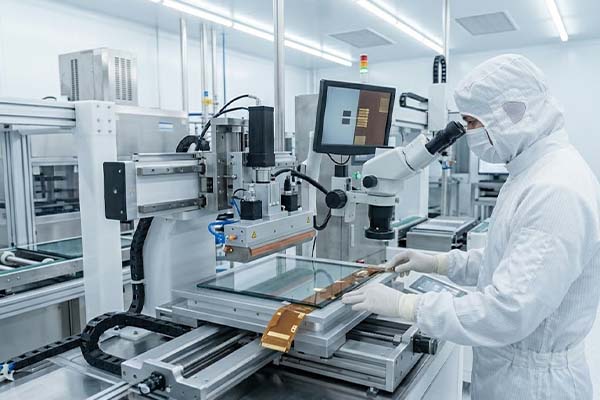
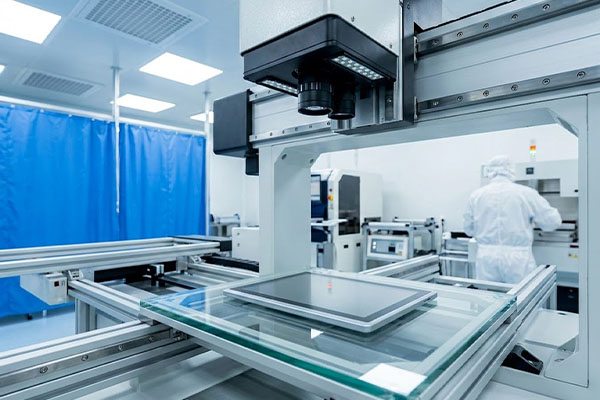
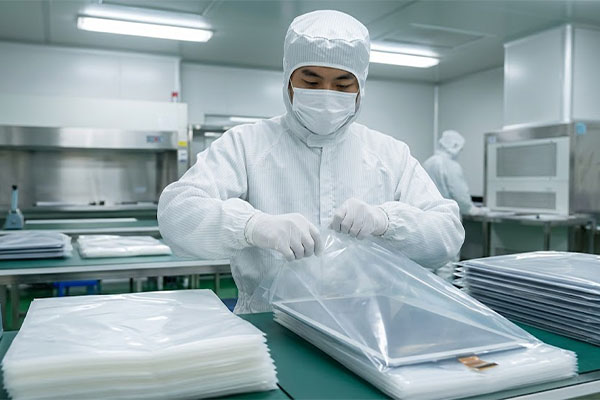

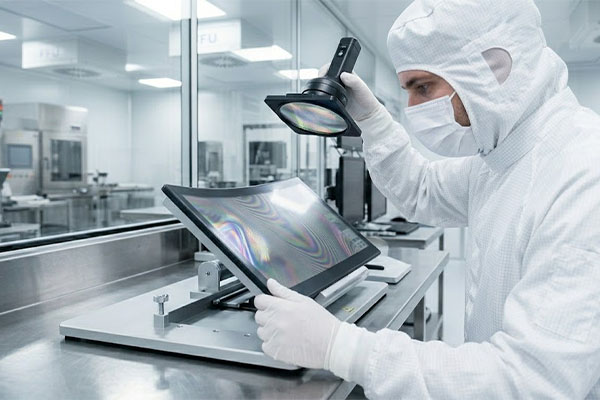
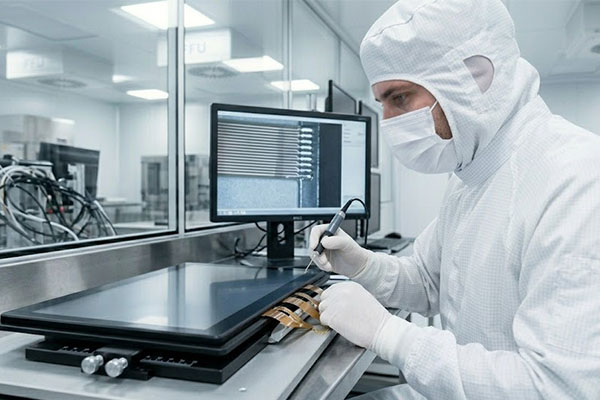
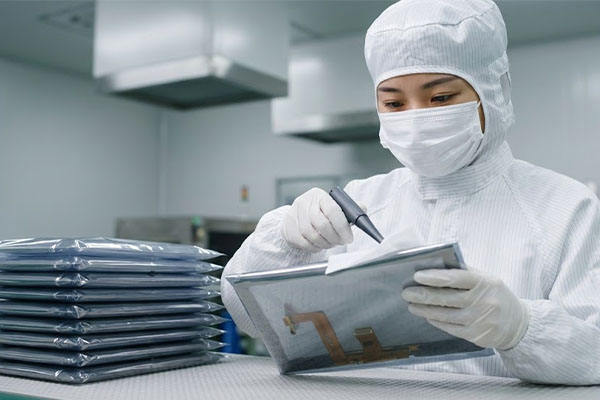
Understanding Resistive Touchscreen Architecture
The fundamental structure determines long-term reliability. Here's what matters most in resistive touchscreen design.
How It Works
Two conductive layers separated by tiny spacer dots. When you apply pressure, the layers make contact at that point, creating a measurable voltage change that determines the touch coordinates.
Layer Uniformity
The ITO (Indium Tin Oxide) coating resistance must be uniform across the entire active area. Variations above 5% create dead zones, ghost touches, or calibration drift over the screen's lifetime.
Edge Sealing Integrity
The perimeter seal prevents moisture, dust, and contaminants from entering between the conductive layers. Seal failure is the leading cause of field returns in industrial applications.
Where Problems Usually Originate
Inconsistent spacer dot placement causes touch sensitivity variation
Poor FPC attachment leads to intermittent connection failures
Inadequate adhesive selection results in delamination under thermal stress
Want to understand how structure impacts your specific application requirements?
Request Technical Deep DiveModular Customization That Actually Scales
We engineer touchscreens to match your exact specifications—and more importantly, we replicate those specifications consistently across thousands of units.

Size & Structure
Custom dimensions matched to your display active area and bezel design. We accommodate standard 4:3, 16:9 formats or completely custom aspect ratios.

Cover Lens Options
Protective overlays engineered for your mechanical and optical requirements—from basic protection to military-grade impact resistance.
Interface Matching
FPC design, connector type, and controller selection configured to integrate seamlessly with your mainboard and software architecture.

Appearance Branding
Custom printing, logo placement, and bezel design that reinforces your product identity while maintaining touch functionality.

Environmental Tuning
Materials and assembly methods selected specifically for your documented temperature range, humidity exposure, and chemical contact scenarios.

Application Optimization
Touch response parameters configured for your specific use case—whether high-precision medical input or rugged industrial operation with heavy gloves.
The Real Question Isn't "Can You Do It?"
The question is: "Can you replicate it with zero deviation across 10,000 units?"
That's where most suppliers fail. That's where we excel.
Ready to discuss your specific customization requirements?
Submit Custom Specification Inquiry"Sample perfection is worthless if you can't replicate it in production."
Batch consistency isn't a feature—it's the foundation of supplier qualification.
Sample-to-Production Consistency Control
Your samples passed all tests. Now the real challenge begins—ensuring every production unit delivers identical performance.

Locked BOM
After sample approval, your Bill of Materials is frozen in our system. No material substitutions, no alternative suppliers, no "equivalent" components without written authorization.
- ITO film from the same batch supplier used in samples
- Adhesive specifications locked to lot-tested materials
- Controller IC sourced from approved vendor only
- Documentation links every material to your approval record

Replicated Process
Your samples establish the manufacturing baseline. Production follows the exact same process sequence, equipment settings, and cure times—no shortcuts or "optimization."
- Same lamination pressure and temperature profile
- Identical UV cure duration and intensity
- FPC bonding parameters locked to sample settings
- Assembly jigs calibrated to sample unit measurements

Matching QC Standards
Every production unit undergoes the same test sequence that validated your samples. Units that don't match sample performance within tolerance don't ship.
- Touch response tested at identical force points
- Linearity measured against sample baseline
- Visual inspection to sample appearance standards
- Electrical parameters must fall within 2% of sample

Controlled Supply Chain
We manufacture in-house rather than sourcing from sub-contractors. This eliminates the silent material substitutions that create batch-to-batch variation.
- ITO coating applied in our climate-controlled facility
- Lamination and sealing on dedicated production lines
- Testing performed by trained technicians, not outsourced
- Traceability from raw materials through final QC
Our Performance Commitment
If production units don't match your approved samples in electrical performance, touch response, and appearance—we don't ship them. Period.
Eliminate production variation risk from your project plan.
Request Consistency DocumentationQuality Control: Preventing Problems,
Not Just Finding Them
We don't pile up certification logos—we explain exactly how our QC process
prevents the failures that cost you time and money.
Incoming Material Inspection
Every material batch is tested before entering production. ITO resistance uniformity, adhesive cure rate, and glass optical clarity must meet specification—or the entire batch is rejected.
In-Process Checkpoints
Critical parameters are verified at each assembly stage—not just at final inspection. This catches deviations early when they're still correctable, not after value has been added.
100% Functional Testing
Every unit undergoes electrical testing, touch response verification, and visual inspection. Statistical sampling isn't sufficient—defects that escape to your receiving dock cost far more than testing time.
Key Detection Points That Eliminate Common Failures

ITO Uniformity Check
Prevents dead zones and calibration drift by ensuring coating resistance varies less than 5% across the active area.

FPC Connection Test
Detects intermittent connection issues before assembly by testing flex circuit bonding under thermal stress.

Seal Integrity Verification
Humidity chamber testing catches seal defects that would cause field failures months after deployment.

Dimensional Accuracy
Active area alignment and overall dimensions verified to ±0.1mm—prevents integration issues at your assembly.

Linearity Mapping
25-point grid test confirms touch accuracy across the entire screen, not just center zones.

Temperature Cycling
Sample units from each production batch tested through your specified temperature range to catch adhesive incompatibility.
"We don't test to make claims. We test to prevent your field failures, reduce your incoming inspection burden, and protect your production schedule."
Want to review our QC process documentation for your application?
Request Quality Process DetailsWhy Factory-Direct Partnership Is Non-Negotiable
Working through traders adds cost without adding value. More critically, it introduces risks that can derail your entire project.
The Hidden Costs of Intermediaries
What looks like convenience creates problems you'll pay for later.
- No control over which factory actually manufactures your order—could change between samples and production
- Technical questions filtered through non-engineers who don't understand your application
- Custom specifications get "interpreted" and simplified without your knowledge to reduce their costs
- Quality issues require negotiating with the trader, who then negotiates with the factory—adding weeks to resolution
- No direct access to production records or process documentation when your team needs troubleshooting data
- Material substitutions made silently to preserve trader margins—you discover this during incoming inspection
The Controllability Advantage
Direct access to the people who actually make your products.
- Your inquiry goes directly to the engineers who will design and manufacture your touchscreen
- Custom specifications are implemented exactly as documented—no translation errors or "value engineering"
- Production records and process data available immediately when you need to analyze field issues
- Quality problems trigger immediate corrective action—no finger-pointing between trader and factory
- Material changes require your written approval—no surprises during receiving inspection or field deployment
- Long-term supply guaranteed by the actual manufacturer—not dependent on trader's business relationships
What Factory-Direct Means for Your Project Timeline
Technical questions answered in hours, not days—because you're talking to the actual engineers
Design changes implemented immediately without coordination overhead
Quality issues resolved at the source—no time wasted managing trader-factory communication
Production capacity visibility lets you plan ramps accurately
Our Position Is Clear
We are the factory. We design it, we build it, we test it, we ship it. No intermediaries. No excuses. No confusion about who's responsible when you need support.
Ready to work directly with the people who will manufacture your touchscreens?
Connect with Factory Engineering TeamFlexible Partnership Models for Different Business Needs
Whether you're developing a new product or maintaining long-term supply, we structure our approach to match your business objectives and project timeline.
New Product Development & Small Batch Production
You're developing a new product, validating market fit, or need specialized touchscreens for limited production runs. Speed and technical accuracy matter more than economies of scale.
What We Provide:
- Rapid prototyping with 2-3 design iterations included
- Engineering support during your integration and testing phases
- Flexible MOQ as low as 100 units for initial production
- Design documentation that enables future scaling
- Technical consulting on touch technology selection
Our Approach:
We treat your prototype with production-level attention because we know today's 500-unit pilot becomes tomorrow's 50,000-unit annual supply. Our engineering involvement upfront prevents costly redesigns when you scale.
Volume Production & Multi-Year Programs
Your product is established, you need consistent supply at scale, and supplier reliability directly impacts your production schedule and customer commitments.
What We Provide:
- Dedicated production capacity with guaranteed lead times
- Component lifecycle management and obsolescence planning
- Volume pricing with annual commitment structure
- Quarterly business reviews and demand planning sessions
- Priority access during material shortage periods
Our Approach:
Long-term relationships require long-term thinking. We invest in understanding your business cycles, maintain buffer inventory for your peak seasons, and proactively communicate any supply chain developments that could affect your production.
We work with both models—but our methods differ based on your stage and needs. The key is matching our resources to your timeline and risk tolerance.
Let's discuss which partnership model aligns with your current objectives.
Explore Partnership OptionsFactory Credentials: Stability Over Scale
We don't compete on being the biggest—we compete on being the most reliable manufacturing partner for mission-critical applications.
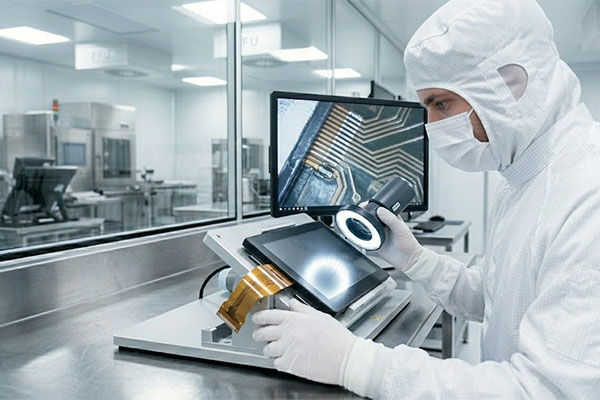
Manufacturing Capabilities
Our facility in Dongguan specializes exclusively in touch panel manufacturing—resistive, capacitive, and hybrid solutions. We're not a general electronics contractor; this is our core expertise.
- 4,500 sqm climate-controlled production area
- Class 10,000 cleanroom for ITO coating
- 15 years specializing in touch panel technology
- In-house R&D team with 8 touch technology engineers
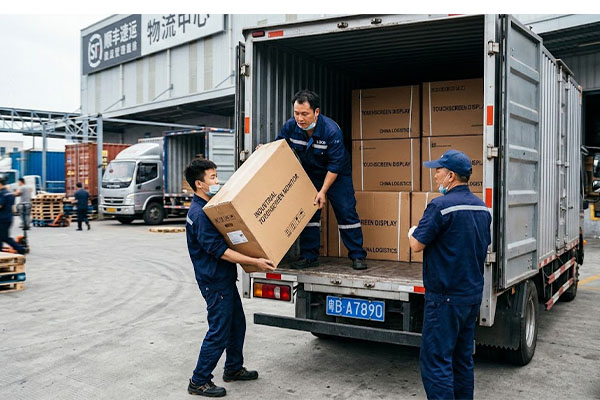
Global Export Experience
We've shipped touchscreens to 43 countries across industrial, medical, automotive, and marine applications. Export isn't a side business—it's our primary focus.
- North America: 40% of annual revenue
- Europe: 35% of annual revenue
- Asia-Pacific: 20% of annual revenue
- Established logistics partners for reliable international shipping

Customer Retention
Our average customer relationship spans 6.5 years. Companies don't maintain supplier relationships that long unless quality and communication consistently meet expectations.
- 78% of customers remain active after 3+ years
- Medical device manufacturers: 5-12 year partnerships
- Industrial equipment OEMs: 4-9 year relationships
- Repeat orders from 85% of project-based customers
How Customers Find Us
We maintain visibility through professional B2B channels where serious buyers conduct supplier research—not consumer marketplaces.
- Verified supplier on Alibaba since 2012 (Gold tier)
- Regular exhibitor at Touch Taiwan, Electronica, MEDICA
- Direct referrals from existing customers: 30% of new business
- Technical white papers and application notes published quarterly
Certifications & Standards
Our products and processes are certified to the standards your markets require, ensuring smooth import compliance and customer acceptance.
- ISO 9001:2015 quality management system
- CE and RoHS compliance for European markets
- FCC certification support for North American customers
- UL recognition available for medical-grade components
Long-Term Supply Stability
We understand that supply chain disruptions cost more than the parts themselves. Our inventory and production planning ensure your supply continuity.
- Safety stock program available for high-volume customers
- Minimum 5-year production lifecycle commitment per model
- Raw material buffer stock reduces lead time volatility
- Dedicated account management for long-term partners
Verification Available Upon Request

Business license and export authorization documentation

Factory audit reports and facility photos with timestamp verification
Reference customers willing to discuss their experience (with permission)

Virtual or in-person factory tours arranged for serious inquiries
Need additional verification before proceeding? We understand and accommodate due diligence.
Request Factory DocumentationFrequently Asked Questions
Clear answers to the questions that determine whether we're the right manufacturing partner for your project.
We are a manufacturing factory located in Dongguan, China, specializing exclusively in touch panel production. We own our production equipment, employ our technicians, and manufacture products in-house. We can provide business registration, export licenses, and facility verification upon request. Unlike trading companies, when you contact us, you speak directly with our engineering and production teams—not sales intermediaries who then relay messages to an unknown factory.
Custom design is our primary business model—approximately 75% of our production involves customized specifications. We engineer touchscreens from your requirements: custom dimensions, interface configurations, environmental adaptations, and appearance specifications. Our capability isn't just "can we make it" but "can we replicate it consistently across thousands of units." We provide detailed engineering drawings, material specifications, and test protocols for your approval before production begins.
After sample approval, we implement four consistency controls: (1) Locked BOM—no material substitutions without written authorization, (2) Process replication—production uses identical equipment settings and procedures that created your samples, (3) Matching QC standards—every production unit tested against sample performance baseline, (4) Controlled supply chain—in-house manufacturing eliminates silent material changes from subcontractors. We maintain detailed production records that trace materials and process parameters for every batch, enabling rapid investigation if any deviation occurs.
Yes, we encourage prototype development before volume commitment. Our typical process: (1) Submit your specifications and application requirements, (2) We provide engineering feasibility assessment and quote, (3) Produce 5-10 prototype samples for your testing (sample fee applies, credited toward production orders), (4) You evaluate fit, performance, and integration, (5) Design adjustments if needed, then production approval. Sample lead time is typically 2-3 weeks depending on customization complexity. This protects both parties—you verify the solution works before scaling, we ensure specifications are manufacturable before production investment.
We export to 43 countries with concentration in North America (United States, Canada, Mexico), Europe (Germany, UK, France, Netherlands, Italy, Poland), and Asia-Pacific (Japan, South Korea, Australia, Singapore). Our products are integrated into industrial equipment, medical devices, marine electronics, and automotive applications globally. We maintain established relationships with international freight forwarders for reliable shipping, handle export documentation, and can work with your preferred logistics provider. For regulated markets, we can support your certification processes with necessary technical documentation and test reports.
Have additional questions specific to your application?
Ask Your Specific QuestionsReady to Move Forward?
Let's Discuss Your Resistive Touchscreen
Requirements
Schedule a technical consultation with our engineering team. We'll review your application, confirm feasibility, and identify potential risks before you commit to anything.
Discuss Your Application Requirements
Confirm Technical Feasibility

Reduce Project Risk
Get Started with Your Project
Provide details about your touchscreen requirements. Our engineering team will review and respond within 24 hours with initial feasibility assessment.