
Outdoor Laminated
Touchscreen Solution
Engineered for sunlight, weather, vibration, and long-term outdoor deployment — fully customizable, factory-direct, with a structure designed around your real application requirements.
What Is an Outdoor Laminated Touchscreen — and Why It's Different
A standard industrial touchscreen is built for controlled environments: stable light, stable temperature, no rain. When you put it outdoors, the system starts to fail — not because the screen broke, but because it was never designed for that operating envelope.
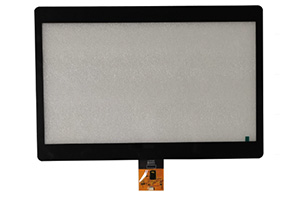
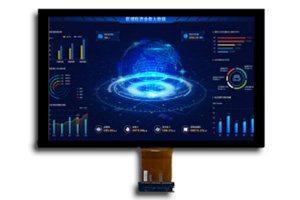
An outdoor laminated touchscreen solves this at the structural level. Every layer — cover glass, touch sensor, optical bonding, and display panel — is selected and bonded together as a unified system, eliminating the air gap that causes condensation, internal reflection, and mechanical delamination over time.
The result isn't just better visibility. It's a screen that behaves predictably at 60°C ambient, stays readable in 80,000 lux direct sunlight, and holds up through repeated thermal cycles without the bonding layer failing.
- No air gap = no condensation, no haze under sunlight — optical bonding fills the space between glass and display with a refractive-index-matched adhesive.
- Structural integrity under vibration and impact — bonded layers move as one unit, eliminating mechanical stress at the interface over thousands of operational hours.
- Wide-temperature bonding adhesives — formulated for outdoor thermal cycling, not just storage range compliance.
All layers are selected and bonded as a unified system — not assembled separately. This is the fundamental difference from a standard industrial screen.
Four Ways Outdoor Deployments Destroy Standard Screens
These aren't edge cases. They're the baseline operating conditions every outdoor screen faces — and where most field failures start. If your current specification doesn't address all four, the system will underperform or fail.
Readability Fails
Ambient outdoor light reaches 80,000–100,000 lux in full sun. A 250-nit indoor screen becomes completely unreadable. Beyond brightness, the air gap inside an unbonded screen reflects ambient light back at the viewer — compounding the problem at every angle.
Structural Failure Risk
Outdoor equipment cycles between –20°C nights and 65°C+ panel surfaces in summer. Standard bonding adhesives delaminate under repeated expansion and contraction. Humidity drives moisture into unbonded air gaps, causing permanent haze and touchscreen controller corrosion.
Reliability Collapses
Water ingress doesn't only damage electronics — it causes touch sensor short-circuits, false touch events during rain, and corrosion in the bonding interface. Dust accumulation between unbonded layers creates permanent optical contamination that cannot be reversed without full disassembly.
Batch Inconsistency
Outdoor product lines run for 3–7 years. A supplier who can produce a good sample but cannot hold consistent optical, electrical, or mechanical parameters across production batches creates field reliability problems. Replacement units that don't match original specs create warranty and support nightmares.
Why Lamination Isn't Optional for Outdoor Touchscreens
Every outdoor failure mode — sunlight washout, delamination, condensation haze, false touch — shares a common root cause: the air gap inside an unbonded assembly. Removing it doesn't just improve performance. It eliminates an entire class of failure mechanisms.
What Changes When You Switch to a Laminated Structure
The performance gap between bonded and unbonded assemblies is not incremental. It's the difference between a product that passes field validation and one that generates warranty claims at month six.
Typical Applications for Outdoor Laminated Touchscreens
Each outdoor deployment scenario brings a different set of environmental stressors, structural integration requirements, and long-term supply expectations. The laminated touchscreen approach is designed to address all of them without compromise.
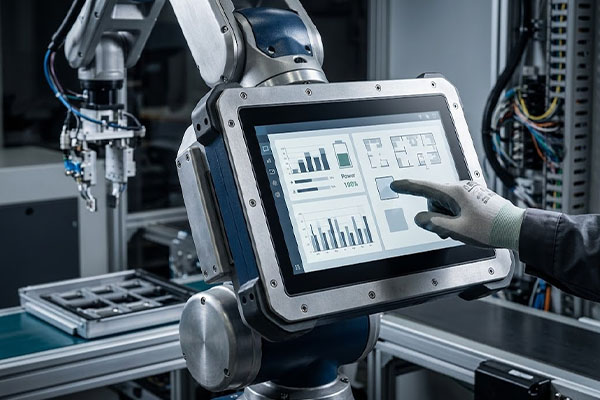
Outdoor Industrial Equipment
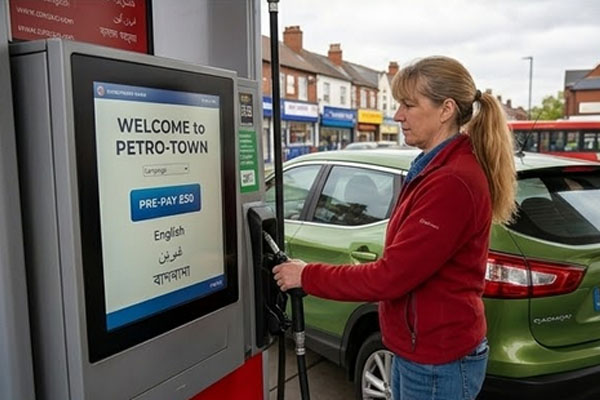
Charging Stations & Kiosks
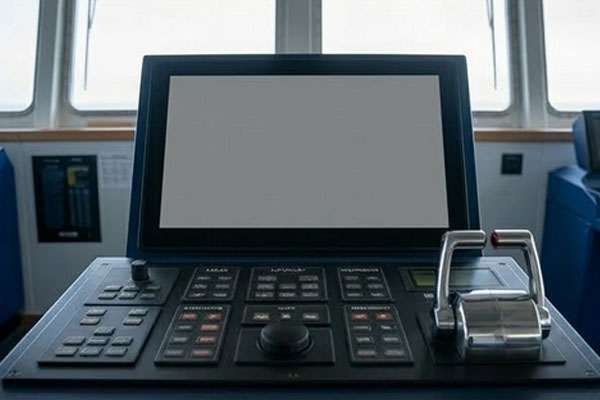
Marine & Vehicle Systems
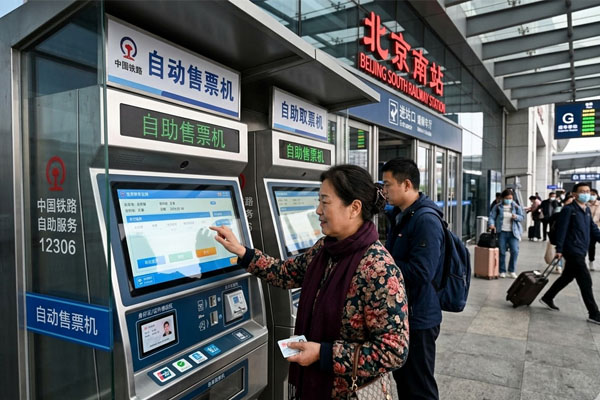
Outdoor Control Panels
We're a Manufacturer, Not a Middleman.
In the display component supply chain, the distinction between a factory and a trader isn't always obvious from the surface — until something goes wrong. The difference determines whether you can get a direct answer about your specification, whether someone actually controls the process, and whether the price you're paying reflects the cost of production or the cost of a margin chain.
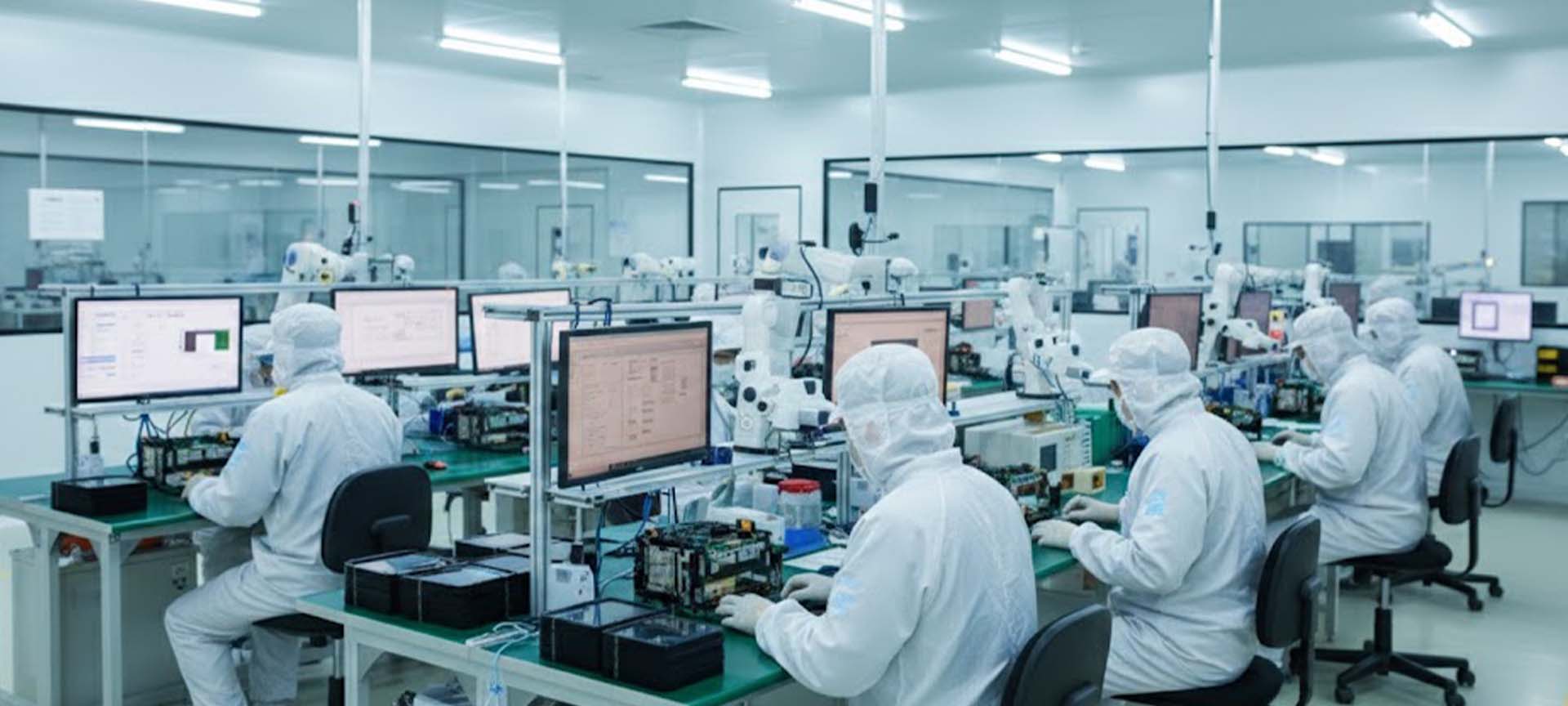
We manufacture optical bonding assemblies in-house. The engineering team that reviews your project specification is the same team that designs the process used to build it. There is no intermediate supplier relationship to manage, no hidden subcontract for the bonding step, and no communication gap between your requirement and the production floor.
-
Factory-Direct Manufacturing
Optical bonding, cover glass processing, assembly, and electrical testing are all performed in our own facility. You are buying from the entity that controls the process — not from someone who outsources it and marks it up.
-
No Middle Layer
When you ask a technical question, you get an answer from the engineering team, not a forwarded email that takes three days to route through a trading company to a factory and back. This speed and directness matters most when you're resolving a field issue or adjusting a specification mid-project.
-
Full Process Ownership
We control the process from incoming component inspection through bonding, assembly, electrical testing, and outgoing QC. Any deviation at any stage is detected internally — not discovered by your incoming inspection team or, worse, reported from the field after installation.
We're a Strong Fit for These Customer Profiles
Not every procurement situation calls for the same type of supplier. Being explicit about where we create the most value — and where we don't — saves both parties time and leads to better long-term relationships.
Outdoor Equipment Manufacturers
Companies building products that operate in real outdoor conditions — industrial machinery, EV charging infrastructure, utility control panels, construction equipment — where the display's long-term reliability is a product reliability issue, not just a component specification.
- Product deployed in direct sun, rain, or wide-temperature environments
- Display specification is custom or semi-custom for the enclosure
- Long-term supply continuity is a product line requirement
- Field failure of the display has downstream warranty or safety consequences
System Integrators
Integrators building complete outdoor systems — kiosks, information terminals, charging stations, wayfinding installations — who specify display components to fit a broader system architecture, and need a supplier who can respond to technical questions at the system level, not just the component level.
- Multiple outdoor projects running in parallel or sequentially
- Need engineering support at the specification stage, not just a price
- Working to tight mechanical and interface constraints defined by the system design
- End client has visibility into component specification and quality
Brands with Long-Term Product Lines
Brands whose outdoor products have multi-year production cycles and require consistent display supply across that period — where the ability to reorder a display that matches the original validated sample is more commercially important than the lowest possible unit price.
- Product line expected to run 3–8 years with ongoing production
- Replacement unit consistency is a customer-facing quality requirement
- Supply chain stability is a risk management priority for the procurement team
- Engineering documentation and component traceability are part of the supplier requirement
Where We May Not Be the Right Fit
If you need standard off-the-shelf catalogue displays with no customization and lowest possible unit price — there are better-suited suppliers for that. Our value is in engineering-supported custom solutions for demanding outdoor environments, not in competing on commodity pricing for standard products. If you're unsure which category applies to your project, start a conversation and we'll tell you honestly.
From First Contact to Long-Term Supply: How We Work Together
A supply relationship for outdoor display components typically runs 3–7 years. Here is the full arc of how we structure that relationship — from the first engineering conversation to the ongoing production supply that keeps your product line running.
You share your application context, environmental requirements, mechanical constraints, and target timeline. We accept drawings, datasheets, reference samples, or plain written descriptions — whatever you have at this stage.
Response within 1–2 business daysWe assess feasibility, propose a structural approach, and identify any open questions or constraints. You receive a written technical summary — specific enough to share with your internal engineering or procurement teams for review and approval.
3–5 business daysOnce the specification is confirmed and agreed, we build the sample to the documented parameters. Sample quantity, lead time, and cost are all confirmed in writing before build begins. QC measurements are documented and included with the sample shipment.
2–5 weeks from specification sign-offYou test the sample in your actual environment, integration rig, or internal validation process. We discuss results, address any feedback, and revise the specification if needed. This stage repeats until you are ready to sign off on the sample as the production reference.
At your pace — we hold the sample spec openProduction is locked to the validated sample parameters. Each batch is checked against the agreed acceptance specification and shipped with QC documentation. Batch traceability is maintained throughout the supply relationship for component-level accountability.
Lead time confirmed per order — typically 3–6 weeksWe actively manage component supply continuity for production products — monitoring EOL risk, maintaining buffer stock for critical components, and providing 6–12 months advance notice on any supply change that could affect your product. Your product line's supply stability is an ongoing responsibility, not a one-time transaction.
Annual supply review included for all active productsBefore You Reach Out: Common Questions Answered
These are the questions that come up in almost every first technical conversation. If yours isn't here, the fastest way to get an answer is to ask directly.
For most outdoor applications, lamination is not a premium option — it's the minimum viable approach. The air gap in a non-laminated assembly causes three failure modes that are extremely difficult to manage in outdoor environments: internal reflection that makes the display unreadable in bright sun, condensation haze from moisture entering the air gap, and delamination over thermal cycling.
The exception is truly sheltered outdoor use — a display in a weatherproof enclosure with temperature control, away from direct sun exposure. If your application genuinely fits that profile, we'll tell you honestly whether lamination adds value in your specific case. If you're deploying in anything resembling real outdoor conditions, it is required.
Drawing-based customization is our standard working method. We don't have a fixed product catalog in the traditional sense — we have a set of manufacturing capabilities and a component sourcing base, and we configure each project to your specification.
What we need from you: a 2D mechanical drawing or DXF for the cover glass outline, a description of the operating environment, your target display size and brightness requirement, and an indication of your expected volume and timeline. We'll assess feasibility and propose a solution from there.
When you sign off on the sample, we document the full production specification: component BOM (including exact part numbers), process parameters, and acceptance measurement values for brightness, uniformity, color point, touch response, and any mechanical dimensions you've verified.
Every production lot is measured against this specification before shipment. The measurement data is included in the QC documentation. If any batch falls outside the agreed acceptance range, it is flagged internally — not shipped and resolved later. Component changes require written approval before they are implemented.
We are a manufacturer. Optical bonding, cover glass processing, assembly, and testing are performed in our own facility. The engineering team you communicate with is the team responsible for the process — there is no subcontract layer for the core production steps.
You can verify this in the most direct way: request a facility visit or a live factory walkthrough via video call. We'll show you the production line, the bonding equipment, and the QC area. If a supplier declines that request, that tells you something.
Yes. Almost every outdoor project should go through a sample and pilot validation stage before committing to production quantities. We build samples from one unit and support pilot runs from 20–50 units specifically to support engineering validation and field testing before your product launches.
We do not require volume commitments before sampling. We ask for a clear application brief and a genuine intent to evaluate the project seriously. The development investment on both sides is real — we'll commit to it when the project parameters and timeline make sense.
End-of-life component risk is a real challenge in long-running outdoor product lines, particularly for display panels with limited second-source availability. Our process for active production products includes annual supply chain reviews that identify components approaching EOL status.
When an EOL risk is identified, we notify you 6–12 months in advance — giving you time to make a planned last-time buy, qualify a replacement, or schedule a product update rather than being forced into an emergency response. For critical components, we maintain buffer stock as a bridge. We will never substitute a component without written approval from your side.
Built for Real Outdoor Projects. Talk to Our Engineering Team.
If you have a display requirement for an outdoor application — whether you're at early evaluation stage or ready to move to sampling — the most useful next step is a direct engineering conversation. Not a quote form. Not a catalog. A conversation about what you're actually building and what the display needs to do.
We respond to every serious project inquiry within 1–2 business days. No auto-reply, no sales script.
No Middleman
From Spec Confirmation
Configuration
for Active Products