
OCA vs LOCA bonding is a comparison of proposed material and process routes, not a contest with one universal winner. In this guide, OCA means an optically clear adhesive film and LOCA means a liquid optical adhesive system; confirm the supplier's terminology. Geometry, surfaces, equipment, verification and loss ownership determine the useful comparison. Ask both suppliers to solve the same accepted-output problem before comparing material form, nominal fees or attractive demonstration samples.
Contents: 1 · 2 · 3 · 4 · 5 · 6 · 7 · 8 · 9 · 10
1. Are the two proposals solving the same joining problem?
Start with identical surfaces, viewing area and supplied-component scope. Also, identify remaining gaps and excluded work. A film joining only the cover and sensor is not directly comparable with a liquid route that also joins the LCD. Normalize the stack before deciding which process appears simpler or produces a better front photograph.
Different scope can masquerade as a material advantage. A lower fee may cover fewer interfaces and less inspection.
Buyer checklist for OCA vs LOCA bonding
Normalize the optical joint. Draw both proposals against one controlled stack section. Reconcile parts and exclusions with purchasing, then compare only routes that address the same intended joining boundary and acceptance requirements.
- Joined surfaces
- Viewing region
- Supplied parts
- Excluded work
| Decision point | Requirement to retain | Related check |
|---|---|---|
| Failure boundary | Different scope can masquerade as a material advantage. A lower fee may cover fewer interfaces and less inspection. | Supplied parts |
| Approval action | Draw both proposals against one controlled stack section. Reconcile parts and exclusions with purchasing, then compare only routes that address the same intended joining boundary and acceptance requirements. | Excluded work |
Review the capacitive product context if glass-front or gesture operation enters the specification. capacitive touchscreen options.
2. How does geometry influence the choice?
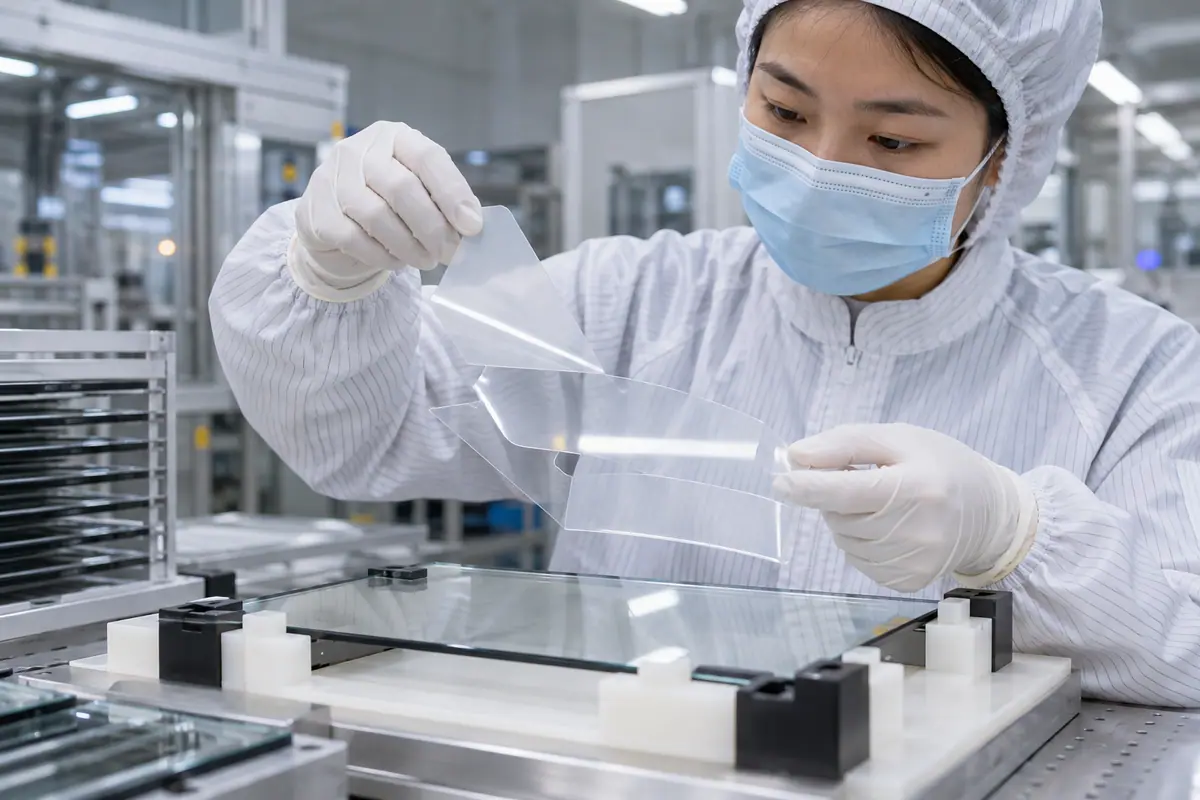
Film routes need an appropriate converted shape and contact strategy. Liquid routes need appropriate flow and containment. Meanwhile, borders, openings and local surface features affect both. Neither form removes the need to evaluate geometry. Ask each process owner to identify the construction features that constrain the proposal and support the selected material choice.
A route demonstrated on flat coupons may not represent the real border. Ignoring openings can cause edge defects or contamination of excluded areas.
Which evidence should accompany the sample?
Compare geometry-specific constraints. Share the actual geometry and surface references with both suppliers. Review their route-specific constraints, then verify dimensions and optical output on representative assemblies rather than selecting from generic material-form descriptions.
- Border profile
- Required openings
- Surface features
- Representative build
| Decision point | Requirement to retain | Related check |
|---|---|---|
| Failure boundary | A route demonstrated on flat coupons may not represent the real border. Ignoring openings can cause edge defects or contamination of excluded areas. | Surface features |
| Approval action | Share the actual geometry and surface references with both suppliers. Review their route-specific constraints, then verify dimensions and optical output on representative assemblies rather than selecting from generic material-form descriptions. | Representative build |
Use the pressure-input product context when a suitable blunt stylus or glove is required. resistive touchscreen options.
3. What material properties matter beyond form?
Exact chemistry, optical properties, thickness and mechanical behavior vary within film and liquid families. Also, compatibility depends on the actual surfaces and exposure conditions. A product-specific datasheet can support selection within its scope. It cannot prove that every OCA film or LOCA liquid has the same behavior or qualifies the entire display.
Acronym-level rankings conceal meaningful product differences. A material specimen result may be misapplied to a complete mounted assembly.
What should the test owner record?
Compare identified materials. Request exact products and applicable technical guidance for both routes. Compare relevant evidence against the project requirements, then document remaining stack-level trials without transferring unrelated product metrics into universal claims.
- Product reference
- Optical evidence
- Mechanical behavior
- Compatibility scope
| Decision point | Requirement to retain | Related check |
|---|---|---|
| Failure boundary | Acronym-level rankings conceal meaningful product differences. A material specimen result may be misapplied to a complete mounted assembly. | Mechanical behavior |
| Approval action | Request exact products and applicable technical guidance for both routes. Compare relevant evidence against the project requirements, then document remaining stack-level trials without transferring unrelated product metrics into universal claims. | Compatibility scope |
A bonding proposal changes the assembled optical and mechanical interface; review its construction context. fully laminated touchscreen construction.
Primary reference: Henkel LOCTITE AD 8650 product-specific technical data. Verify its applicable scope against the proposed build.
4. Which handling risks differ?
Film processing introduces release-liner and exposed-film handling. Liquid processing introduces dispensing and distribution control. Meanwhile, both depend on incoming condition, preparation and surface protection. Review the actual part path and operator controls. A cleanroom photograph or automated machine does not establish that either route eliminates contamination or handling damage.
A route-specific checklist can overlook a shared preparation failure. Automation can repeat an incorrect setup as consistently as a correct one.
Which installed detail needs approval?
Follow each part through processing. Observe representative handling for each proposed route. Review preparation, setup and inspection records, then compare observed pilot defects and corrective actions rather than assuming one material form is inherently defect-free.
- Preparation method
- Film handling
- Liquid dispensing
- Pilot defects
| Decision point | Requirement to retain | Related check |
|---|---|---|
| Failure boundary | A route-specific checklist can overlook a shared preparation failure. Automation can repeat an incorrect setup as consistently as a correct one. | Liquid dispensing |
| Approval action | Observe representative handling for each proposed route. Review preparation, setup and inspection records, then compare observed pilot defects and corrective actions rather than assuming one material form is inherently defect-free. | Pilot defects |
For a machine installation, relate these checks to mounted-console and operator conditions. industrial control touchscreen context.
5. What verification is unique to the selected process?
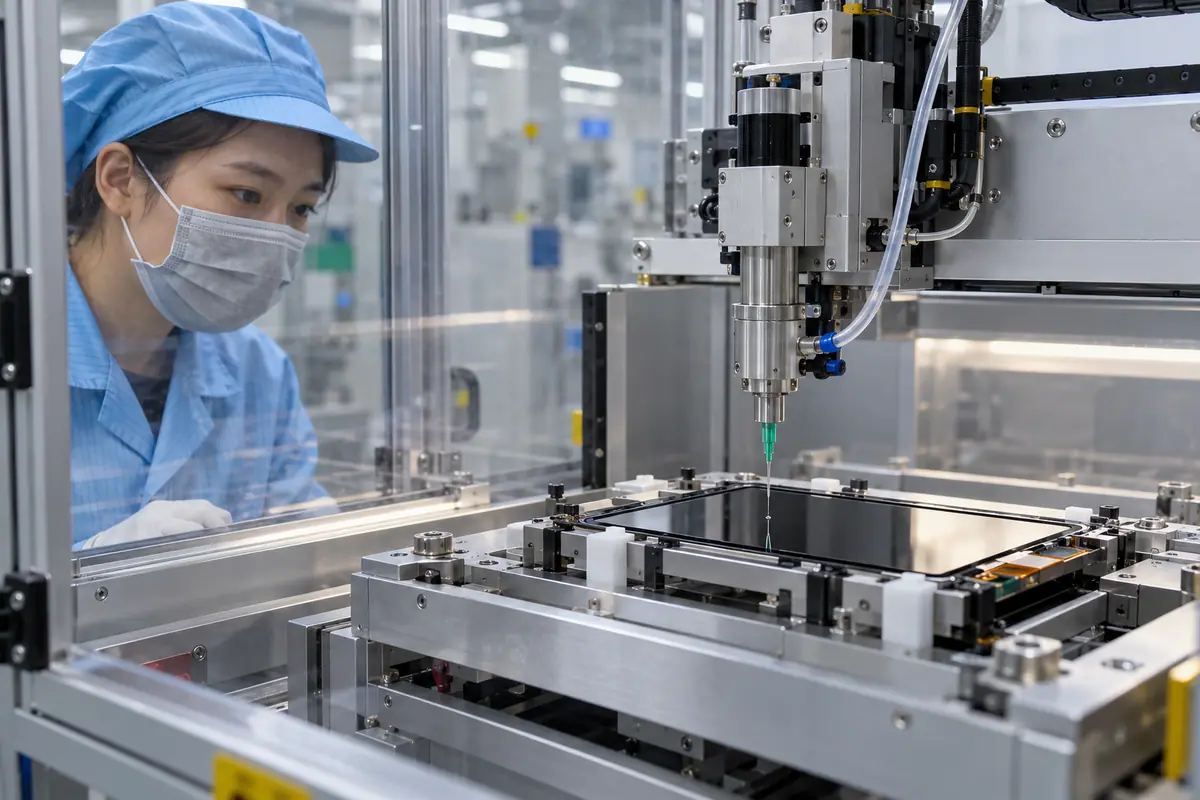
A film route needs evidence of appropriate alignment and contact across the intended region. A liquid route needs appropriate distribution and material-specific processing verification. Where light curing applies, geometry and access deserve review. Also, applicable component limits constrain both routes. Qualified owners should establish settings; the buyer should request relevant output evidence.
A generic pass record can omit a critical route-specific step. A recipe copied from another product can be unsuitable for the actual stack.
How can engineering close this check?
Compare verified routes, not recipes. Ask each supplier to identify critical steps and verification boundaries. Review representative build records and applicable guidance, then align acceptance evidence with the proposed route rather than requiring unsupported universal processing values.
- Contact evidence
- Distribution evidence
- Process verification
- Component constraints
| Decision point | Requirement to retain | Related check |
|---|---|---|
| Failure boundary | A generic pass record can omit a critical route-specific step. A recipe copied from another product can be unsuitable for the actual stack. | Process verification |
| Approval action | Ask each supplier to identify critical steps and verification boundaries. Review representative build records and applicable guidance, then align acceptance evidence with the proposed route rather than requiring unsupported universal processing values. | Component constraints |
Healthcare equipment introduces device-specific cleaning and qualification questions; keep those outside generic component claims. medical touchscreen context.
6. How should finished optics be compared?
Use the same relevant content, settings, lighting and viewing geometry. Inspect defects under the agreed method. Meanwhile, front finish and LCD differences can obscure the effect of joining. Compare complete accepted constructions, not a bare material transmission figure or photographs taken at different brightness settings and angles.
A visually stronger demonstration may result from a different LCD. Uncontrolled inspection can make one route appear better without comparable evidence.
What failure would reject this configuration?
Match the optical comparison. Identify both sample builds and retain matched conditions. Evaluate required visual tasks and agreed defect limits, then explain any result within that construction rather than generalizing it to all films or liquids.
- Sample identity
- Display settings
- Viewing conditions
- Defect limits
| Decision point | Requirement to retain | Related check |
|---|---|---|
| Failure boundary | A visually stronger demonstration may result from a different LCD. Uncontrolled inspection can make one route appear better without comparable evidence. | Viewing conditions |
| Approval action | Identify both sample builds and retain matched conditions. Evaluate required visual tasks and agreed defect limits, then explain any result within that construction rather than generalizing it to all films or liquids. | Defect limits |
Compare the application boundary before assuming a single demonstration covers every installation. application solution overview.
7. What input and installed tests remain shared?
The completed sensor, controller, host and mounting determine usable interaction. Also, thermal and mechanical conditions depend on the full assembly. Both candidate routes should meet the same application gates. Do not let a good optical result bypass required glove, idle-event, startup, fitted-clearance or relevant environmental checks.
A clear bond can coexist with poor input. A component-only trial can omit the installed condition that rejects the design.
What should quality retain?
Keep application gates equivalent. Use one task and operating-state matrix for the two assemblies. Retain controller, host and mounting references, then compare functional evidence alongside optical output before selecting a route for production-intent qualification.
- Input matrix
- Host reference
- Mounting detail
- Operating profile
| Decision point | Requirement to retain | Related check |
|---|---|---|
| Failure boundary | A clear bond can coexist with poor input. A component-only trial can omit the installed condition that rejects the design. | Mounting detail |
| Approval action | Use one task and operating-state matrix for the two assemblies. Retain controller, host and mounting references, then compare functional evidence alongside optical output before selecting a route for production-intent qualification. | Operating profile |
Review public supplier information alongside evidence for the actual part being quoted. factory background.
8. How do repair assumptions change the comparison?
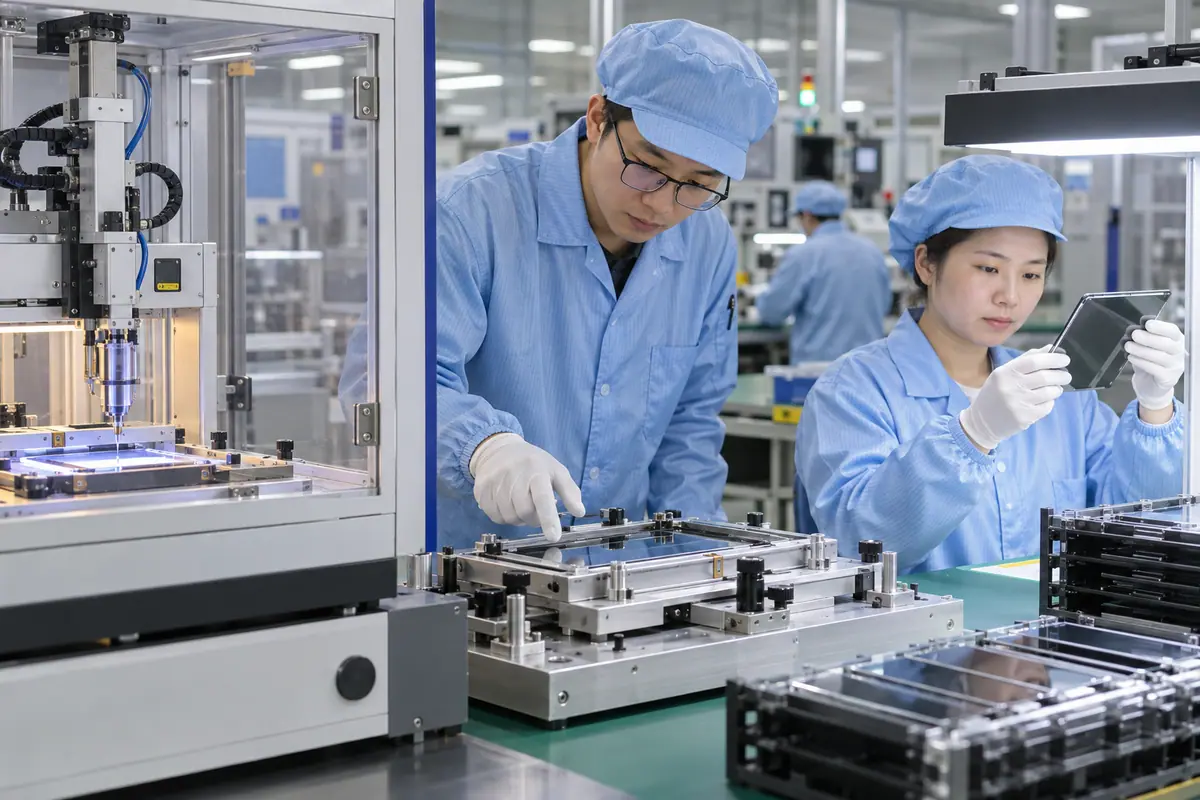
Film and liquid assemblies can each have construction-specific separation and cleanup limits. Recovery may damage parts or require renewed inspection. Meanwhile, customer-supplied component value changes the consequence of a reject. Compare qualified recovery evidence and ownership terms rather than assuming either form always offers easy or economical rework.
A successful separation demonstration may not represent routine recovery. Unpriced component loss can outweigh a nominal processing advantage.
Which trial result changes the decision?
Compare recovery and loss exposure. Request demonstrated repair boundaries, part-loss terms and reinspection requirements for both routes. Compare them with full-module replacement, then assign responsibility before authorizing processing of customer-owned components.
- Separation evidence
- Cleanup limits
- Part-loss owner
- Replacement scope
| Decision point | Requirement to retain | Related check |
|---|---|---|
| Failure boundary | A successful separation demonstration may not represent routine recovery. Unpriced component loss can outweigh a nominal processing advantage. | Part-loss owner |
| Approval action | Request demonstrated repair boundaries, part-loss terms and reinspection requirements for both routes. Compare them with full-module replacement, then assign responsibility before authorizing processing of customer-owned components. | Replacement scope |
Send the controlled drawing and unresolved test questions with the sample configuration attached. technical inquiry route.
For example, one supplier may quote a film route with converted tooling while another includes liquid dispensing setup and verification. Normalize the stack, inspection and reject ownership before comparing fees. Then evaluate identified complete samples under matched optical and input conditions. This hypothetical RFQ comparison explains a selection method; it does not claim either route is cheaper or better for every display.
9. What does a fair cost comparison include?
Normalize material, conversion or dispensing setup, tooling, process verification, inspection, rejects and qualification support. Also, separate non-recurring work from recurring accepted-output scope. Volume and product changes can alter assumptions. Use supplier-specific quoted conditions rather than inventing a universal percentage saving from OCA vs LOCA bonding.
A material-price comparison can omit essential processing work. Different reject or inspection terms can make quoted unit prices misleading.
How can purchasing compare the evidence?
Price equivalent accepted output. Build one commercial matrix with technical owners and purchasing. Ask both suppliers to identify assumptions and exclusions, then compare equivalent accepted deliverables using actual quotations and identified pilot evidence.
- Non-recurring work
- Recurring scope
- Verification inclusion
- Quoted assumptions
| Decision point | Requirement to retain | Related check |
|---|---|---|
| Failure boundary | A material-price comparison can omit essential processing work. Different reject or inspection terms can make quoted unit prices misleading. | Verification inclusion |
| Approval action | Build one commercial matrix with technical owners and purchasing. Ask both suppliers to identify assumptions and exclusions, then compare equivalent accepted deliverables using actual quotations and identified pilot evidence. | Quoted assumptions |
Module quotes need a defined LCD, sensor and controller boundary. touch display module scope.
10. How should the final route be selected?
Apply mandatory application gates first, then compare evidence, unresolved risk and commercial responsibility. Preserve the rationale rather than declaring a material family universally superior. Changes to geometry, surfaces or scale may alter the decision. A controlled release should connect the selected route to the exact stack and output requirements it demonstrated.
A generic winner label can be reused for an unsuitable later project. An undocumented exception can undermine repeat-production consistency.
What should the team release next?
Release a project-specific choice. Record the selected material, process, test evidence and approved exclusions. Require relevant change notices and review triggers, then repeat affected checks before extending the decision to a revised construction or operating envelope.
- Mandatory gates
- Evidence gaps
- Selected references
- Change triggers
Frequently asked questions about OCA vs LOCA bonding
Q1: Is OCA always better than LOCA? No. Compare exact materials and qualified routes against the same geometry, tasks and accepted-output requirements.
Q2: Does liquid form mean the same cure process everywhere? No. Identify the actual product and its applicable processing and verification requirements.
Q3: Should material transmission decide the winner? Not alone. Evaluate complete samples with matched conditions and relevant application tests.
Q4: Which cost basis is useful? Equivalent accepted output including setup, inspection, rejects, qualification scope and responsibility.
Q5: When should the choice be reviewed again? When relevant materials, surfaces, geometry, processing, operating requirements or commercial ownership change.