A 3C Certification Touchscreen is a specialized interface panel that has undergone rigorous China Compulsory Certification testing to ensure it meets strict safety, electromagnetic compatibility, and environmental protection standards. When you are sourcing components for high-stakes industrial or medical projects, using unverified hardware often leads to catastrophic system failures or expensive customs delays. Imagine the frustration of a project halt because your interface interference disrupts local networks or fails basic safety audits. By choosing a 3C Certification Touchscreen , you secure a reliable, compliant solution that guarantees both operational safety and smooth global distribution for your end products.
Why is a 3C Certification Touchscreen critical for your project?
A 3C Certification Touchscreen is vital because it provides a legal and technical guarantee that your device will not cause electrical hazards or interfere with other electronic systems. Integrating a 3C Certification Touchscreen into your hardware allows you to bypass the technical debt associated with substandard components. This certification acts as a shield for your brand reputation, ensuring every user interaction is safe and consistent.
Establishing Safety Benchmarks
Safety is the foundation of any professional hardware deployment. When you select a certified panel, you are opting for a product that has been tested for high-voltage resistance and leakage current.
- Insulation testing for user protection.
- Resistance to high temperatures.
- Protection against electrical surges.
Think about it: a single short circuit could ruin an entire production batch, but certified components prevent these vulnerabilities before they reach the assembly line.
Ensuring Material Quality
Certification requires strict adherence to material standards that prevent toxic off-gassing or structural degradation. You need to know that your screen won’t yellow or crack under standard operating stress.
Specifically: the quality of the glass and the bonding adhesive must meet international environmental directives. Here is the deal: if the materials aren’t verified, your long-term maintenance costs will inevitably skyrocket.
| Metric | Certified Standard | Non-Certified Risk | |
|---|---|---|---|
| Dielectric Strength | High | Electrical Leakage | |
| Material Toxicity | Low (RoHS compliant) | Potential Health Hazards | |
| Structural Integrity | Tested for impact | High Failure Rates |
The table above demonstrates the clear gap between verified and unverified hardware.
Key Takeaway: You gain peace of mind knowing your hardware complies with mandatory safety laws, reducing the risk of liability and product recalls.
What does 3C compliance mean for industrial safety standards?
3C compliance means the touchscreen has successfully passed the China Compulsory Certification, which covers essential safety requirements and electromagnetic compatibility (EMC). This certification ensures your 3C Certification Touchscreen functions reliably in environments where electrical noise is prevalent. It specifically addresses how a device handles power surges and prevents it from becoming a source of interference for other mission-critical tools.
Advanced Electrical Protection
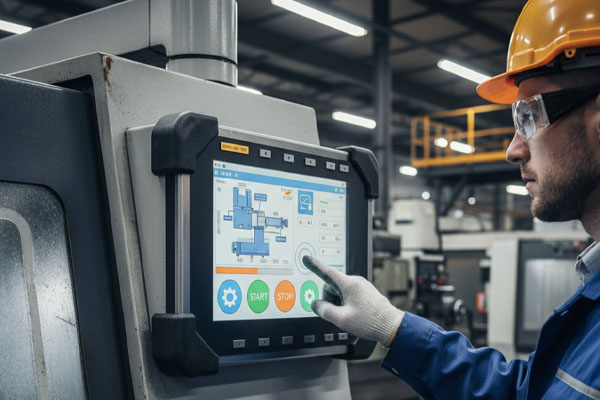
Industrial environments are notorious for unstable power grids and high-frequency noise. Certified panels are designed with internal shielding to maintain operation during these fluctuations.
- Grounding mechanisms to prevent static buildup.
- Voltage spike protection for sensitive controllers.
- Sealed internal components to resist dust ingress.
What does this mean? It means your interface won’t flicker or ghost-touch when a nearby heavy-duty motor starts up.
Optimized EMI Shielding
Electromagnetic interference can corrupt data or cause touch lag. Certified screens utilize specific coatings to dampen external signals and maintain a clean signal-to-noise ratio.
As it turns out: proper shielding is not just a luxury; it is a requirement for any automated system relying on precise timing. Bottom line: certification is the only way to prove your screen can handle the “noise” of a modern factory.
| Feature | Industrial Impact | Benefit | |
|---|---|---|---|
| EMI Shielding | Blocks external noise | Stable touch accuracy | |
| Surge Protection | Handles power spikes | Longer component life | |
| Sealed Design | Resists particles | Reduced downtime |
Consistent electrical performance is a direct result of following these rigorous certification protocols.
Key Takeaway: Your industrial systems remain stable and responsive even in the most electrically demanding factory settings.
How do you verify a 3C Certification Touchscreen from suppliers?
You verify a 3C Certification Touchscreen by requesting a valid certificate number and matching the product’s Bill of Materials (BOM) against the factory’s records. Genuine suppliers of a 3C Certification Touchscreen will provide transparent documentation that correlates with their manufacturing site. This verification step is crucial to ensure you are not dealing with a middleman who might swap components without notice.
Reviewing Factory Audits
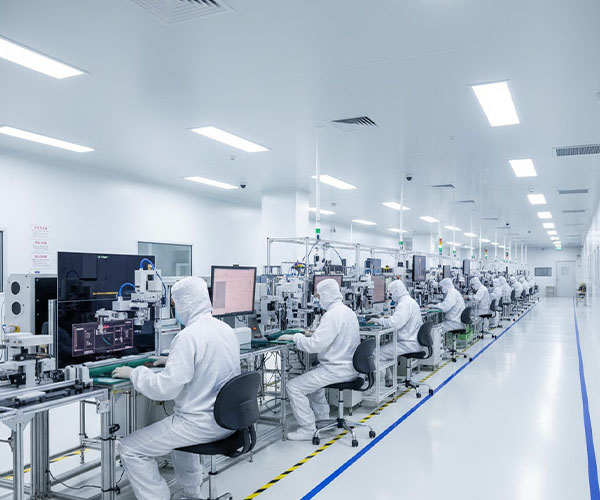
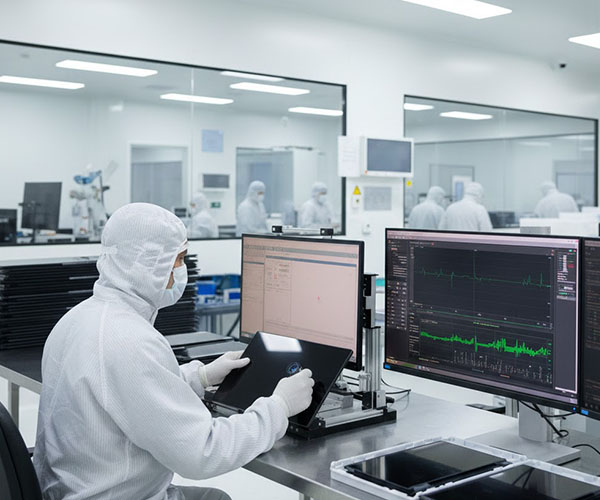
A real factory undergoes periodic inspections to maintain its certification status. You should look for manufacturers who allow site visits or provide video tours of their production lines.
- Verification of cleanroom conditions.
- Inspection of automated testing equipment.
- Proof of consistent raw material sourcing.
In simple terms: if a supplier cannot prove they own the factory, they cannot guarantee the certification remains valid across mass production batches.
Tracking the Bill of Materials
The BOM must remain identical from the sample phase to mass production. Any change in a capacitor or glass type could technically void the existing certification.
The best part? Professional manufacturers lock in their BOM to ensure every unit shipped matches the safety profile of the tested sample. This prevents the “sample-to-production” quality drop that plagues many B2B projects.
| Checkpoint | Verification Method | Importance | |
|---|---|---|---|
| Certificate Number | Online database query | Confirms legal compliance | |
| BOM Lock | Contractual agreement | Guarantees batch consistency | |
| Factory Location | Registration documents | Eliminates middleman risks |
Verification ensures that the technical specifications you approve are the ones that actually arrive at your warehouse.
Key Takeaway: Verifying supplier credentials protects your supply chain from inconsistent quality and fraudulent compliance claims.
Can a 3C Certification Touchscreen withstand harsh environments?
Yes, a 3C Certification Touchscreen is specifically engineered to maintain performance under extreme temperatures, high humidity, and physical vibration. The testing for a 3C Certification Touchscreen involves environmental stress screening to confirm that the glass, sensors, and adhesives do not fail when exposed to factory-floor conditions. This makes them ideal for outdoor kiosks or unconditioned industrial spaces where standard consumer screens would quickly fail.
Handling Temperature Extremes
Industrial touchscreens often operate in temperatures ranging from -20°C to +70°C. Certified panels use industrial-grade liquid crystals and specialized adhesives that won’t delaminate in the heat.
- High-temperature storage testing.
- Cold-start functionality checks.
- Thermal shock resistance.
It gets better: these screens are also tested for direct sunlight readability, which is essential for any outdoor-integrated system.
Chemical and Impact Resistance
In many applications, screens are exposed to cleaning agents or accidental impacts. Certified panels often feature chemically strengthened glass to resist scratches and cracks.
But wait, there’s more: specialized coatings can be applied to provide antimicrobial properties or resistance to harsh industrial solvents. This ensures the touch surface remains clear and functional for years, even with frequent disinfection cycles.
| Stress Test | Certified Result | User Benefit | |
|---|---|---|---|
| Drop Test | No glass shattering | Improved safety in field | |
| Solvent Wipe | No surface degradation | Easy maintenance and cleaning | |
| Vibration | Internal connections stay intact | Reliable mobile/vehicle use |
Environmental resilience is a hallmark of certified hardware designed for professional use.
Key Takeaway: You receive a ruggedized interface that reduces maintenance visits and hardware replacement costs in tough environments.
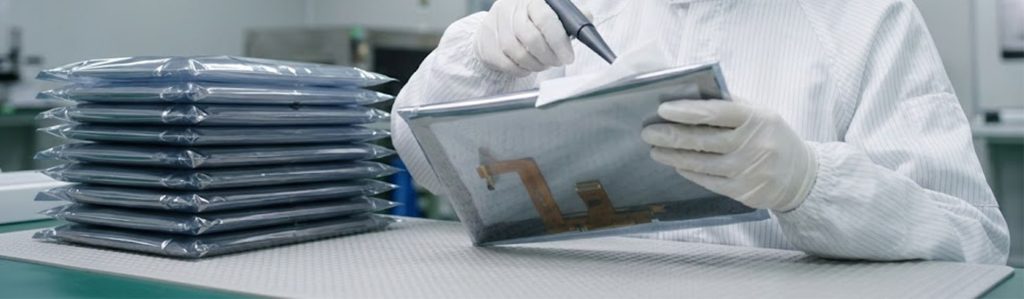
What role does 3C certification play in medical touch interfaces?
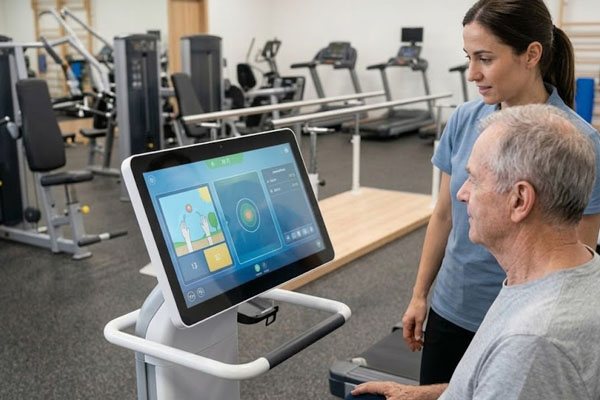
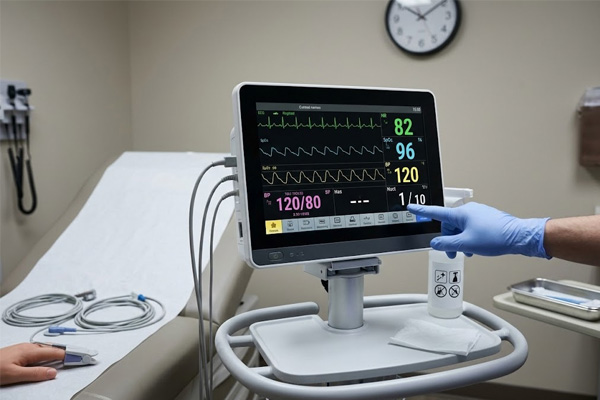
3C certification ensures that medical touch interfaces meet essential safety requirements for patient environments, specifically regarding electrical leakage and antimicrobial safety. Using a 3C Certification Touchscreen in a clinical setting is non-negotiable because patient lives depend on the accuracy and safety of the monitoring equipment. This certification validates that the device will not interfere with other sensitive medical instruments like ECG monitors or ventilators.
Prioritizing Patient Safety
The most critical aspect of medical hardware is preventing accidental electrical discharge. Certified screens go through rigorous dielectric testing to ensure no current can reach the user or patient.
- Low leakage current design.
- Reinforced insulation layers.
- EMC compliance for hospital zones.
What does this mean? It means your medical staff can operate diagnostic equipment with total confidence that the interface is electrically isolated.
Precision and Accuracy
In a medical environment, a missed touch or a ghost-touch can lead to incorrect data entry. Certified capacitive technology provides the high signal-to-noise ratio needed for precise surgical or diagnostic control.
Here is the deal: when you are designing a medical device, you cannot afford “good enough.” You need the documented reliability that only a 3C Certification Touchscreen can provide for clinical applications.
| Medical Requirement | Certified Solution | Clinical Outcome | |
|---|---|---|---|
| Disinfection Resistance | Chemical-grade glass | Hygiene standards maintained | |
| Gloved Touch Support | Tuned controller firmware | Easy use for medical staff | |
| Low EMI Emission | Shielded electronics | No interference with monitors |
Compliance in the medical field is the ultimate benchmark for quality and reliability.
Key Takeaway: Your medical devices achieve the high levels of safety and precision required for critical healthcare environments.
Is a 3C Certification Touchscreen mandatory for export markets?
Yes, a 3C Certification Touchscreen is often a prerequisite for clearing customs in various regions and for meeting the safety expectations of global B2B buyers. While 3C is specific to China, the testing protocols are closely aligned with international standards like CE, FCC, and RoHS. Having a 3C Certification Touchscreen proves that your product has already cleared one of the world’s most stringent testing hurdles, making further international certifications much easier to obtain.
Streamlining Global Logistics
Customs officials often look for recognized certification marks to verify the safety of electronic imports. Without these, your shipment could be held for weeks or even confiscated.
- Simplified documentation for customs.
- Reduction in secondary testing fees.
- Faster route to market.
Bottom line: certification is your passport to the global electronics market, ensuring your product isn’t stuck at the border.
Meeting OEM Requirements
Most large-scale integrators and OEMs will not even look at a component that lacks recognized safety certifications. They need to minimize their own liability by sourcing parts that are proven safe.
Specifically: when you can present a 3C certificate, you are showing potential partners that your manufacturing process is mature and audited. This builds immediate trust and speeds up the procurement cycle.
| Market Region | Certification Alignment | Importance | |
|---|---|---|---|
| Asia-Pacific | 3C/PSE/KC | Mandatory for entry | |
| Europe | CE Compatibility | High technical overlap | |
| North America | UL/FCC standards | Shared safety principles |
This chart-style comparison highlights how certification acts as a universal language for safety and quality.
Key Takeaway: You avoid expensive logistical bottlenecks and gain immediate access to high-value international supply chains.
How does 3C certification impact touchscreen durability metrics?
3C certification impacts durability by mandating specific test results for cycle life, surface hardness, and mechanical stability. A certified 3C Certification Touchscreen must demonstrate that it can withstand millions of touches without a decrease in sensitivity. This rigorous testing ensures that the conductive layers and sensors do not degrade prematurely, providing a much higher return on investment compared to uncertified alternatives.
Maximizing Cycle Life
Standard touchscreens might fail after a few hundred thousand cycles, especially in high-traffic retail or industrial kiosks. Certified panels are built with robust sensor grids designed for longevity.
- 10 million+ touches per point.
- Wear-resistant top coatings.
- Consistent activation force.
Think about it: replacing a screen in the field costs three times more than the screen itself. Using a certified part prevents those field failures.
Surface Hardness and Scratch Resistance
A screen that is easily scratched becomes unreadable and unresponsive. Certification often includes Mohs scale testing to ensure the cover glass can handle daily abuse.
As it turns out: a hardness rating of 6H to 9H is typical for certified industrial panels. This level of protection means that even if a worker uses a tool to touch the screen, the interface remains functional and clear.
| Durability Factor | Certified Specification | Operational Benefit | |
|---|---|---|---|
| Touch Cycles | >10 Million | Years of reliable use | |
| Surface Hardness | 7H+ Mohs | Scratch-free operation | |
| Bonding Strength | High-vibration resistant | Durable in mobile units |
Durability is not just a feature; it is a measurable result of the certification and manufacturing process.
Key Takeaway: You reduce the total cost of ownership by selecting hardware that outlasts standard consumer-grade components.
Which 3C Certification Touchscreen features improve UX?
3C Certification Touchscreen features that improve UX include high optical clarity, rapid response times, and multi-touch capabilities that remain stable under pressure. A 3C Certification Touchscreen undergoes performance validation to ensure the touch controller is tuned for zero-lag interaction. This focus on performance ensures that users don’t experience the frustration of missed inputs or slow feedback, which is critical for complex industrial control systems.
Enhancing Visual Clarity
High-quality bonding techniques used in certified screens eliminate the air gap between the panel and the LCD. This results in better contrast and wider viewing angles.
- Anti-glare (AG) coatings.
- Anti-reflective (AR) treatments.
- 90%+ light transmission.
The best part? These enhancements allow users to see the interface clearly even under bright overhead factory lighting or direct sunlight.
Improving Touch Responsiveness
Latency can make a machine feel clunky and difficult to control. Certified controllers are programmed for rapid-fire input processing, supporting gestures and multi-finger commands seamlessly.
What does this mean? It means your operators can work faster and with fewer errors, directly increasing the efficiency of your automated processes. Modern 3C panels provide the “smartphone-like” experience users now expect in professional settings.
| UX Feature | Technology Used | Impact on User | |
|---|---|---|---|
| Multi-Touch | Advanced Capacitive | Intuitive gesture control | |
| Optical Bonding | Full Lamination | No internal reflection | |
| Zero Lag | High-speed Controllers | Immediate system feedback |
User experience is significantly boosted when the underlying hardware meets high-performance certification standards.
Key Takeaway: Your end-users enjoy an intuitive, responsive interface that minimizes training time and improves operational accuracy.
Why choose a factory-direct 3C Certification Touchscreen?
Choosing a factory-direct 3C Certification Touchscreen eliminates middleman markups and gives you direct access to the engineers who designed the hardware. Sourcing a 3C Certification Touchscreen directly from the manufacturer ensures that you receive genuine parts with a locked Bill of Materials. This direct relationship is the best way to guarantee that the certification you see on paper matches the actual performance of every unit in your order.
Cost Reduction and Transparency
Trading companies often add 20-30% to the cost without adding any technical value. By working with a factory, you get wholesale pricing and transparent insight into the production costs.
- Factory-direct wholesale rates.
- Transparent BOM pricing.
- Volume discount opportunities.
Here is the deal: when you talk directly to the factory, you can solve technical issues in hours instead of waiting days for a trader to relay messages.
Specialized Engineering Support
Off-the-shelf screens rarely fit custom designs perfectly. Factory engineers can modify the glass thickness, cable length, or firmware to meet your specific project needs.
Specifically: you get a dedicated technical contact who understands your project history. This level of support ensures that integration into your system is seamless and that any future modifications are handled with expert precision.
| Sourcing Model | Pricing | Technical Support | |
|---|---|---|---|
| Trading Company | High (with markup) | Limited/Slow | |
| Factory Direct | Lowest (Wholesale) | Expert/Immediate | |
| Stock Distributor | Medium | Basic/General |
Direct factory access provides the best balance of cost, quality, and technical assistance for B2B buyers.
Key Takeaway: You maximize your profit margins while securing superior technical support for your custom touchscreen integration.
How to design your custom 3C Certification Touchscreen?
Designing your custom 3C Certification Touchscreen starts with a detailed drawing review and selecting the right touch technology for your specific application environment. Whether you need a 3C Certification Touchscreen for a medical device or a vehicle navigation system, the process involves balancing glass thickness, controller protocols, and surface treatments. Working with a factory that provides drawing-based confirmation ensures that the final product fits your mechanical housing perfectly the first time.
Selecting the Right Touch Technology
You must choose between capacitive and resistive technologies based on your user requirements. Capacitive is ideal for multi-touch and clarity, while resistive is often preferred for heavy-gloved use in harsh environments.
- PCAP for medical and high-end industrial.
- Resistive for rugged outdoor equipment.
- Integrated modules for fast assembly.
In simple terms: the right technology choice at the design stage prevents expensive redesigns later in the project lifecycle.
Finalizing Mechanical Details
The physical fit of the screen is just as important as the touch sensitivity. You need to specify dimensions, mounting holes, and interface protocols like USB, I2C, or RS232.
The best part? Professional factories provide rapid sampling and pilot runs to validate your design before you commit to mass production. This “measure twice, cut once” approach is the secret to successful hardware launches.
| Design Phase | Activity | Result | |
|---|---|---|---|
| Initial Review | CAD drawing analysis | Feasibility confirmed | |
| Prototyping | 5-50 unit sample run | Integration verified | |
| BOM Lock | Material finalization | Production consistency |
A structured design process ensures your custom interface meets every functional and regulatory requirement.
Key Takeaway: You achieve a perfect mechanical and electrical fit for your product, reducing development time and risk.
Selecting a certified interface is the most effective way to solve sourcing risks, eliminate inconsistent quality, and bypass logistical hurdles. By integrating a verified panel into your project, you ensure that your hardware is safe, durable, and ready for global distribution. We are here to transform your technical drawings into high-performance interfaces that stand the test of time. Our vision is to empower every industrial and medical manufacturer with precision touch technology that never fails. Please contact us today to start your custom project with a trusted manufacturing partner.
FAQ
Can I get custom glass thickness for a 3C Certification Touchscreen?
Yes, factories support custom glass options ranging from 0.7mm to 6.0mm. This allows you to select the exact level of impact resistance and structural integrity required for your specific application.
What’s the best way to verify if a screen is actually certified?
The best is to request the official 3C certificate number and verify it through the China Quality Certification Center database. This ensures the certificate is current and belongs to the actual manufacturing facility.
How do I know if I need a capacitive or resistive screen?
The best is to evaluate your operating environment; capacitive is superior for clarity and multi-touch, while resistive is better if users must wear heavy gloves or if cost-efficiency is the primary concern.
Can I start with a small order for testing?
Yes, reputable manufacturers support small trial or pilot orders of 5 to 50 units for testing. This enables you to validate the design and certification in your system before scaling to full mass production.
How do I know if the quality will stay consistent after the sample?
The best is to ensure your supplier uses a locked Bill of Materials (BOM) system. This guarantees that every component used in mass production is identical to the one used in your approved sample.