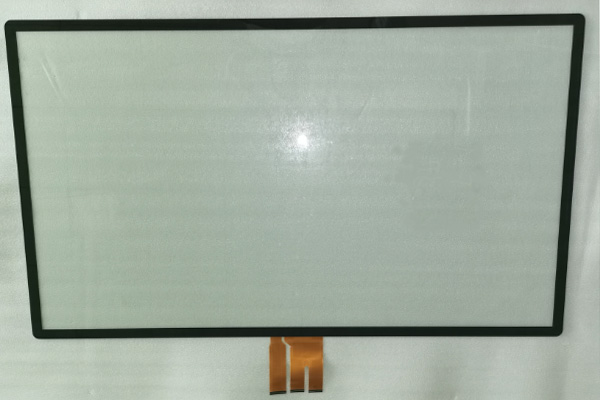
Selecting the right touchscreen module requires a systematic evaluation of environmental durability, interface compatibility, and verified manufacturing transparency to ensure long-term reliability in your specific application. Imagine deploying a critical interface only to have it fail under heavy industrial use or fluctuating temperatures. You face the constant risk of supply chain delays and inconsistent batch quality from middlemen who lack actual production control. By partnering directly with a factory that provides custom-engineered solutions and strict BOM management, you can eliminate these sourcing headaches and secure a high-performance Touchscreen Module for your equipment.
Why is factory direct sourcing for a Touchscreen Module vital?
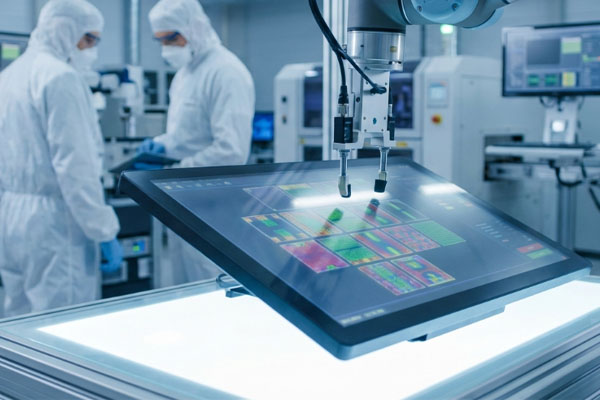
Direct factory sourcing is essential because it eliminates middleman markups and ensures you have a direct line to the engineers who actually manufacture your hardware. Working with a dedicated manufacturer means you avoid the “trader trap” where samples look great but production units vary significantly. This transparency allows you to verify cleanroom standards and production capacities firsthand.
Avoiding Middleman Markups and Communication Gaps
Middlemen often inflate costs while slowing down the technical feedback loop necessary for complex industrial projects. When you bypass traders, you gain control over the production timeline and technical precision of your hardware.
- Direct pricing without third-party commissions.
- Faster response times for engineering modifications.
- Transparent documentation of raw material sourcing.
Think about it: Cutting out the middleman isn’t just about saving money; it’s about securing the integrity of your technical specifications.
Direct Access to Engineering Support for Custom Designs
Having a direct line to the factory engineers ensures that your specific mechanical drawings are translated perfectly into the final product. They can provide immediate feedback on feasibility and suggest optimizations that reduce costs without sacrificing quality.
- On-site engineering review of CAD drawings.
- Rapid prototyping based on direct technical input.
- Collaborative troubleshooting for integration challenges.
The best part? You get expert guidance that understands the physical constraints of the manufacturing line from day one.
Key Takeaway: Factory-direct partnerships provide the technical accountability and cost efficiency required to sustain long-term industrial production cycles without quality degradation.
| Sourcing Type | Cost Efficiency | Technical Control | Quality Assurance | |
|---|---|---|---|---|
| Factory Direct | High | High | Verified | |
| Trading Company | Low | Low | Variable |
This comparison highlights why direct access to the manufacturing floor is the most secure path for mission-critical sourcing.
How does environment impact your Touchscreen Module choice?
Environmental factors dictate whether your Touchscreen Module needs ruggedized glass, wide temperature range components, or specialized coatings to survive harsh operating conditions. Failure to account for temperature swings or high humidity can lead to delamination or electrical malfunctions in the field. You must specify your Touchscreen Module requirements based on where the device will actually live and breathe.
Resistance to Industrial Vibrations and Mechanical Stress
Industrial machinery often generates significant vibration that can loosen connections or cause internal component failure over time. You need a solution that utilizes advanced bonding techniques to maintain structural integrity.
- Enhanced bonding technology for high-vibration resistance.
- Ruggedized frame designs to withstand mechanical impact.
- Secure connector configurations that prevent signal loss.
Now, let’s dive deeper: Selecting a module with high mechanical durability ensures your interface remains operational even in the most demanding shop floor environments.
Wide Operating Temperature Ranges for Harsh Conditions
Standard consumer-grade displays often fail when exposed to the extreme heat of a factory or the freezing temperatures of outdoor installations. Industrial modules are engineered to operate reliably from -20°C to +70°C without ghosting or liquid crystal freezing.
- Industrial-grade components rated for thermal extremes.
- Heated glass options for extremely cold climates.
- Thermal management features within the module assembly.
Here is the kicker: If your hardware can’t handle the heat, your entire system goes offline when your customers need it most.
Key Takeaway: Environmental hardening is not optional for industrial applications; it is the foundation of a reliable user interface that lasts for years.
| Environment Factor | Hardware Requirement | Target Metric | |
|---|---|---|---|
| High Vibration | Optical Bonding | MIL-STD-810G Compliance | |
| Extreme Heat | Industrial Components | +70°C Operating Limit |
These metrics serve as a baseline for determining if your selected module is truly fit for its intended operational landscape.
Which capacitive technology fits your Touchscreen Module?
Choosing the right capacitive technology for your Touchscreen Module depends on whether your application requires multi-touch precision through thick glass or cost-effective single-touch functionality. Projective Capacitive (PCAP) technology is the gold standard for modern industrial interfaces due to its high durability and superior optical clarity. This technology allows you to implement modern gesture controls that users expect from today’s smart devices.
Projective Capacitive for Precise Multi-Touch Performance
PCAP technology uses a grid of sensors to detect touch through protective cover glass, making it highly resistant to surface damage. This setup supports complex gestures like pinch-to-zoom and multi-finger inputs required for advanced software.
- Support for multi-touch gestures and high-resolution tracking.
- Durability against scratches and heavy surface wear.
- Superior optical transparency compared to resistive options.
But wait, there’s more: PCAP modules can be tuned to work through very thick cover glass, providing an extra layer of protection for public-facing kiosks.
Scaling Sensitivity for Thick Cover Glass Applications
You can customize the sensitivity of your module to ensure it registers inputs accurately even when placed behind armored glass or safety shields. This is critical for outdoor or high-risk environments where physical protection is as important as touch response.
- Custom firmware tuning for varying glass thicknesses.
- Maintains accuracy without requiring increased pressure.
- Reliable performance in high-security applications.
Think about it: The ability to sense touch through 6mm of glass gives you incredible design flexibility for rugged enclosures.
Key Takeaway: PCAP technology offers the best balance of user experience and industrial durability for almost all modern manufacturing and display applications.
| Feature | PCAP Technology | Surface Capacitive | |
|---|---|---|---|
| Multi-touch | Yes | No | |
| Durability | Excellent | Good | |
| Through-Glass | Yes | No |
Selecting PCAP provides a future-proof interface that supports evolving software needs and provides maximum physical protection.
Is industrial control a priority for your Touchscreen Module?
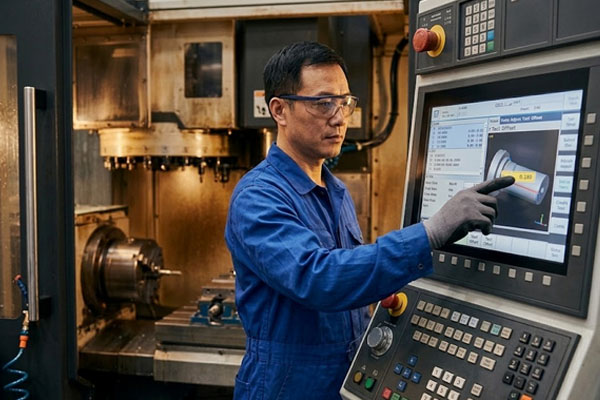
Industrial control applications require a Touchscreen Module built with high electromagnetic interference (EMI) shielding and the ability to detect inputs through heavy-duty work gloves. In a factory setting, electrical noise from motors and power lines can cause “phantom touches” if the Touchscreen Module is not properly shielded. You need a solution that maintains its composure in the middle of a high-voltage environment.
Supporting Heavy-Duty Gloved Operation Capabilities
On many production floors, workers must wear thick safety gloves that can prevent standard capacitive screens from detecting an input. Specialized industrial controllers can be tuned to increase the signal-to-noise ratio, allowing for seamless gloved operation.
- Adjustable sensitivity levels for different glove materials.
- Maintains precision without needing to remove safety gear.
- Ensures worker efficiency and safety in the workplace.
Now, let’s dive deeper: A screen that works with gloves is not a luxury; it is a critical safety feature for any high-risk industrial operation.
Electromagnetic Interference Shielding for Machine Stability
EMI from nearby industrial equipment can wreak havoc on sensitive touch electronics, leading to erratic behavior or complete system failure. Integrated shielding layers and high-quality controllers filter out this noise to ensure consistent input detection.
- ITO shielding layers to block external electrical noise.
- Industrial-grade controllers with advanced noise filtering.
- Stable performance near high-power industrial machinery.
Here is the kicker: A single phantom touch on a heavy machinery control panel can lead to catastrophic safety or production errors.
Key Takeaway: Industrial-grade touch modules prioritize signal integrity and functional accessibility, ensuring safety and reliability in noisy factory environments.
| Industrial Need | Technical Solution | Benefit | |
|---|---|---|---|
| Gloved Use | High Sensitivity Firmware | Operational Continuity | |
| EMI Protection | Shielded ITO Layers | Input Stability |
These technical specifications ensure that your human-machine interface remains a stable point of control within a complex factory ecosystem.
What certifications are needed for a medical Touchscreen Module?
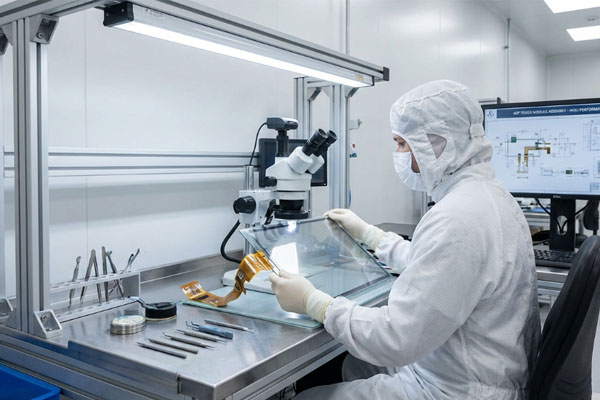
A medical-grade Touchscreen Module must comply with stringent regulatory standards and feature antimicrobial surface treatments to allow for repeated chemical disinfection in clinical settings. Precision and hygiene are paramount when a touch interface is used for diagnostic or surgical equipment. You must ensure your supplier can provide the necessary compliance documentation for your specific market requirements.
Complying with Regulatory Standards for Medical Displays
Medical devices are subject to rigorous testing to ensure they do not interfere with other equipment and remain safe for patient contact. Your module should meet standards like ISO 13485 to ensure the manufacturing process itself is medically validated.
- Full compliance with medical safety regulations.
- Documentation for CE, FCC, and RoHS certifications.
- Batch traceability for every medical-grade component.
The best part? Having pre-certified components significantly speeds up your own device’s path to regulatory approval.
Antimicrobial Surface Treatments and Hygiene Protocols
In clinical environments, touchscreens are frequently wiped down with harsh chemicals like bleach or isopropyl alcohol. A medical-grade module features chemically strengthened glass and specialized coatings that resist corrosion and inhibit bacterial growth.
- Antimicrobial coatings to prevent pathogen spread.
- Chemical-resistant surfaces for easy sterilization.
- Sealed designs that prevent liquid ingress during cleaning.
Think about it: A medical screen must be as easy to disinfect as a surgical tool while remaining crystal clear for the user.
Key Takeaway: Medical touch modules require a specialized focus on chemical resilience and regulatory compliance to ensure patient safety and long-term diagnostic accuracy.
| Medical Requirement | Solution | Importance | |
|---|---|---|---|
| Disinfection | Chemical Resistant Glass | High | |
| Hygiene | Antimicrobial Coating | Essential | |
| Safety | Regulatory Certification | Mandatory |
Focusing on these medical-specific traits ensures your device meets the high standards of the healthcare industry and protects both patients and practitioners.
How to ensure BOM consistency for a Touchscreen Module?
You ensure consistency by selecting a manufacturer that locks the Bill of Materials (BOM) for your Touchscreen Module, preventing unauthorized component swaps between sample and production phases. Many buyers suffer when a supplier changes a controller chip or a glass type without notice, leading to firmware bugs or breakage in the field. By locking the Touchscreen Module specifications, you guarantee that every unit you receive performs exactly like the approved sample.
Locking Component Specifications from Sample to Production
Once you approve a sample, every single component—from the sensor to the adhesive—should be documented and frozen in a version-controlled BOM. This prevents the “bait and switch” tactics often seen in the consumer electronics supply chain.
- Version-controlled BOM documentation for every project.
- Contractual guarantees against unannounced material changes.
- Identical component sourcing for every production batch.
But wait, there’s more: Consistency in your hardware means your software and firmware never have to deal with unexpected hardware variations.
Multi-Stage Quality Control and Batch Traceability
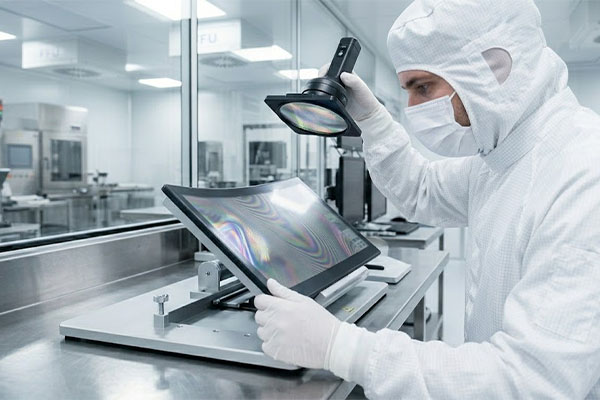
Rigorous inspection at every stage of production—from incoming materials to final functional testing—ensures that defects are caught before they leave the factory. Detailed record-keeping allows you to trace any field issue back to the specific batch and components used.
- 100% functional testing for touch sensitivity and calibration.
- Optical inspection for cosmetic defects and transparency.
- Comprehensive batch quality reports provided with every shipment.
Now, let’s dive deeper: Traceability is your best defense against widespread recalls, allowing you to isolate and address specific issues quickly.
Key Takeaway: Strict BOM management and multi-stage QC are the only ways to guarantee that mass-produced modules match the performance of your initial prototypes.
| Consistency Factor | Manufacturer Action | Result | |
|---|---|---|---|
| Component Sourcing | BOM Locking | Reliable Performance | |
| Quality Control | 100% Final Testing | Zero-Defect Delivery |
A manufacturer’s commitment to these processes is the most reliable indicator of their suitability for long-term industrial partnerships.
Which interface is best for a Touchscreen Module integration?
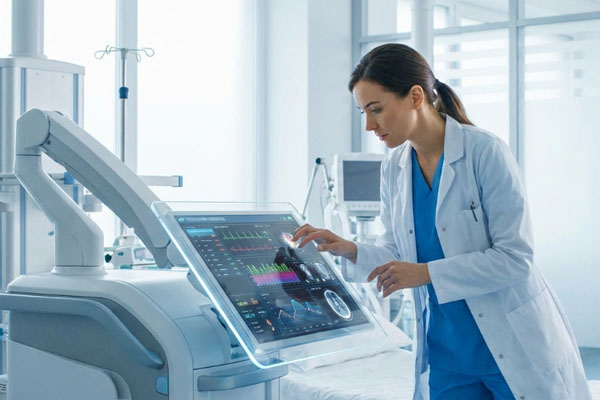
The best interface for your Touchscreen Module depends on your processor’s available ports, with options like I2C for embedded systems or USB for plug-and-play PC compatibility. Choosing the wrong interface can lead to communication bottlenecks or complex driver development that delays your product launch. You must evaluate the data transfer speeds and electrical requirements of your system before finalizing your choice.
Evaluating USB vs I2C vs RS232 Communication Protocols
USB is the most common choice for Windows-based systems due to its ease of integration and high speed. For embedded microcontrollers, I2C or RS232 often provide a more direct and power-efficient way to communicate with the touch controller.
- USB for universal compatibility and fast setup.
- I2C for low-power, embedded system integration.
- RS232 for long-distance communication in specialized hardware.
Here is the kicker: Choosing the wrong protocol can double your integration time and increase the complexity of your software stack.
Matching Controller Firmware to Specific Operating Systems
Your touch controller must be compatible with your target OS, whether it’s Windows, Linux, or a proprietary embedded system. A professional manufacturer provides the necessary drivers and firmware tuning to ensure “out of the box” functionality.
- Driver support for major industrial operating systems.
- Firmware customization for specific hardware handshakes.
- Technical support for OS-level integration challenges.
The best part? A well-matched interface and driver set make the touch integration process feel invisible to your end-users.
Key Takeaway: Careful selection of the electrical interface and firmware ensures a smooth integration process and optimal performance for your system’s architecture.
| Interface Type | Best Use Case | Integration Speed | |
|---|---|---|---|
| USB | PC-based Systems | Very Fast | |
| I2C | Embedded Boards | Moderate | |
| RS232 | Legacy / Long Distance | Moderate |
Proper interface planning prevents technical hurdles and ensures your development team can focus on software features rather than hardware communication.
How to evaluate the optical quality of a Touchscreen Module?
Evaluating optical quality involves checking the Touchscreen Module for high transparency, low reflection through optical bonding, and surface treatments that minimize glare and fingerprints. In bright environments, a Touchscreen Module without proper optical treatment can become nearly unreadable due to reflections. You need to look beyond the basic resolution and consider how the display layers interact with light.
Benefits of Optical Bonding for Glare Reduction
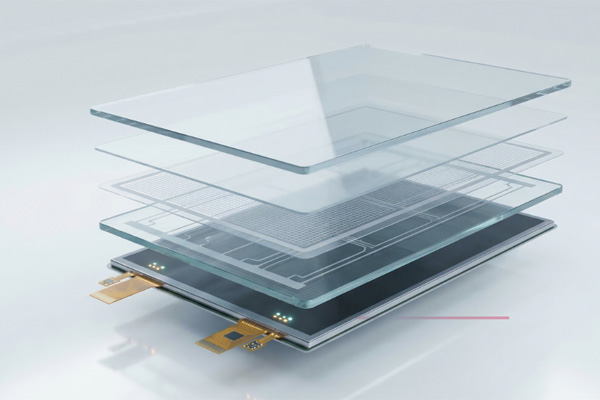
Optical bonding fills the air gap between the touch sensor and the display with a clear adhesive, significantly reducing internal reflections. This process improves contrast and makes the screen much easier to read in direct sunlight or bright factory lighting.
- Eliminates internal reflections and improves contrast.
- Prevents moisture and dust from entering the air gap.
- Increases the structural strength of the display assembly.
Now, let’s dive deeper: Optical bonding isn’t just an upgrade; it’s a necessity for any device used in high-ambient-light environments.
Anti-Reflective and Anti-Fingerprint Surface Treatments
Surface coatings can be applied to the cover glass to scatter light and reduce the appearance of oils from users’ fingers. These treatments keep the screen looking professional and maintain clarity even after heavy daily use.
- Anti-Glare (AG) coatings to diffuse harsh reflections.
- Anti-Fingerprint (AF) treatments to repel oils and moisture.
- Anti-Reflective (AR) layers to maximize light transmission.
Think about it: A dirty, reflective screen doesn’t just look bad; it creates a poor user experience that can lead to operational errors.
Key Takeaway: High-quality optical bonding and surface coatings are essential for maintaining display readability and professional appearance in diverse lighting conditions.
| Optical Treatment | Primary Benefit | Best Environment | |
|---|---|---|---|
| Optical Bonding | Contrast & Readability | Sunlight / Outdoors | |
| Anti-Glare Coating | Reflection Diffusion | Indoor / Office | |
| Anti-Fingerprint | Easy Cleaning | Public Kiosks |
Investing in these optical enhancements ensures your interface remains clear, legible, and professional throughout its service life.
Can you customize the glass of your Touchscreen Module?
Yes, you can customize the cover glass of your Touchscreen Module by specifying thickness, chemical strengthening levels, and precision silk-screened branding or custom cutouts. Customization allows you to align the interface perfectly with your industrial design and branding requirements. You don’t have to settle for standard sizes when your application demands a unique form factor or extra-thick safety glass.
Selecting Thickness and Chemically Strengthened Glass
Depending on your durability needs, you can choose cover glass thickness ranging from 0.7mm to over 6mm. Chemically strengthened glass, such as Gorilla Glass or similar variants, provides significantly higher impact resistance than standard soda-lime glass.
- Custom thickness options to meet specific impact ratings.
- Chemical strengthening for superior scratch and shatter resistance.
- Support for specialized safety glass requirements.
But wait, there’s more: Thicker glass doesn’t have to mean lower sensitivity if you use a high-quality industrial controller capable of high-signal penetration.
Precision Silk Screen Printing for Custom Branding
You can have your company logo, custom button icons, or specific brand colors printed directly onto the glass border. This creates a cohesive, professional look that reinforces your brand identity every time a customer uses your equipment.
- High-durability inks that resist chemicals and UV light.
- Precise registration for logos and functional icons.
- Custom border colors to match your machine’s industrial design.
The best part? Custom silk-screening turns a generic component into a branded asset that distinguishes your product from the competition.
Key Takeaway: Glass customization allows you to balance physical protection with brand aesthetics, creating a rugged yet professional interface tailored to your specific hardware.
| Customization Option | Purpose | Typical Spec | |
|---|---|---|---|
| Glass Thickness | Impact Protection | 1.1mm – 6.0mm | |
| Silk Printing | Branding / Icons | Custom CMYK/Pantone | |
| Strengthening | Durability | Chemical Ion-Exchange |
By taking advantage of these custom options, you ensure your touchscreen is as much a part of your brand identity as it is a functional tool.
What is the typical lead time for a custom Touchscreen Module?
Typical lead times for a custom Touchscreen Module range from two to four weeks for prototyping and four to six weeks for mass production, depending on tooling requirements. These timelines are critical for your project planning, as unannounced delays can stall your entire production line. By working with a Touchscreen Module manufacturer that provides clear scheduling and regular updates, you can manage your supply chain with confidence.
Rapid Prototyping and Sampling Timelines
The initial phase involves technical confirmation and the creation of custom samples for your evaluation. A responsive manufacturer can usually provide physical samples within 15 to 20 days once the design is finalized.
- Quick-turn engineering review of specifications.
- Rapid tooling for custom glass shapes and sizes.
- Evaluation units delivered for integration testing.
Here is the kicker: Fast prototyping allows you to identify and fix design issues early, saving months of potential delays later in the project.
Managing International Shipping and Export Logistics
For US-based manufacturers sourcing from overseas factories, shipping and customs can add significant time to the total lead time. An experienced export partner handles the documentation and logistics to ensure your components arrive safely and on time.
- Expertise in international shipping and customs clearance.
- Protective anti-static and moisture-barrier packaging.
- Predictable delivery schedules for large-volume orders.
Now, let’s dive deeper: Good logistics aren’t just about moving boxes; they’re about ensuring your production line never stops due to a missing component.
Key Takeaway: Reliable lead times and proactive communication from your factory partner are essential for maintaining your production schedule and meeting market demands.
| Project Stage | Typical Duration | Focus Area | |
|---|---|---|---|
| Prototyping | 2 – 3 Weeks | Technical Validation | |
| Tooling (Custom) | 1 – 2 Weeks | Mechanical Precision | |
| Mass Production | 4 – 6 Weeks | Batch Consistency |
Understanding these timelines helps you set realistic launch goals and ensures a steady supply of high-quality interfaces for your assembly line.
Conclusion
Selecting a Touchscreen Module for your next project shouldn’t be a gamble. By focusing on direct factory verification, rigorous BOM consistency, and industry-specific customizations—whether for industrial, medical, or automotive use—you ensure a reliable interface that performs under pressure. Our vision is to provide manufacturers with the technical transparency and engineering excellence required to build world-class products without supply chain uncertainty.
If you are ready to eliminate sourcing risks and secure a stable, high-performance interface for your equipment, contact us today to review your technical drawings and receive a factory-direct solution.
Frequently Asked Questions
Can I request a custom silk-printed logo on the glass?Yes, we provide precision silk screen printing for custom branding, button icons, and decorative borders directly on the touch panel glass using UV-resistant inks.
What’s the best way to test durability for extreme temperatures?Industrial modules should undergo thermal cycle testing from -20°C to +70°C to ensure component adhesion and electrical performance remain stable in harsh environments.
Can I get a sample before committing to a full production run?Absolutely. We support flexible sampling—typically 5 to 50 units—allowing you to verify integration, sensitivity, and optical quality before scaling to mass production.
What’s the best technology for high-interference environments?Projective capacitive modules with specialized controller tuning and EMI shielding are best for environments with high electrical noise, such as factory floors with heavy machinery.
Can I use these modules with specific industrial Linux kernels?Yes, our engineering team provides driver support and firmware tuning to ensure seamless compatibility with various operating systems, including custom Linux distributions and Windows IoT.