
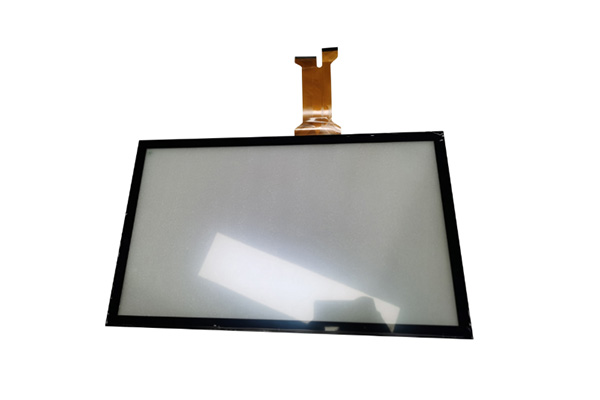
Procuring 5-wire resistive touchscreens requires evaluating sensor durability, driver compatibility, and factory-direct quality controls to ensure long-term operational ROI. You likely face the frustration of frequent interface failures in high-traffic environments, which leads to expensive equipment downtime. When a critical control panel stops responding due to surface wear or environmental stressors, your entire production line can grind to a halt. Implementing high-performance resistive touchscreens provides a rugged, reliable solution that maintains precision even after millions of individual touches.
What are 5-wire resistive touchscreens?
A 5-wire resistive touchscreen is a specialized interface that uses a fixed voltage across a bottom glass layer to maintain touch accuracy regardless of top-sheet wear. Unlike older 4-wire systems, these resistive touchscreens do not rely on the flexible top layer for coordinate calculations.
Understanding the 5-Wire Circuitry
The kicker is this: the 5th wire connects directly to the conductive coating on the glass substrate. This architecture ensures that the measurement of the X and Y coordinates remains stable over millions of actuations even if the outer film is damaged.
- Voltage is applied to the four corners of the glass layer.
- The top layer acts exclusively as a voltage probe.
- Damage to the top sheet does not cause coordinate drift or calibration loss.
Key Takeaway: Five-wire technology isolates the coordinate sensing to the stable glass base, making it far superior for heavy-use industrial applications where longevity is paramount.
| Feature | 5-Wire Specification | Benefit | |
|---|---|---|---|
| Durability | 35 Million Touches | Extended device lifespan | |
| Stability | No recalibration needed | Reduced maintenance labor | |
| Resilience | Continues working if scratched | High uptime in harsh zones |
Comparing internal sensor architectures reveals why the 5-wire variant is the industry standard for high-reliability human-machine interfaces.
Why choose 5-wire resistive touchscreens?
You should choose these interfaces because they provide exceptional longevity and environmental resistance for mission-critical hardware. These resistive touchscreens are specifically engineered to withstand the rigors of industrial settings where operators may use gloves or styluses.
Longevity in High-Traffic Areas
Let’s dive deeper into the performance metrics. Because the top layer is only a probe, it can sustain significant physical abuse without failing.
- Resistance to surface contaminants like oil and grease.
- Operates flawlessly in extreme temperature fluctuations.
- Support for any input method, including bare fingers and heavy gloves.
Key Takeaway: Choosing a 5-wire model over a 4-wire alternative drastically reduces your total cost of ownership by extending the replacement cycle of your hardware.
| Metric | 4-Wire Performance | 5-Wire Performance | |
|---|---|---|---|
| Touch Life | 1 Million | 35 Million+ | |
| Accuracy | Drifts over time | Permanently stable | |
| Surface Damage | Leads to failure | Impact-resistant operation |
Transitioning to 5-wire technology ensures that your control systems remain responsive in environments where capacitive screens would fail.

How to test 5-wire resistive touchscreens?
Testing these panels involves verifying their linear accuracy and response time under varied pressure levels. Your procurement team must ensure that the resistive touchscreens pass rigorous environmental stress tests before they reach your assembly line.
Precision and Sensitivity Verification
It gets better when you implement standardized testing protocols. High-quality sensors should respond to a light touch while ignoring environmental noise or electromagnetic interference.
- Use a 100g force test to check for consistent activation.
- Conduct a “drag test” to ensure there are no dead spots on the surface.
- Perform high-temperature soak tests to verify material stability.
Key Takeaway: Comprehensive testing protocols protect your investment by identifying potential manufacturing defects before the screens are integrated into final products.
| Test Type | Objective | Pass Criteria | |
|---|---|---|---|
| Linearity Test | Verify coordinate accuracy | < 1.5% deviation | |
| Life Cycle Test | Simulate long-term use | > 35 million points | |
| Chemical Test | Resistance to cleaning agents | No surface degradation |
Maintaining a strict testing regime ensures that every batch of sensors meets the high standards required for professional-grade equipment.
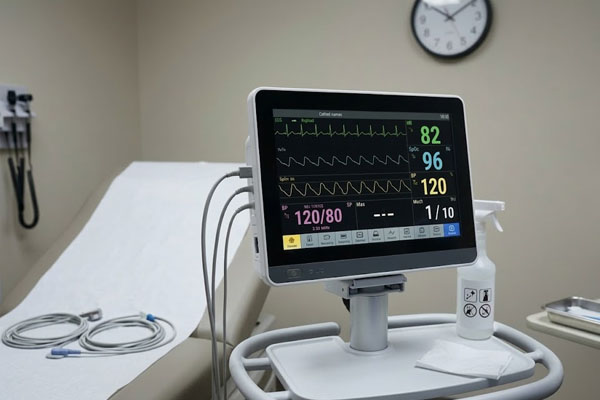
Are these resistive touchscreens medical-grade?
Yes, these sensors are ideal for medical environments because they can be operated with surgical gloves and withstand harsh chemical disinfectants. These resistive touchscreens provide the tactile feedback and reliability needed in sterile or emergency settings.
Compliance and Chemical Resistance
Think about this: medical devices require frequent sterilization with alcohol-based cleaners. A high-quality resistive panel features a top coating that prevents the ingress of liquids and resists corrosive chemicals.
- Antimicrobial surface treatment options are often available.
- Sealed edges prevent fluid penetration into the internal electronics.
- Gloved operation is 100% reliable, unlike consumer-grade capacitive displays.
Key Takeaway: For medical applications, 5-wire resistive technology is often the safest choice due to its chemical resilience and guaranteed input response in critical moments.
| Requirement | 5-Wire Capability | Medical Application | |
|---|---|---|---|
| Disinfection | Alcohol/Bleach resistant | Patient monitors | |
| Input | Gloved finger/Stylus | Diagnostic workstations | |
| Reliability | No false triggers | Infusion pumps |
Evaluating the chemical resistance of the top polyester film is a vital step in medical hardware procurement.
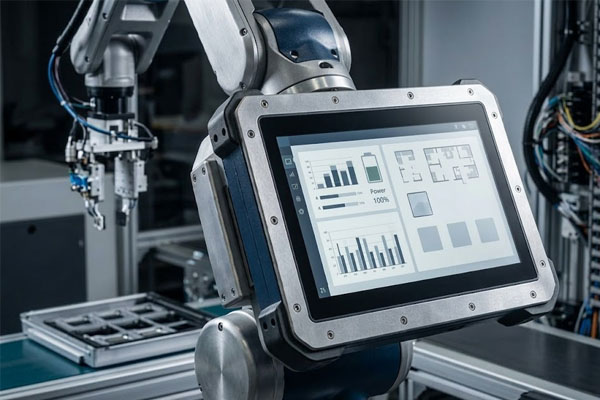
What sizes suit resistive touchscreens?
The most common sizes for these panels range from 3.5 inches to 21.5 inches, covering a wide array of industrial and commercial needs. While resistive touchscreens can be manufactured in larger formats, they are most effective in mid-sized applications where precision is key.
Optimal Dimensions for Industrial Use
But wait, there’s more to size than just the diagonal measurement. You must consider the aspect ratio and bezel thickness to ensure the screen fits your existing chassis without modifications.
- Standard 4:3 ratios are common for legacy system upgrades.
- Widescreen 16:9 formats support modern high-definition interfaces.
- Custom ultra-slim bezels allow for compact device integration.
Key Takeaway: Matching the sensor size to the viewing area of your display is critical to preventing parallax errors and ensuring a smooth user experience.
| Size Range | Common Application | Resolution Match | |
|---|---|---|---|
| 7″ – 10.1″ | Handheld terminals | WVGA / WSVGA | |
| 12.1″ – 15″ | POS / Industrial PC | XGA | |
| 17″ – 21.5″ | Self-service kiosks | Full HD |
Selecting the correct physical dimensions during the design phase prevents costly mechanical rework during the manufacturing stage.
How to source 5-wire resistive touchscreens?
Sourcing should prioritize direct factory partnerships over trading companies to ensure you have control over the Bill of Materials (BOM). When you buy resistive touchscreens directly from the manufacturer, you eliminate middleman markups and gain direct access to engineering support.
Evaluating Manufacturer Credentials
Check this out: a real factory will offer transparent workshop access and detailed quality documentation. You need a partner that can lock in your BOM to prevent unexpected component changes in future batches.
- Request factory registration and ISO certification documents.
- Verify their capacity to handle both small trial orders and mass production.
- Ensure they provide dedicated after-sales technical contacts for integration help.
Key Takeaway: Direct factory sourcing is the only way to guarantee batch-to-batch consistency and secure the lowest possible wholesale pricing.
| Supplier Type | Technical Control | Cost Structure | |
|---|---|---|---|
| Direct Factory | High / Engineering access | Wholesale / Low margin | |
| Trading Company | Low / No design influence | Marked up / High cost | |
| Distributor | Moderate / Stock available | Tiered pricing |
Establishing a direct line of communication with factory engineers reduces project risk and accelerates your time-to-market.

What affects resistive touchscreens pricing?
Pricing is primarily influenced by material quality, the complexity of the sensor stack, and the total order volume. High-grade resistive touchscreens use premium Indium Tin Oxide (ITO) coatings that offer better light transmission and durability, impacting the final unit cost.
Cost Drivers in Component Selection
The reality is: you get what you pay for when it comes to sensor longevity. Cutting costs on the flexible top film or the glass substrate often leads to premature failures in the field.
- Order volume: High-quantity orders significantly reduce per-unit costs.
- Customization: Non-standard sizes or special coatings add to the price.
- Bonding technology: Optical bonding increases clarity but raises assembly costs.
Key Takeaway: Balancing initial hardware costs with the expected lifespan of the device is essential for calculating the true return on investment.
| Cost Factor | Impact Level | Strategy | |
|---|---|---|---|
| Volume | High | Batch orders for discounts | |
| ITO Quality | Medium | Prioritize high transmission | |
| Custom Tooling | High | Use standard sizes where possible |
Analyzing the cost-to-quality ratio helps procurement managers secure reliable components without exceeding their budgetary limits.
How to mount these resistive touchscreens?
Proper mounting requires a secure seal to prevent dust and moisture from entering the space between the screen and the display. You must integrate these resistive touchscreens using high-quality adhesives and gaskets that can withstand vibration and impact.
Integration Best Practices
Look no further for a reliable mounting strategy. The goal is to create a seamless bond that maintains the sensitivity of the touch sensor while protecting the underlying LCD.
- Use IP65-rated gaskets for wash-down environments.
- Ensure the bezel does not apply uneven pressure to the sensor surface.
- Allow for thermal expansion by using flexible mounting tapes.
Key Takeaway: Correct mounting is just as important as the sensor quality itself; poor integration can lead to false touches or structural failure.
| Component | Function | Material Choice | |
|---|---|---|---|
| Gasket | Dust/Waterproofing | Closed-cell foam | |
| Adhesive | Bonding sensor to LCD | Optically clear tape | |
| Bezel | Mechanical support | Aluminum or high-grade plastic |
Professional integration ensures that the touch interface remains responsive and durable throughout the life of the machine.
Can you customize resistive touchscreens?
Customization is a core strength of 5-wire technology, allowing you to specify everything from glass thickness to surface coatings. Tailoring your resistive touchscreens to your specific application ensures that the hardware performs optimally in its intended environment.
Design Flexibility Options
You might be wondering: how far can customization go? Modern manufacturing allows for specialized features that address unique industry challenges, such as extreme glare or high-impact risks.
- Anti-glare (AG) and Anti-reflective (AR) coatings for outdoor use.
- Custom silk-screened logos and button icons on the border.
- Specialized connectors like USB, I2C, or RS232 to match your controller.
Key Takeaway: Customizing your touch panels allows for better branding and improved functionality that standard off-the-shelf parts cannot provide.
| Customization | Benefit | Industry | |
|---|---|---|---|
| AG Coating | Sunlight readability | Outdoor kiosks | |
| 6H Hardness | Scratch resistance | Heavy industry | |
| Custom Logos | Brand consistency | Retail POS |
Working with a factory that supports low-MOQ customization allows you to prototype and iterate your designs efficiently.
How to verify resistive touchscreens QA?
Quality Assurance (QA) verification involves checking for optical defects, functional consistency, and adherence to dimensional tolerances. You need to verify that the resistive touchscreens you receive match the approved samples exactly to avoid assembly line disruptions.
Systematic Quality Auditing
Bottom line: your supplier must provide detailed batch reports for every shipment. These reports should include the results of functional testing and a visual inspection of the sensor surface.
- Inspect for bubbles or particles in the laminated layers.
- Check the electrical resistance of the 5-wire circuit.
- Verify that the outer dimensions match your CAD drawings.
Key Takeaway: A robust QA process at the factory level prevents defective components from ever reaching your production floor, saving you time and money.
| QA Stage | Checkpoint | Tooling Used | |
|---|---|---|---|
| Incoming | Raw ITO glass quality | Optical micrometer | |
| In-Process | Lamination alignment | Automated vision system | |
| Final | Touch sensitivity | Functional tester |
Strategic quality auditing reduces the risk of post-deployment failures by ensuring that only top-tier components are installed in your devices.

Conclusion
Selecting the right 5-wire interface solves the pervasive issues of environmental interference and physical wear in your industrial and medical operations. By prioritizing factory-direct sourcing, rigorous testing protocols, and careful material selection, you ensure your hardware withstands the test of time and heavy usage. Whether you are upgrading legacy systems or designing next-generation medical devices, 5-wire technology provides the reliability and precision your users demand. Take the next step in securing your supply chain and enhancing your product durability by choosing a partner that understands the nuances of professional-grade touch technology. To optimize your display infrastructure for the next generation of industrial excellence, contact us today .
FAQ
Can I use a stylus with a 5-wire resistive touchscreen?
Yes. 5-wire resistive technology responds to pressure, making it fully compatible with any non-sharp stylus, gloved finger, or prosthetic.
What is the best way to clean a 5-wire panel?
It depends. While these screens are highly resistant to chemicals, you should use a soft cloth with 70% isopropyl alcohol for clinical environments or mild soap for general industrial use.
How do I know if my application requires 5-wire instead of 4-wire?
It depends. If your device will be used in a high-traffic area with over 1 million touches per year or requires permanent calibration stability, 5-wire is the essential choice.
Can I get a 5-wire touchscreen with sunlight readability?
Yes. You can specify high-brightness displays and apply anti-reflective or anti-glare coatings during the manufacturing process to ensure visibility in direct sunlight.
What is the best controller interface for resistive touchscreens?
It depends. USB is the standard for most modern PC-based systems, while I2C and RS232 are often preferred for embedded industrial controllers or legacy hardware.