
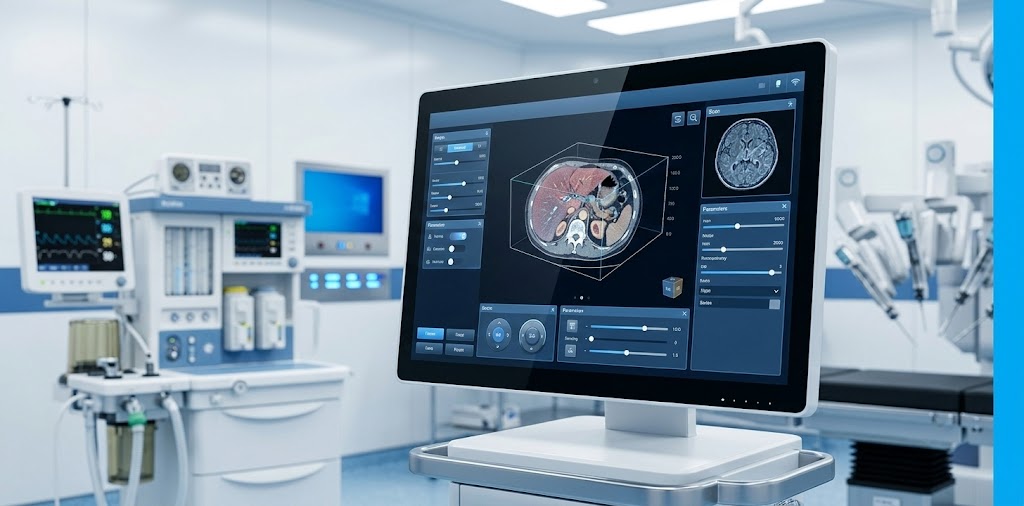
Why Capacitive Touchscreens Are High-Risk Components in B2B Applications
In B2B production environments, a capacitive touchscreen isn't just another display component—it's a critical interface that directly affects equipment usability, end-user experience, and your brand reputation. When this component fails, the consequences extend far beyond the hardware itself.
Device Downtime
Touch response failures or calibration issues can render your entire equipment unusable, leading to costly production interruptions and emergency repairs that disrupt your customers' operations.
User Experience Degradation
Inconsistent touch sensitivity, ghost touches, or delayed response times frustrate end users, creating negative perceptions of your product quality and diminishing the value of your equipment.
After-Sales Support Burden
Touchscreen defects generate high volumes of warranty claims, field service calls, and component replacements—driving up your support costs and straining customer relationships.
Brand Reputation Risk
Persistent touchscreen problems erode customer confidence in your brand, affecting not just current sales but future opportunities as negative feedback spreads through industry networks.
Supply Chain Disruption
Sourcing inconsistency from unstable suppliers can cause production delays, force last-minute redesigns, and leave your manufacturing line exposed to unexpected component shortages.
Compliance & Certification Delays
Non-compliant touchscreen materials or undocumented specification changes can invalidate your product certifications, causing costly re-testing cycles and delaying your market launch.
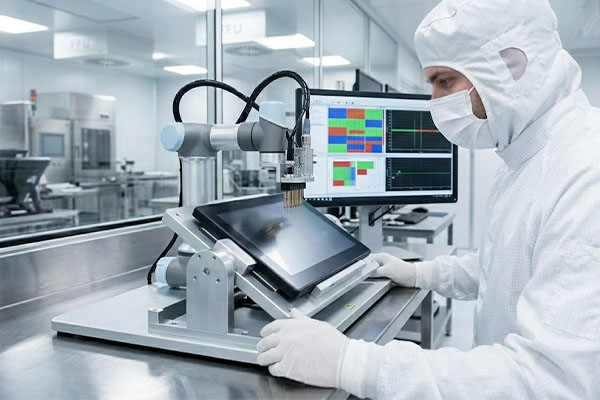
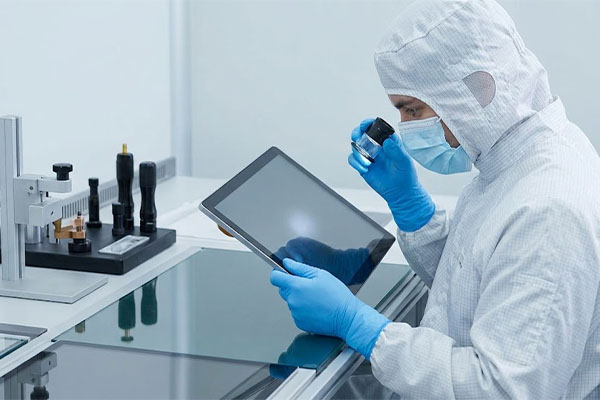
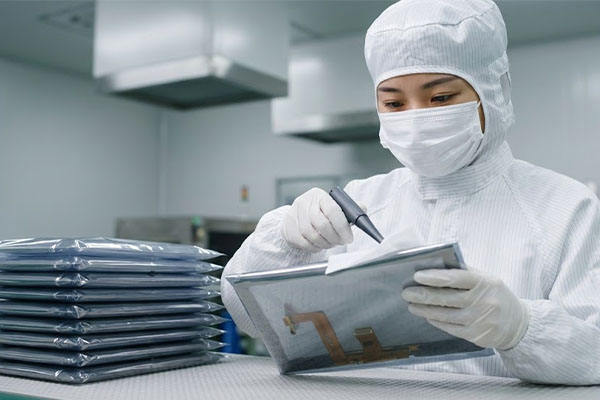
Protect your production timeline and brand reputation with reliable touchscreen solutions
Discuss Your Project RequirementsTypical Failure Scenarios: Most Projects Don't Fail on Price
In our experience working with equipment manufacturers worldwide, the most costly problems don't stem from component pricing—they emerge from supply chain weaknesses that reveal themselves when it's too late to pivot.
Samples Work, Mass Production Fails
Initial samples pass your testing with excellent touch response and accuracy. But when mass production begins, you discover inconsistent behavior across batches—some units have dead zones, others show drift after a few hours of use.
The real issue: Your supplier doesn't control their own production line. They're sourcing from multiple sub-contractors, and quality varies based on whoever's available that week.
Touch Interference and Calibration Drift
Touch panels work perfectly on your test bench but exhibit strange behavior in actual field conditions—environmental EMI causes false triggers, and touch points shift after temperature changes in industrial environments.
The real issue: The supplier didn't design for your specific application environment. They used standard commercial-grade materials and configurations without understanding your deployment conditions.
Batch Inconsistency in Touch Feel
Your QA team notices that touchscreens from different production runs have noticeably different tactile responses—some require more pressure, others are too sensitive. Your customers start complaining about inconsistent product experience.
The real issue: Critical parameters like bonding adhesive thickness and glass specifications aren't locked down batch-to-batch. There's no true process control or documentation trail.
Supplier Unresponsive During Production Crisis
You encounter a quality issue mid-production and need immediate technical support or alternative solutions. Your supplier takes days to respond, can't provide engineering documentation, and has no capacity to adjust specifications quickly.
The real issue: You're dealing with a trading company or distributor, not the actual factory. There's no direct line to engineering, and every decision requires multiple layers of communication.
💡 These scenarios share a common root cause: you're not working with a supplier who owns the process, understands your application, and has the infrastructure to maintain consistency at scale.
Avoid these costly mistakes—work with a factory that controls the full production chain
Get a Factory-Direct AssessmentYinghong's Capacitive Touchscreen Solution Approach
We don't just manufacture touchscreens. We control production risks.
Factory-Controlled Process
We own our complete production facility—from sensor lamination to controller integration and final testing. No outsourcing, no quality handoffs, no hidden sub-suppliers disrupting your timeline.
Drawing-Based Customization
Your specifications are locked into engineering drawings and approved through formal documentation—not verbal promises. Every mechanical dimension, electrical parameter, and material spec is confirmed before production starts.
Sample-to-Mass Consistency
We use the same production line, same materials, and same process parameters for samples and mass production. What you approve in testing is exactly what your customers receive—no unpleasant surprises at scale.
Long-Term Supply Mindset
We design supply relationships for multi-year commitments, not one-time orders. Our production planning, component sourcing, and engineering support are structured for sustained partnerships with growing equipment manufacturers.
Partner with a factory that treats your project as a long-term commitment
Start Your Custom ProjectCapacitive Touchscreen Technical Structure: Why Each Layer Matters
Understanding the structure of capacitive touchscreens helps explain why quality control at every layer is critical to long-term reliability. Each component plays a specific role in touch performance, and inconsistency in any layer compromises the entire system.
Cover Glass Layer
Function:
Protects internal electronics and provides the touch surface. Thickness, surface treatment, and optical clarity directly affect touch sensitivity and visual quality.
Why it matters:
Incorrect glass specifications create touch dead zones, reduce light transmission, or make the panel vulnerable to scratches and impact damage in industrial environments.
Sensor Layer (ITO)
Function:
Detects capacitive changes when a finger approaches or touches the screen. Consists of transparent conductive material patterned into precise electrode grids.
Why it matters:
Sensor patterning quality determines touch accuracy and multi-touch capability. Poor manufacturing creates ghost touches, position drift, and unreliable multi-finger gestures.
Touch Controller IC
Function:
Processes raw capacitance data from the sensor and converts it into precise touch coordinates. Manages noise filtering, calibration, and communication protocols.
Why it matters:
Controller selection affects EMI resistance, reporting speed, and compatibility with your system's interface (I2C, USB, etc.). Wrong IC choice causes integration headaches and field failures.
Interface & Connection
Function:
Provides electrical and mechanical connection between the touch panel and your host system. Includes FPC cables, connectors, and signal conditioning circuits.
Why it matters:
Interface reliability determines whether the touchscreen can withstand vibration, temperature cycling, and repeated connection/disconnection without signal degradation or intermittent failures.
🔧 At Yinghong, we control every layer of this stack—from glass sourcing and ITO deposition to controller programming and FPC assembly. This vertical integration is what enables us to guarantee consistency from sample approval through years of mass production.
Work with engineers who understand your application requirements at the technical level
Request Technical ConsultationCapacitive Touchscreen Types We Support
Different applications demand different touchscreen configurations. We manufacture capacitive touch solutions across multiple product categories, each optimized for specific environmental conditions and performance requirements.
Industrial Capacitive Touch Panels
Usage Environment
Factory floors, control rooms, outdoor kiosks—environments with high EMI, temperature fluctuations, vibration, and exposure to industrial chemicals or cleaning agents.
Stability Focus
Enhanced EMI shielding, wider operating temperature range (-20°C to +70°C), strengthened glass for impact resistance, and sealed construction for ingress protection (IP65+).
Customization Space
Custom bonding for glove/wet-touch operation, anti-reflective coatings for sunlight readability, vandal-resistant glass options, and integration with protective enclosures.
Medical-Grade Touch Screens
Usage Environment
Diagnostic equipment, patient monitors, surgical displays—sterile environments requiring frequent disinfection with hospital-grade cleaners and alcohol-based sanitizers.
Stability Focus
Chemical-resistant surface treatments, biocompatible materials, stable touch performance under repeated cleaning cycles, and design for compliance with medical device standards (IEC 60601).
Customization Space
Antimicrobial coatings, low-reflection surfaces for surgical lighting conditions, custom interface protocols for medical systems, and documentation for regulatory submissions.
Vehicle / Navigation Touchscreens
Usage Environment
Automotive dashboards, GPS systems, heavy machinery controls—mobile environments with constant vibration, extreme temperature swings, direct sunlight exposure, and occasional shock impacts.
Stability Focus
Automotive-grade components (AEC-Q100 qualified where applicable), bonding solutions that withstand thermal cycling (-40°C to +85°C), vibration-resistant mounting, and high-brightness optimization for daylight viewing.
Customization Space
Curved glass integration for dashboard aesthetics, polarizer orientation for sunglasses compatibility, CAN bus interface support, and custom cutouts for physical buttons or branding elements.
Touch Display Modules
Usage Environment
Integrated HMI systems, embedded displays, all-in-one terminals—applications where the touchscreen is bonded directly to the LCD/OLED display to create a unified input-output module.
Stability Focus
Optical bonding precision to eliminate air gaps (reducing reflections and improving contrast), careful matching of touch controller to display timing, and mechanical integration that maintains alignment over product lifetime.
Customization Space
Custom display selection and sourcing, integrated backlight control, unified mounting brackets, combined PCBA for touch + display + control logic, and single-point interface to your host system.
Find the right touchscreen solution for your specific application requirements
Discuss Your ApplicationCustomization Capability: Not Just a Checkbox List
True customization means engineering your touchscreen to match your exact mechanical, electrical, and performance specifications—documented in drawings and confirmed through structured engineering review. This isn't about selecting options from a catalog; it's about manufacturing a component that integrates seamlessly into your product.
Size & Structure
Custom active area dimensions, overall panel outline, mounting hole placement, and mechanical stack-up design to fit your enclosure exactly—all specified in your mechanical drawings.
Glass Thickness
Selection of cover glass thickness (0.7mm to 6mm) and type (soda-lime, aluminosilicate, chemically strengthened) based on your durability requirements and touch sensitivity targets.
Touch IC & Interface
Choice of touch controller IC based on your system requirements—I2C, USB, UART, or SPI interface options, with custom firmware configuration for your reporting rate and resolution needs.
Surface Treatment
Anti-glare, anti-reflective, anti-fingerprint, or anti-bacterial surface coatings applied based on your usage environment—each with specific optical transmission and durability characteristics.
Logo & Silk Printing
Custom branding, legends, icons, or operational instructions silk-screened onto the cover glass with precise positioning—your artwork translated into production-ready screen patterns.
Every customization parameter is locked into engineering drawings, reviewed in technical meetings, and confirmed through formal sample approval—not verbal descriptions or email assumptions. This drawing-based approach eliminates misunderstandings and ensures what you design is what we manufacture.
Start with your specifications—we'll translate them into manufacturable reality
Submit Your RequirementsEngineering Communication: How We Eliminate Misunderstandings
Most touchscreen supply problems don't stem from technical impossibility—they come from communication breakdowns between your engineering team and the supplier. We've built a structured process that ensures everyone is aligned on specifications, expectations, and deliverables before production begins.
Drawing-Based Communication
You provide mechanical drawings, interface specs, and application context. We respond with marked-up drawings showing what we can meet directly and where we recommend alternatives—no ambiguity about dimensions, tolerances, or materials.
Engineering Confirmation Process
Our engineering team reviews your requirements in structured technical meetings (virtual or in-person). We create a formal requirements document listing every specification, our proposed solution, and any deviations—signed off by both teams.
Sample Approval Mechanism
Samples are shipped with a detailed inspection report covering dimensional checks, electrical parameters, and functional testing results. You perform your own validation and formally approve samples before we commit tooling or materials for production.
Change Management & Traceability
Any specification changes during development or production go through formal ECN (Engineering Change Notice) documentation. We maintain version-controlled records so you always know which revision is in production and can trace any batch back to its approved specs.
What This Process Delivers
No "Lost in Translation" Moments: Every specification is documented in writing with drawings, eliminating verbal misunderstandings that cause production delays.
Faster Development Cycles: Structured communication reduces back-and-forth iterations, getting you from concept to approved samples in weeks, not months.
Confident Production Ramp: With approved samples and documented specs, you can scale production knowing exactly what quality level to expect in every batch.
Audit Trail for Compliance: Complete documentation supports your quality management systems and regulatory submissions where traceability is required.
Experience engineering communication that actually prevents problems
Start a Structured Project DiscussionSample to Mass Production: Consistency Control Logic
The biggest fear in B2B touchscreen sourcing is simple: "The samples were perfect, but mass production is a disaster." This happens when suppliers don't have systematic controls to replicate sample conditions at scale. Here's how we ensure what you approve in sampling is exactly what your customers receive in production.
Same BOM Control
When you approve a sample, we lock the Bill of Materials—specific suppliers for glass, ITO film, adhesive, FPC, and touch controller IC. These aren't generic categories; they're exact part numbers from qualified vendors.
Result: Mass production units use identical materials to samples, eliminating the risk of performance changes due to component substitution.
Same Process Parameters
Critical manufacturing parameters—lamination temperature/pressure, curing time, ITO deposition thickness, bonding adhesive application—are documented as part of your product's process specification and locked in our manufacturing system.
Result: Every production batch follows the same process recipe that created your approved samples, preventing drift in touch sensitivity or optical properties.
Batch Inspection Protocol
We perform incoming inspection on raw materials, in-process checks at critical assembly steps, and final functional testing on every panel. Inspection criteria match the acceptance standards you defined during sample approval.
Result: Defects are caught during production, not after shipment, and you receive inspection data showing conformance to your specifications for every batch.
Record Keeping & Traceability
Every production lot is assigned a unique identifier linked to material lot numbers, process parameters used, inspection results, and the approved sample reference. This data is retained for the lifetime of your project.
Result: If you ever encounter a field issue, we can trace back to the exact production conditions and materials for that batch, enabling rapid root cause analysis and corrective action.
🎯 This systematic approach directly addresses the B2B buyer's biggest fear: batch-to-batch variability. By controlling materials, processes, inspection, and documentation, we deliver the predictable quality that makes your production planning reliable and your customer experience consistent.
Work with a factory that treats consistency as a system, not a promise
Request a Quality System OverviewTypical Industry Application Scenarios
Each industry places unique demands on capacitive touchscreen technology. Understanding these requirements—from environmental challenges to regulatory compliance—allows us to engineer solutions that perform reliably in your specific deployment context.
Operating Environment
Factory automation systems, CNC machine controls, process monitoring stations—environments with high electrical noise, temperature extremes, exposure to cutting fluids or coolants, and operators wearing gloves.
Critical Requirements
Touch functionality must work reliably with industrial gloves (leather or nitrile), resist EMI from nearby motors and VFDs, maintain calibration despite temperature swings, and survive occasional impacts from tools or materials.
Yinghong's Approach
We specify thicker sensor layers and optimized controller algorithms for glove touch, implement grounded shielding layers for EMI immunity, use chemically strengthened glass rated for industrial impact, and test across -20°C to +70°C operating range.
Operating Environment
Diagnostic equipment, patient monitoring systems, surgical displays, dental imaging—sterile or cleanroom environments requiring frequent disinfection with hospital-grade chemicals and UV sanitization.
Critical Requirements
Surface must withstand repeated cleaning with alcohol, bleach, or quaternary ammonium compounds without degrading touch sensitivity. Need biocompatible materials, precise touch accuracy for detailed interfaces, and documentation supporting IEC 60601 compliance.
Yinghong's Approach
We apply chemical-resistant surface treatments tested against common hospital disinfectants, use medical-grade adhesives and materials with biocompatibility documentation, implement tight calibration tolerances for sub-millimeter accuracy, and maintain quality records supporting regulatory submissions.
Operating Environment
Automotive infotainment systems, GPS navigation devices, heavy equipment control panels—mobile platforms experiencing constant vibration, rapid temperature changes, direct sunlight exposure, and occasional shock impacts.
Critical Requirements
Must function reliably across automotive temperature range (-40°C to +85°C), maintain touch response despite vibration and road shock, provide sunlight-readable display with polarizer compatibility for sunglasses, and integrate with vehicle communication protocols.
Yinghong's Approach
We use automotive-grade components and adhesives qualified for thermal cycling, implement vibration-resistant mechanical designs with shock-absorbing mounting, optimize bonding stack for high brightness and polarizer orientation, and support CAN bus or LIN interface integration where needed.
Operating Environment
Embedded systems, HMI terminals, all-in-one kiosks—applications where touch and display are bonded into a unified module, simplifying mechanical integration and improving optical performance through elimination of air gaps.
Critical Requirements
Optical bonding must eliminate Newton rings and improve contrast ratio without introducing alignment issues. Touch controller timing must synchronize with display refresh. Mechanical assembly needs unified mounting that maintains touch-display registration over product lifetime.
Yinghong's Approach
We perform precision optical bonding in cleanroom conditions, carefully match touch sensor to display active area with sub-0.5mm tolerances, integrate touch controller and display driver on a unified PCBA where beneficial, and design mechanical assemblies that prevent stress-induced misalignment.
Get a touchscreen solution engineered for your industry's specific challenges
Discuss Your Industry Requirements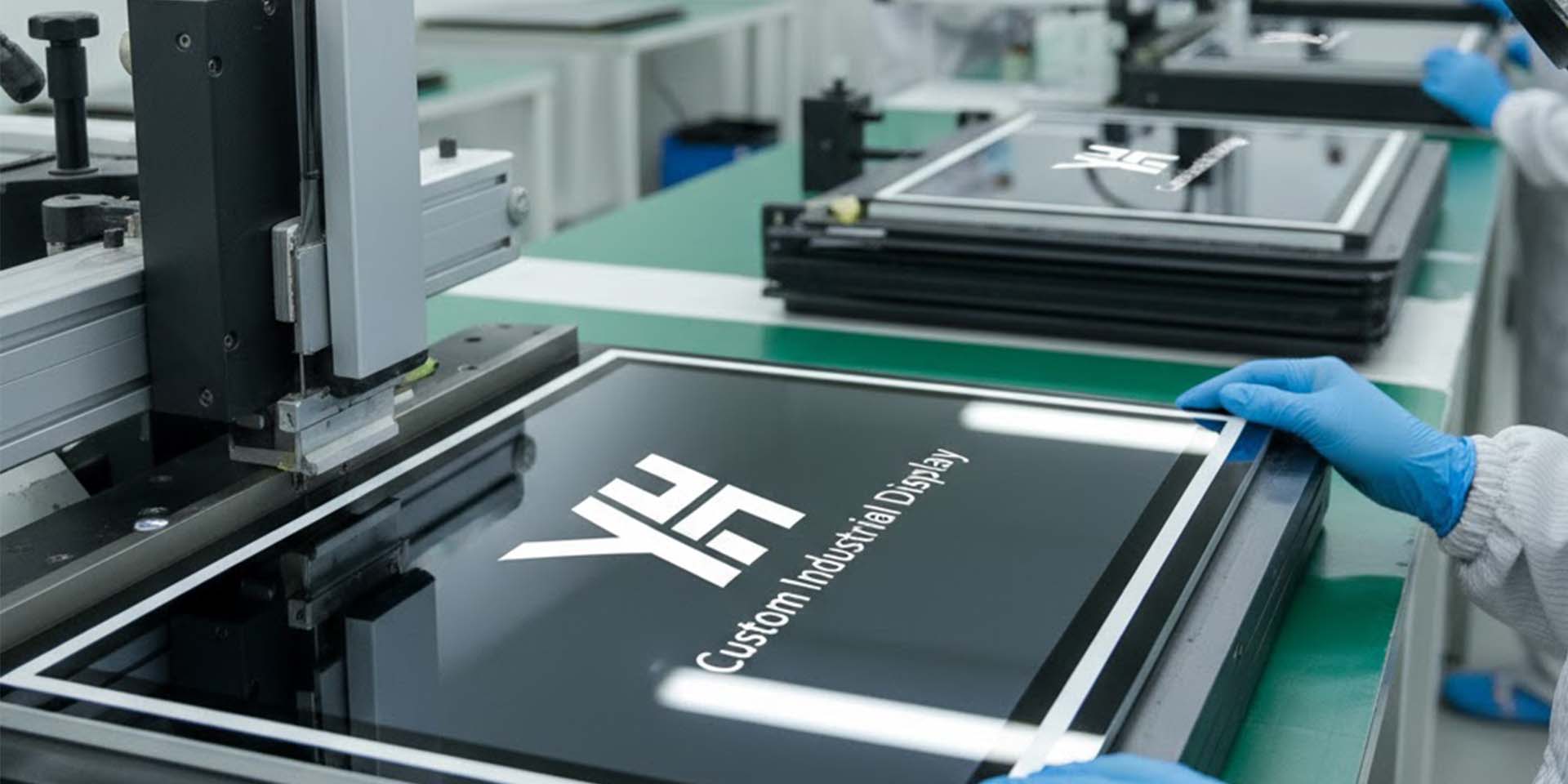
Precision Capacitive Touchscreens
Built for Your Application
From industrial control panels to medical-grade devices—our engineering team works directly with your specs to deliver consistent, certified touchscreen solutions at scale.
Why Choose Factory-Direct Instead of Solution Providers
Both trading companies and factory-direct suppliers serve important roles in the supply chain. However, for long-term production projects requiring customization and consistent quality, the structural differences matter significantly.
Trading / Integration Company
- No production control: Relies on third-party manufacturers whose capacity and quality standards may fluctuate based on their current workload and priorities.
- Limited technical depth: Sales-focused teams without direct engineering access, making detailed customization discussions and quick technical problem-solving difficult.
- Communication layers: Multiple handoffs between you, the integrator, and the actual manufacturer create delays in technical clarifications and specification changes.
- Uncertain long-term availability: If the integrator switches factories or goes out of business, you lose your entire supply chain relationship and continuity.
Factory-Direct Partnership
- Complete process ownership: We control every production step from material sourcing to final testing, ensuring consistent quality and ability to respond quickly to issues.
- Direct engineering access: Your project connects directly with our technical team who design and produce the products, enabling rapid customization and detailed specification discussions.
- Single-point communication: No intermediaries—you communicate directly with the people controlling production schedules, quality standards, and engineering decisions.
- Guaranteed supply continuity: As the manufacturer, we maintain production records, tooling, and material specifications for years, protecting your long-term supply security.
What This Means for Long-Term Projects
For equipment manufacturers planning multi-year production runs with evolving specifications and scale requirements, factory-direct relationships reduce risk exposure. You gain transparency into manufacturing capabilities, direct access to problem-solving resources, and confidence that your supply chain won't disappear due to third-party business decisions. This isn't about eliminating integrators from every scenario—it's about choosing the right partnership structure for projects where control and continuity matter most.
Build a transparent, direct relationship with the team controlling your production
Start Factory-Direct PartnershipCooperation Process: From Consultation to Long-Term Supply
Our partnership framework is designed to eliminate ambiguity at every stage—from initial requirement discussions through years of consistent mass production. Here's how we structure projects for predictable outcomes.
Requirement & Drawing Review
Share your application details, performance requirements, and mechanical constraints. We review your technical drawings (if available) or help you define specifications based on your end-use conditions. This phase clarifies interface requirements, environmental demands, and any regulatory certifications needed.
Technical Proposal
Our engineering team provides a detailed proposal including recommended touch panel configuration, controller selection, interface specifications, and customization options. We document mechanical dimensions, electrical characteristics, and quality standards in formal drawings for your approval.
Sampling
We manufacture samples using the exact materials, processes, and quality controls planned for mass production. Samples ship with full test reports and documentation. You conduct integration testing and validation in your actual application environment to confirm performance meets requirements.
Approval
After your testing confirms sample quality, we finalize all technical specifications, manufacturing procedures, and quality acceptance criteria in a formal approval document. This locked-in specification becomes the reference standard for all future production, ensuring no drift or undocumented changes.
Mass Production
Production follows approved specifications with the same materials, tooling, and process parameters used in samples. We implement batch quality control with defined inspection checkpoints and maintain production records for full traceability. Regular quality reports keep you informed throughout manufacturing.
Long-Term Supply
We maintain your product specifications, tooling, and material sourcing relationships for the duration of your product lifecycle. Production capacity is planned to accommodate your scaling requirements. Technical support, specification updates, and continuous improvement discussions continue throughout the partnership.
Experience a structured, predictable partnership from initial contact through years of production
Begin Your Project JourneyWho We're Best Suited to Serve
We've built our factory, processes, and team to excel at serving specific types of customers with particular needs. Being transparent about fit helps both of us invest time wisely and build successful long-term partnerships.
We're Best For:
- OEM & Brand Owners producing equipment under their own name who need touchscreen components that reflect their quality standards and support their brand reputation.
- Industrial & Medical Device Manufacturers requiring customized touchscreens that meet specific environmental, durability, or regulatory requirements beyond standard commercial specs.
- Companies planning multi-year production who value supply continuity, technical documentation, and consistent quality more than finding the absolute lowest per-unit cost.
- Engineering-led organizations that conduct thorough supplier qualification, want direct access to technical teams, and appreciate detailed documentation throughout development and production.
We're Not Optimal For:
- One-time buyers seeking spot purchases with no plan for ongoing relationship or future orders—our value proposition centers on long-term partnership, not transaction efficiency.
- Buyers optimizing purely on lowest unit price without considering total cost of ownership—we compete on reliability and support, not on being the cheapest option available.
- Projects requiring consumer-grade touchscreens for mobile phones, tablets, or retail consumer electronics—our expertise is in industrial and specialized applications, not consumer markets.
- Customers expecting instant quotes without technical discussion—meaningful pricing requires understanding your requirements, application environment, and quality expectations first.
💡 Why Clarity About Fit Matters
Being direct about who we serve best isn't about turning away business—it's about ensuring successful partnerships. When customer needs align with our capabilities and approach, projects run smoothly, quality expectations are met, and both parties build value together. When there's misalignment, everyone wastes time and faces frustration. We'd rather have honest conversations early than disappointing experiences later.
If this sounds like your project and organization, let's explore working together
Discuss Your Project FitFrequently Asked Questions: Clearing the Path to Partnership
These are the questions we hear most often from equipment manufacturers evaluating touchscreen suppliers. Direct answers help you make informed decisions quickly.
We are a manufacturing facility with our own production lines, quality control systems, and engineering team. We own the equipment that laminates sensor layers, bonds cover glass, programs controllers, and tests finished panels. You can verify this through factory visits, audit reports, or business registration documentation showing manufacturing operations. Unlike trading companies, we don't outsource production to third parties—your order is built on our controlled production floor.
We specialize in customization based on your mechanical drawings and performance specifications. This includes custom sizes, glass thickness, touch IC selection, interface types (I2C, USB, SPI), surface treatments, and mounting configurations. What we need from you: dimensional requirements, environmental conditions (temperature, humidity, EMI exposure), expected touch accuracy, and interface compatibility with your host system. We then engineer a solution that matches your exact needs rather than forcing you to adapt to off-the-shelf products.
We use the same production line, same material lots, and same process parameters for both samples and mass production. Every specification approved during sampling—BOM list, process flow, quality checkpoints—is locked into our production documentation and becomes the reference standard for all future builds. We maintain batch records showing material traceability, process parameters, and quality inspection results, ensuring every production run matches the approved sample characteristics.
Yes, we support pilot production runs to validate integration, test field performance, and build confidence before scaling to full volume. Minimum order quantities depend on customization level—standard configurations may have lower MOQs than highly specialized designs requiring custom tooling. We're transparent about setup costs and MOQ rationale upfront. Our goal is giving you enough units to conduct real-world validation without requiring immediate commitment to years of production.
We export to North America, Europe, and Asia-Pacific, serving industrial equipment, medical device, and specialized display integration markets. Our facility holds ISO 9001 quality management certification. For product certifications (CE, FCC, RoHS, REACH, medical standards), requirements vary by your application and target markets—we work with you to identify which certifications your project needs and can provide supporting documentation or pursue additional certifications as required for your specific use case.
Still have questions? Let's have a detailed conversation about your specific situation
Ask Your Specific QuestionsGet Your Custom Touchscreen Solution Today
Factory-direct. Engineer-supported. Built to last.
We'll respond within 24 hours with a technical assessment or clarifying questions
Direct Control
Certified
Global Markets
Supply Partner